 Celebrate with up to 80% off
TikTok scams to watch out for: How to recognize them before it’s too late


TikTok's rapid growth has made it one of the most influential social platforms. Like many large social media platforms, it has also become a target for online scams. Because content can spread quickly and blend in with entertainment, misleading posts and impersonation tactics can sometimes appear convincing enough to pass as legitimate content.
What are TikTok scams?
TikTok scams are fraudulent schemes that exploit the app's features to trick people into giving up money, personal data, or account access. Whatever form they take, the goal is the same: to extract something valuable from the target.
Why TikTok scams are so common
Fraud is a growing problem across social media, and TikTok ranks high in at least some survey findings. A 2025 F-Secure article citing the company's consumer scam survey says that 60% of TikTok users encounter a scam on the platform every week, and 15% reported having become victims.
In Singapore, the Police Force's Annual Scam and Cybercrime Brief 2025 reported that scam cases involving TikTok as a contact method rose by 37.8%.
Several features of the platform help explain why. Its recommendation system helps people discover engaging content quickly and allows creators to reach large audiences. Like many widely used social platforms, however, that reach can also be exploited by scammers, who design posts to look compelling enough to spread before users recognize the warning signs.
The same is true of fast sharing and easy account creation. These features lower the barrier for legitimate participation and help content circulate quickly, but they can also be misused by bad actors trying to spread fraudulent videos before they are reported or removed.
Shopping and payment features can make it easier for users to buy from legitimate creators and sellers without leaving the app. However, as with many e-commerce tools, scammers may also try to misuse that convenience to make fraudulent offers seem more seamless or trustworthy.
Put together, these features can make TikTok attractive to bad actors: quick account setup, viral reach, and integrated commercial tools that are useful for legitimate activity but can also be abused.
Also read: Is TikTok safe? Risks and how to protect yourself.
Common tactics used by scammers
Most scams rely on psychological manipulation rather than technical hacking. Impersonation is one of the most common methods used across major social media apps: scammers may create copycat accounts, use slightly altered usernames, or even use deepfake audio and video to pose as real people, brands, or businesses, building trust quickly.
Urgency is another hallmark. Messages or videos may promise big payouts, exclusive prizes, or limited-time offers, or threaten negative consequences, all designed to push people into acting before they stop to think. Impersonation scams, more broadly, often rely on this kind of pressure and emotional manipulation.
These tactics work because they exploit basic emotions such as trust, fear, urgency, and the hope of getting something valuable.
Learn more: What is social engineering? A complete security guide.
How TikTok helps protect its users against scams
TikTok does actively try to limit abuse. Beyond broad enforcement, the platform also gives users several tools and resources that can help reduce scam risk:
- In-app reporting tools: Users can report suspicious accounts, posts, direct messages, impersonation attempts, and other safety issues from within the app or on the website. This provides a direct way to flag suspected fraud and helps the platform investigate and remove content or accounts that violate its rules.
- Security Checkup: This feature walks users through important account-protection steps, such as linking an email address and phone number, reviewing logged-in devices, and strengthening sign-in settings. Keeping these controls in one place makes account security easier to review and can help reduce the risk of account takeover.
- Two-factor authentication (2FA): An extra sign-in step adds another barrier if a password is stolen or reused elsewhere. That makes unauthorized access harder, especially on unfamiliar devices.
- Verification badges: These indicate that an account belongs to the person, brand, or entity it claims to represent. They can help users distinguish some authentic public accounts from impersonators, although a badge does not endorse everything an account posts.
- Phishing guidance: Official safety guidance explains how to spot fraudulent emails, texts, links, and other messages that pretend to come from the platform. This can help users recognize warning signs such as suspicious sender details, unexpected links, or requests for sensitive information.
- Buyer protections and refund channels: For eligible TikTok Shop purchases in supported markets, return, refund, and dispute processes are available for issues such as damaged items, defective goods, missing parts, or items that do not match the description.
In a December 2024 newsroom post, TikTok said it had banned more than 214 million accounts for violating its rules and removed over 500 million videos. In a separate 2024 newsroom post about deceptive behavior, TikTok said it had prevented over 700 million fake accounts from being created and removed over 940 million videos from fake accounts.
Types of TikTok scams
TikTok scams can be grouped into several broad categories. Understanding these patterns can help people recognize fraudulent activity before it's too late.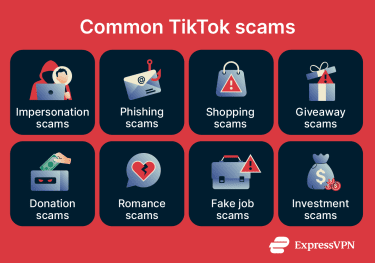
Fake TikTok accounts and impersonation scams
Scammers create TikTok accounts that mimic celebrities, creators, brands, or even people known personally to the victim. Their goal is to build trust over time so that later requests for money or personal information feel believable rather than suspicious. Some do this by taking over legitimate accounts, but many create impersonation profiles from scratch.
According to the Identity Theft Resource Center (ITRC) 2025 Consumer Impact Report, social media account takeover was the most commonly reported form of identity misuse among the general population in its survey, affecting over 35% of victims, up from 29.4% the year before.
Phishing scams on TikTok
Phishing scams trick people into revealing passwords or payment details. On TikTok, scammers may post videos or send messages containing suspicious links to fake websites disguised as account alerts, rewards, or other incentives. These pages may imitate well-known brands, including TikTok itself, or login portals.
Common hooks include warnings about copyright violations or alerts that ask people to confirm their passwords. According to the FBI's Internet Crime Report (ICR) 2024, phishing and spoofing were the most reported cybercrime categories nationwide, with over 193,000 complaints.
TikTok Shop and online shopping scams
TikTok's in‑app shopping and live‑commerce features make it easy to buy directly from videos, but the marketplace has drawn scrutiny over counterfeit goods and seller practices. Investigations and platform safety reports have described likely counterfeit products and large-scale enforcement against listings that did not meet platform standards.
A 2025 investigation by the U.K. consumer group Which? found that 5 out of 6 branded beauty products purchased from TikTok Shop were likely counterfeit, based on visual comparisons with genuine items.
Meanwhile, the TikTok Shop Safety Report shows the platform rejected 1.4 million seller applications and blocked 70 million product listings in the first half of 2025, highlighting the scale of its enforcement efforts.
Fake giveaway and prize scams
Fake giveaways and prize scams are common on social media, including TikTok. These scams may promise cash, electronics, or charitable donations in exchange for likes, follows, or small payments. Once someone engages, the scammer may try to collect personal information, redirect them to suspicious third-party websites, or demand extra fees to claim the supposed prize.
Donation scams
Donation scams exploit generosity by impersonating charities or creating fake fundraising campaigns, often timed to coincide with natural disasters, conflicts, or other crises. The Better Business Bureau (BBB) has issued a scam alert about TikTok videos that use emotional stories, such as older adults trying to save animal shelters, to redirect viewers to fraudulent product or donation pages, sometimes using AI-generated or stolen content.
Donation scammers may ask for funds to be directly deposited into personal bank accounts or use websites to collect payments and personal information. Legitimate charities should be verifiable through official registries or independent evaluators, and unexpected pressure to donate immediately is a warning sign.
Romance and sugar baby scams
Romance scams are a well-known scam pattern across social media and other online platforms. Scammers typically invent a reason they can't meet in person (such as working overseas), then try to build a bond quickly. Once the victim is emotionally invested, the scammer creates an emergency and asks for money.
According to the Federal Trade Commission (FTC), consumers reported losing about $1.14 billion to romance scams in 2023, with a median reported loss of $2,000, the highest reported median loss for any form of imposter scam.
A related variation that can also appear on TikTok is the sugar-baby scam, where someone promises to send an allowance but first asks for fees or bank details.
Also read: Military romance scams: How to protect yourself.
Fake jobs and easy money scams
Job scams advertise well-paid positions requiring little effort but demand upfront payments or personal information. One recent example involves scammers posing as TikTok's own HR department, texting targets with offers to earn hundreds of dollars a day simply by liking videos.
According to Virgin Media O2, fake job offers impersonating TikTok's HR department were among the scam texts reported by O2 customers in January 2025, including messages promising up to £800 a day for liking videos.
The FTC's data underscores the broader trend: between 2020 and 2024, reported losses to job scams in the U.S. jumped from $90 million to $501 million, with reports nearly tripling over the same period.
Cryptocurrency and investment scams
Cryptocurrency investment scams are a well-known scam pattern across social media and other online platforms, including TikTok. Posts or videos may show people living lavish lifestyles and claim that a small crypto investment will yield massive returns. The scammer then directs victims to buy cryptocurrency or deposit funds into a supposed trading account, even though there is no legitimate investment behind it. In some cases, scammers may use funds from new victims to create the illusion of returns for earlier victims, but these schemes are more broadly described as fraudulent investment or confidence scams.
The scale is significant. The FBI's 2024 ICR says complaints involving cryptocurrency caused about $9.3 billion in losses, a 66% increase over the prior year. The same report says cryptocurrency investment fraud accounted for about $5.8 billion in losses, much of it driven by pig butchering schemes.
Some scammers provide small initial returns or show fake profits to build trust before pressuring victims to invest more. Others create fake trading platforms or fake wallet apps that appear legitimate until the victim tries to withdraw funds or enter sensitive wallet details. Money flip schemes, which promise to multiply a small payment through peer-to-peer apps or crypto, follow a similar playbook by dangling easy profits and then demanding more money or disappearing.
TikTok also warns about money mule scams, in which users are offered easy commissions in exchange for receiving and transferring funds through their bank accounts, sometimes turning them into unwitting participants in money laundering.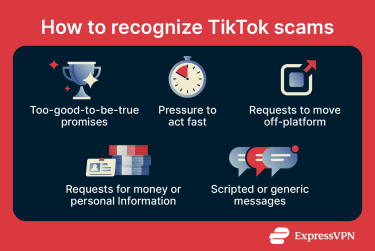
How to avoid scams on TikTok
Implementing protective measures can reduce the risk of falling victim to fraud. Remember that vigilance is your best defense.
- Verify accounts and offers: Check whether an account is verified, but don't rely on verification alone. Cross-check claims, promotions, and giveaways through official websites or other trusted sources. TikTok notes that verified badges are applied by TikTok and appear in a consistent place next to the account name
- Shop only through trusted channels: Before buying anything or visiting an off-site merchant, verify the seller, the product, and the refund terms on the official brand website or with an established retailer, rather than relying on a TikTok post or message.
- Protect your personal and financial information: Don't share sensitive information through TikTok or direct messages. Avoid clicking links from unknown users, and never send money to someone who insists on payment by gift card, cryptocurrency, or wire transfer.
- Strengthen your account and device security: Use a unique password and enable multi-factor authentication (MFA) on your TikTok account and any linked payment methods. Review your account regularly for unusual activity, and keep your operating system, apps, and security software updated so known vulnerabilities are patched.
- Use parental controls for minors: TikTok's Family Pairing feature allows parents or guardians to link to a teen's account, review privacy and safety settings, and manage options such as blocked accounts and Restricted Mode. Using these, or third-party parental control apps, responsibly can help reduce a teen's exposure to unwanted contact and other risks.
Also read: Internet safety for kids: 10 rules every parent must know.
What to do if you get scammed on TikTok
If you become a victim of a TikTok scam, taking swift action may help limit further damage. While this information offers general guidance, it does not constitute legal or financial advice.
How to report a scammer on TikTok
TikTok provides tools to report accounts, videos, and messages that violate its policies. The exact steps vary depending on what's being reported, but usually follow the steps below:
- Open TikTok and go to the scammer's profile, video, or message. Tap the Share button (or press and hold the post).

- Tap Report.
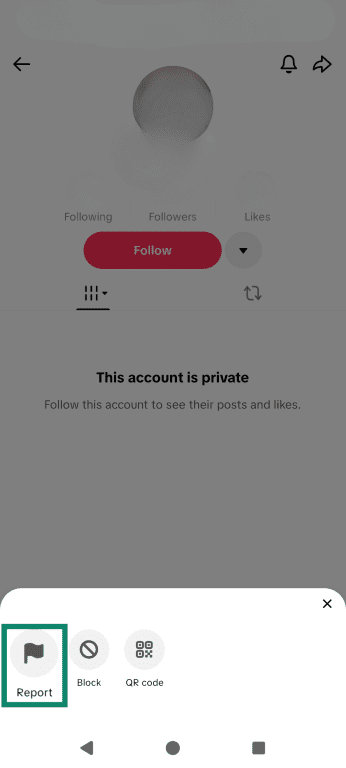
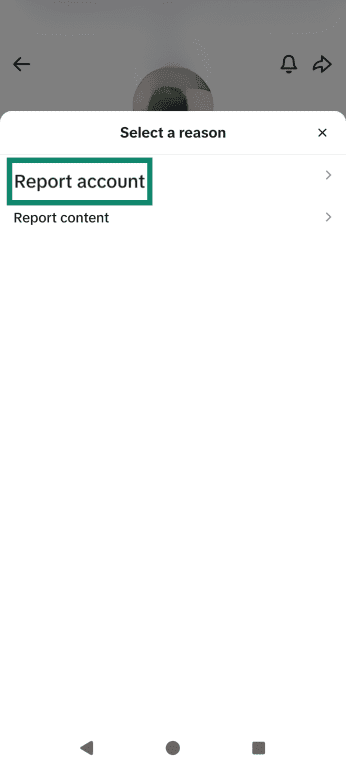
- Choose between Report account when you're reporting the profile itself (such as for impersonation, a fake identity, or a scam account), or Report content when the issue is a specific post, video, message, or comment that's misleading, fraudulent, or otherwise violates the rules.
- If prompted, complete Select a reason.
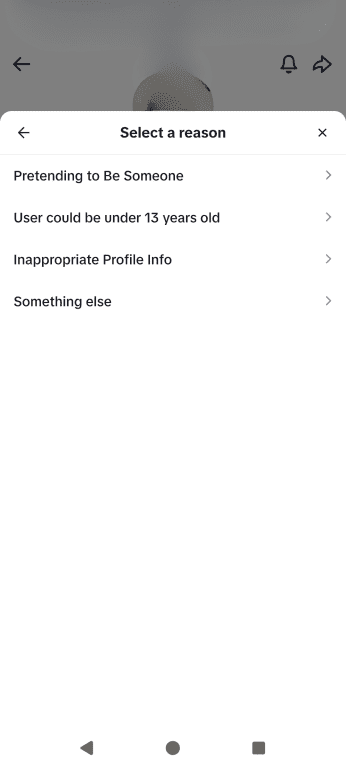
- Tap Submit.
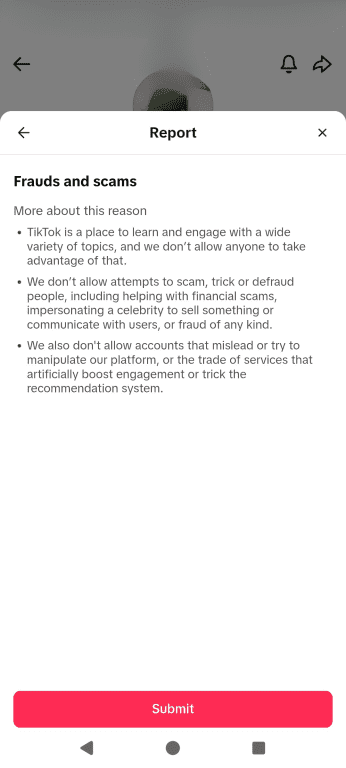
You can also report from a web browser by hovering over the More options button on a video and following the same steps.
Note: If you've already given the suspicious user money, contact your bank, card issuer, payment app, wire transfer company, or cryptocurrency exchange as soon as possible and report the fraud. Depending on the payment method, it may be possible to reverse or dispute the payment, although recovery can be harder in crypto-related cases. The exact process varies by provider, and any reimbursement will depend on its policies. Save screenshots of messages, profiles, transaction receipts, and any other relevant details, since they may help with complaints or investigations.
Change the password and enable two-factor authentication (2FA)
Change your password and enable 2-step verification, which adds an extra layer of security when you log in. To do this:
- Open TikTok, tap Profile, then tap the Menu button in the top-right corner.

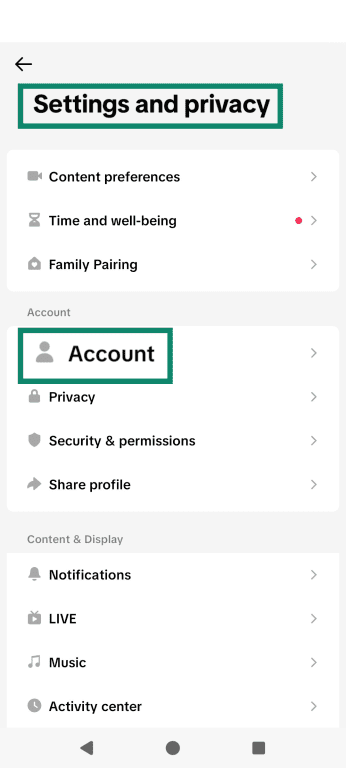
- Tap Settings and privacy > Account.
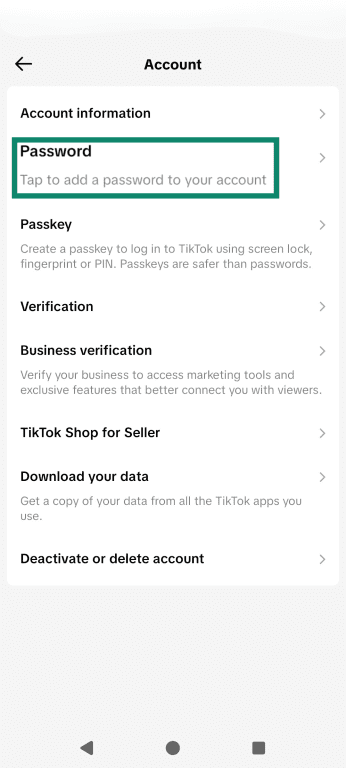
- Select Password to change it, then follow the on-screen prompts.
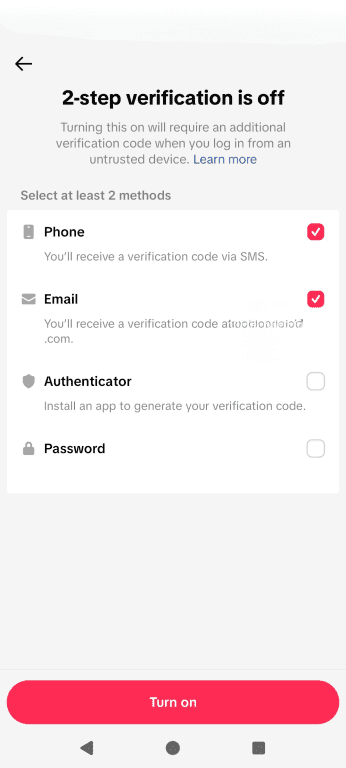
- Return to Settings and privacy, then open Security & permissions and tap 2-step verification.
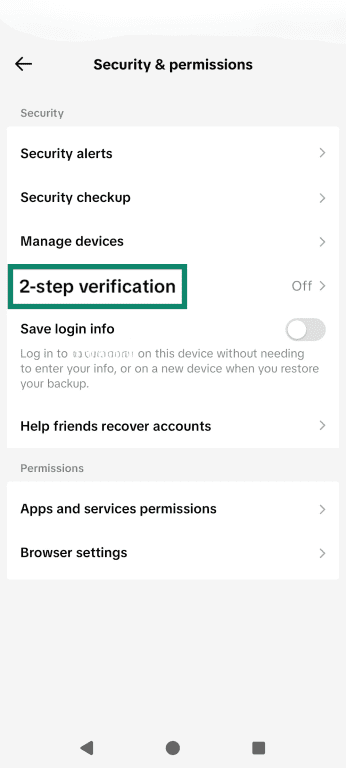
- Choose at least two verification methods and follow the prompts to complete their setup.
Review logged-in devices
Review which devices are logged in under your security settings. Remove any you don't recognize.
- Open TikTok, tap Profile, then tap the Menu button in the top-right corner.
- Tap Settings and privacy, then open Security & permissions.
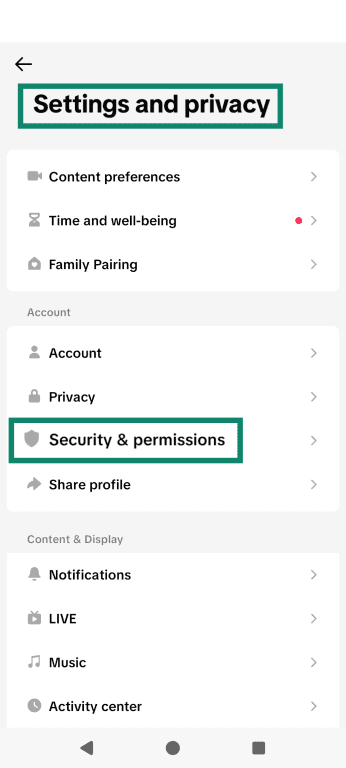
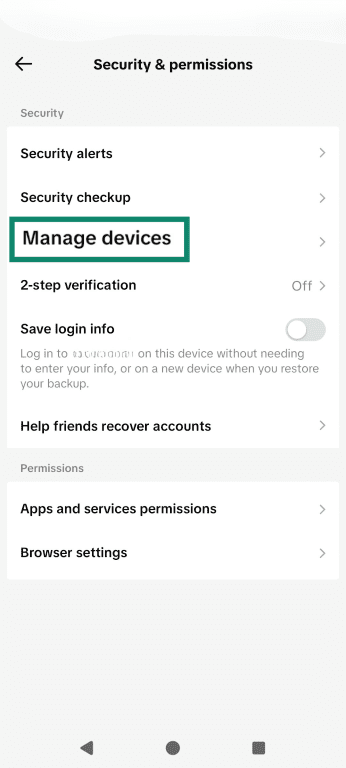
- Tap Manage devices and review the list of devices signed into your account.
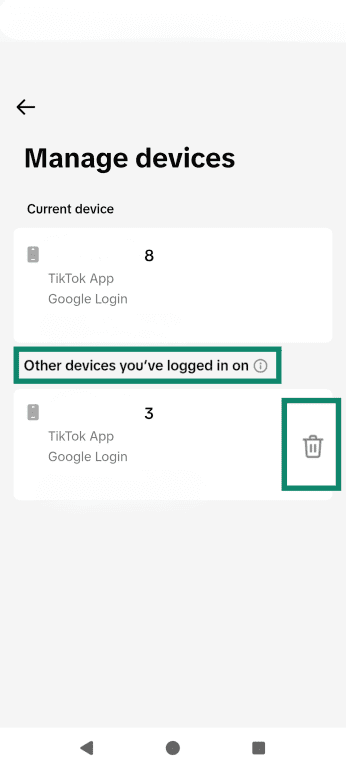
- If you see a device you don't recognize, tap Delete (or the trash can icon), then tap Remove.
How to report the scam beyond TikTok
Depending on where you are and the nature of the scam, consider filing a report with:
- U.S.: The FTC at ReportFraud.ftc.gov and the FBI's Internet Crime Complaint Center (IC3) at ic3.gov.
- U.K.: Action Fraud at actionfraud.police.uk, and forward scam texts to 7726.
- EU: Your national consumer protection authority, or the European Consumer Centres Network (ECC-Net) if the issue involves a cross-border purchase or seller within the EU.
If you believe you may be a victim of identity theft, consider placing a fraud alert or credit freeze with credit bureaus where those services are available, such as in the U.S.
FAQ
Can I get scammed just by opening a TikTok message?
How can I tell if a TikTok giveaway is fake?
Are TikTok Shop sellers trustworthy?
Can a verified TikTok account still be a scam?
Why do scammers ask to move the conversation off TikTok?