 Celebrate with up to 80% off
Bail bond scams exposed: How to spot fraud and protect your family


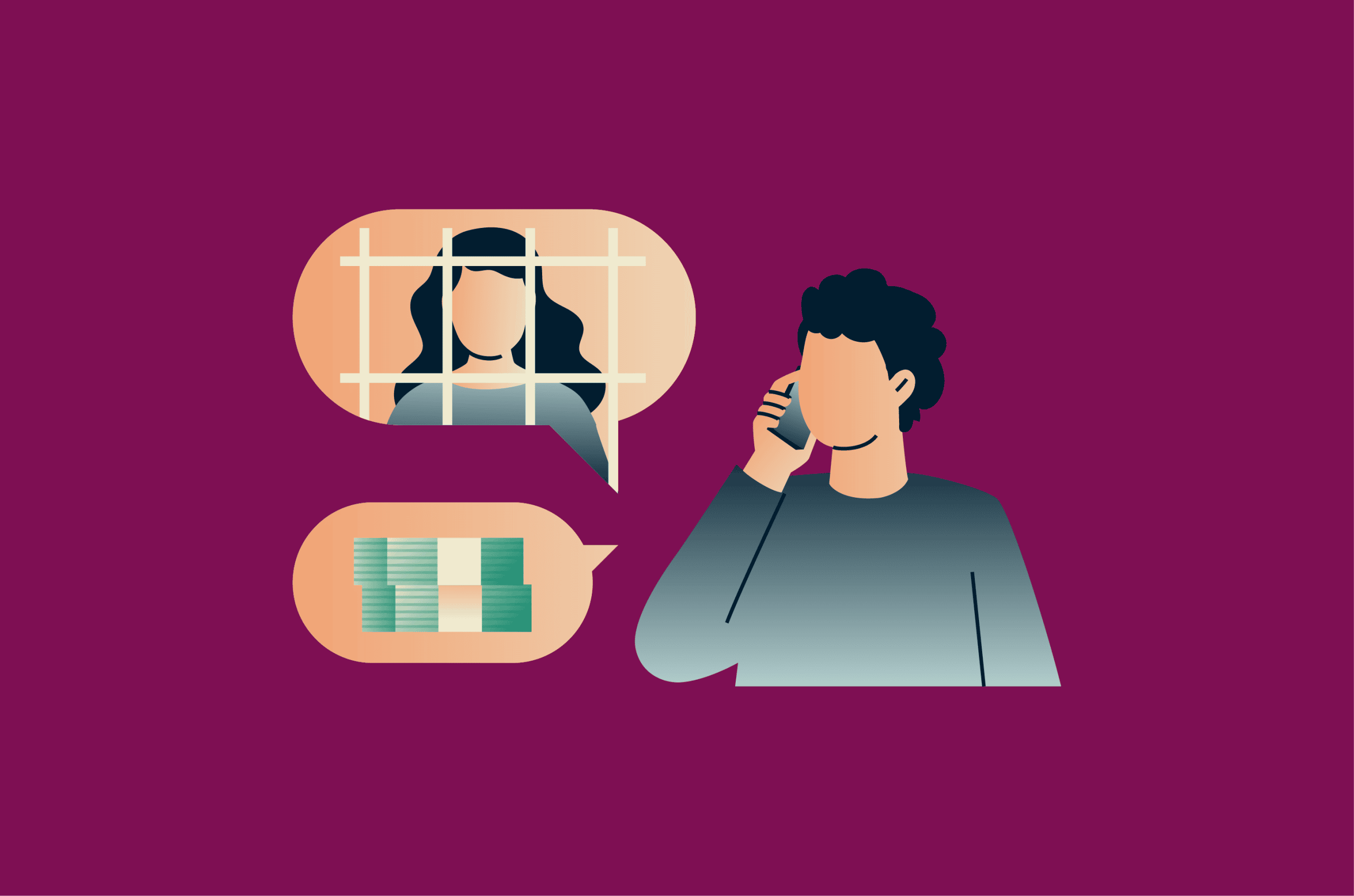
You’re just going about your day when you receive a call or text from someone claiming to be a lawyer, a bail agent, or even a police officer. A loved one has been arrested, they say, and the only way to get them out is to send money now.
Sometimes the arrest is entirely fictional. In other cases, scammers target families after learning about a real arrest through public records or online jail rosters. Either way, the goal is the same: create a sense of urgency and convince victims to pay fake bond requests before they have time to verify the situation.
What are bail bond scams?
Bail bond scams are fraud schemes that exploit people seeking to secure the release of someone who has been arrested (or who they believe has been arrested). Scammers pose as bail bond agents, law enforcement officials, attorneys, court employees, or even the detained.
To understand how these scams work, it helps to know how the bail process operates. When someone is arrested in the U.S., a judge may set bail as a financial guarantee that the defendant will appear in court. If the defendant follows court orders and shows up, bail money paid directly to the court is usually returned at the end of the case.
In states where commercial bail bonds are allowed, the defendant or their family may use a licensed or approved bail bond agent instead of paying the full bail amount upfront. The bail bond agent posts a bond with the court, while the family pays the bail bond agent a non-refundable fee, often called a premium. This premium is a percentage of the total bail amount.
Scammers copy the surface structure of this process to make their requests sound credible. They contact family members with news of an arrest, present themselves as bondsmen or officers, and push for immediate payment of the premium before victims have a chance to verify the details.
How do bail bond scammers target families?
Bail bond scammers often begin by gathering information about their targets. In some cases, they use publicly available arrest records to identify people who’ve recently been taken into custody and then contact their family members. In others, no arrest has occurred at all; the scammers simply invent the situation and use publicly available information to make the story sound believable.
Criminals may review the target’s public profiles to map out family relationships, identify likely contacts, and tailor the story accordingly. Data breaches can expose additional personal details, such as phone numbers, addresses, and relationship data, that are then sold and could be used to make fraudulent calls more convincing.
Once they've built a profile, the scam usually follows a familiar pattern:
- An unsolicited call or message: This often appears to come from a jail, courthouse, or law enforcement number due to caller ID spoofing.
- A claim that a family member is in custody: The scammers use the correct name, facility, and sometimes even the charge, often pulled from public records.
- Urgency and pressure: They insist that bail must be paid immediately to prevent transfer to a higher-security facility, avoid additional charges, or meet a narrow processing window.
- An unusual payment request: The scammers often ask for payment via wire transfer, cryptocurrency, gift cards, or peer-to-peer (P2P) payment apps. Once payment is made, the scammer either disappears or invents additional fees and requests more money.
How AI is changing bail bond scams
AI has introduced a new layer of difficulty for people trying to identify bail bond fraud. One significant development is the rise of AI voice scams. A convincing voice clone can now be created from just a few seconds of audio. These samples are often freely available through social media posts, voicemails, or online videos. Scammers use this technology to mimic a family member's voice, making a call appear to come from the person supposedly in custody.
Beyond voice cloning, AI tools are also being used to generate more convincing phishing messages, create professional-looking scam websites, and craft highly personalized scripts that reference real details about the target. The combination of public data access and AI-generated phishing content means that bail bond scams can now be highly targeted and very convincing.
Common bail bond scams to watch for
Bail bond scams can take many forms, but most rely on the same basic tactic: scammers create a sense of urgency and convince someone to act before they have time to verify the situation.
Here are some common elements of bail bond scams.
Fake emergency and family impersonation scams
In this scam, the scammer contacts a victim and claims that a friend, child, grandchild, spouse, or another relative has been arrested and needs bail money.
The scammer might pretend to be the detained person or a third party acting on their behalf. The story is usually specific enough to sound real, with a correct name, location, and other personal details, and it often includes a request for secrecy. This helps prevent the victim from independently verifying the claim with family members.
Spoofed websites and caller ID scams
Fraudsters can create fake websites that imitate legitimate bail bond agencies. These websites might use professional-looking branding, fabricated reviews, and fake licensing information to appear trustworthy.
A victim searching online for a bail bond agent may unknowingly contact a scammer instead of a legitimate agency. Once contact is established, the scammer requests upfront payments.
Caller ID spoofing is another common tactic. Criminals can make calls appear to come from a local jail, courthouse, police department, or licensed bail bond company. Seeing a familiar or official-looking number can make recipients more likely to trust the caller.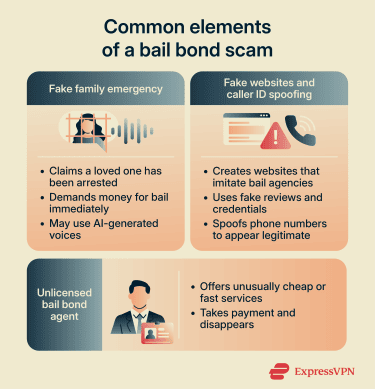
Fraudulent bail bond agent scams
Scammers pose as licensed bail bond agents and contact families, claiming they can quickly arrange a release. Sometimes they lure their victims with unrealistically low "premiums" that legitimate bail bond agents would not normally offer.
Once a family engages, the scammer may demand immediate payment, add unexpected processing or administrative charges, or claim that urgent action is required to avoid additional legal consequences.
Requests are often accompanied by pressure tactics, such as warnings that bail or premium amounts will increase or that release opportunities will be lost unless payment is made immediately.
How to avoid bail bond scams
The most effective way to avoid a bail bond scam is to verify every claim before sending money or sharing personal information. Taking a few extra minutes to confirm the details can significantly reduce your risk.
Steps to take before sending money
The steps below apply regardless of how credible the caller sounds, how specific their information is, or how urgent they claim the situation is. Each one adds a layer of verification that helps reduce the chances of getting scammed.
Before making any payment:
- Verify the arrest and bond amount through independent sources.
- Request written documentation and review it carefully.
- Contact the alleged detainee through a known phone number if possible.
- Consult other family members before making a decision.
If someone insists that verification isn't possible or claims there's no time to check the details, treat that as a warning sign.
It's also worth being very cautious about links sent through unsolicited text messages. A bail bond text message may direct you to a fraudulent website designed to collect payment information or personal data.
Confirm you’re dealing with a legitimate bail bond agent
If you’ve already verified that the arrest is real, you should also check that the person you're dealing with meets the following criteria before discussing payment.
They hold a verifiable state license
Every legitimate bail bond agent must be licensed by a state agency. That license is on record with the state and can be looked up independently using an agent's name or license number through the relevant website.
When verifying the agent’s credentials, look for:
- A valid license number
- A registered business name
- A physical office address
- A professional website and contact information
- Consistent information across official records
They provide verifiable arrest and bond amount details
A genuine bail bond agent should be able to provide details about the jail, court, case number, charges, or bond amount. Verify this information independently by contacting the local police department, sheriff's office, court, or jail directly, rather than relying on contact information supplied by the caller.
They charge a regulated, transparent fee
In most states, the premium is set by law, not negotiated. The most common rate is 10%-15% of the bail amount, though rates vary by jurisdiction. Legitimate bail bond agencies explain their fees upfront, provide written agreements, and issue receipts for payments. Be wary of agents who demand payment before providing paperwork, add unexpected charges, or offer unusually low premiums.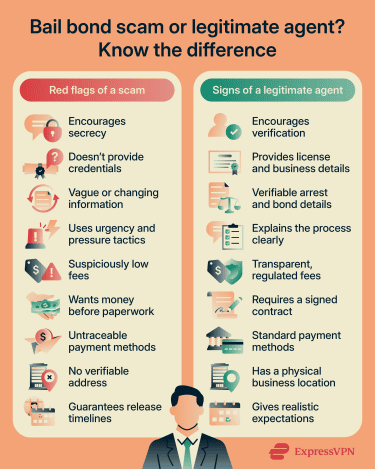
They require a signed contract
A genuine bail bond agent will require a signed contract and provide clear documentation. They will go over the details with you clearly and in full. No legitimate bail transaction can be completed without documented paperwork that clearly outlines fees, terms, collateral requirements, and obligations.
They're honest about release timelines
Real bail bond agents provide clear expectations and detailed explanations of the time frame. They don't pressure you to pay without explaining how long it takes. No bail bond agent can guarantee an instant or specific release time. That's determined by the jail's processing workload, not the agent.
They don’t rely on pressure or secrecy
Scammers often create urgency to prevent victims from verifying information. They may insist that immediate payment is required, discourage the victim from contacting family members, or become hostile when questioned. A legitimate bail bond agent should be willing to answer questions, explain the process, and allow you time to review documentation before making a decision.
They use traceable payment methods
Legitimate bail transactions follow a traceable, documented process, with payment methods generally including cash, checks, money orders, and sometimes credit and debit cards depending on the jurisdiction.
Scammers, on the other hand, often rely on untraceable or hard-to-reverse methods like cryptocurrency, gift cards, wire transfers, and mobile P2P services.
Safe ways to handle bail payments
Here are a few additional payment-related rules worth keeping in mind:
- Always ask for a written receipt for any payment made to a bail bond agent.
- Keep copies of contracts and agreements.
- Review all fees before authorizing payment.
- Pay through established business channels. Never pay to an agent’s personal account.
- Take down the name of every person you speak to, along with dates, times, and details of the conversation. This documentation is useful if anything goes wrong.
Real bail bond scam examples and lessons
The real-world examples below show how bail bond scams can play out in documented cases.
Fake electronic bond payments: Maricopa County, Arizona
Even when an arrest or case is real, the payment request may still be fake.
In January 2026, the Judicial Branch of Arizona in Maricopa County warned about a bond scam targeting family members of defendants. Scammers posing as court officials or law enforcement officers contacted relatives by phone or text and told them they could post a bond electronically, through Zelle, to secure a family member’s release from jail.
At the time of the warning, officials said there were three known victims, with reported losses ranging from $300 to $1,750. Some callers also claimed the money was needed for release-related costs, such as electronic monitoring equipment.
The scam worked because it targeted people who had a real reason to be worried: a family member was involved in the court system or in custody. But Maricopa County officials emphasized that the court and sheriff’s office do not ask for bonds to be posted by phone, text, or electronic payment. In that county, criminal bonds must be posted in person with the Maricopa County Sheriff’s Office.
AI voice cloning case: Los Angeles, California
In a case reported in Los Angeles in 2024, a man received a call he believed was from his son. The "son" told him that he’d been in a car accident and had struck a pregnant woman who was rushed to the hospital. Shortly after hanging up, the man received a second call from someone claiming to be a lawyer, who told him his son needed $9,200 for bail or would remain in custody for 45 days.
The man’s daughter withdrew the money in cash and handed it to an Uber driver the scammers had directed to the house. The phone then rang again. This time, a second caller said the pregnant woman had died, and the bail amount had been raised to $25,000. The man sent a second payment. It was only after everything had settled that they discovered what had happened.
The voice the man heard at the start of the call was an AI-generated clone of his son's, assembled from audio available on social media. The son was never in custody, and no accident had occurred.
Spoofed caller ID operation: Bergen County, New Jersey
In 2025, area law enforcement began receiving reports of residents being called by an unknown individual claiming to be either an officer from the Bergen County Sheriff's Office or a bail bond agent representing the court. The caller used caller ID spoofing, making calls appear to originate from legitimate law enforcement numbers.
Victims were told they had outstanding warrants for missing a court date or ignoring jury duty. They were instructed to meet the supposed official in person and hand over large sums of cash to avoid arrest, leading to a combined loss of $190,000 for the victims.
If you’ve been scammed: Steps to recovery
Falling victim to a bail bond scam can be disorienting, but acting quickly could help limit financial losses and reduce the risk of further fraud.
Stop payments and protect your accounts
If you've already sent money, contact your payment provider as soon as possible. Depending on the payment method, it may be possible to stop, reverse, or dispute the transaction.
If personal information, such as a Social Security number (SSN), bank account details, or credit card numbers, was shared during the scam, take additional steps beyond stopping the payment. Place a fraud alert or credit freeze with the three major credit bureaus to prevent new credit accounts from being opened in your name without your explicit authorization.
If you shared login credentials or believe your accounts may have been exposed, change your passwords immediately. Use strong, unique passwords for each account and enable multi-factor authentication (MFA) where available. Password managers like ExpressKeys can help generate and securely store unique passwords.
Additionally, monitor your accounts closely in the weeks and months that follow for any unauthorized transactions or new account activity. ExpressVPN’s Identity Defender, available to U.S. users on the Advanced and Express Pro plans, combines dark web monitoring with identity theft alerts and credit monitoring features designed to help users detect suspicious activity involving their personal information.
Gather evidence of the scam
Keeping detailed records can help when filing a police report, submitting a complaint to federal agencies, disputing a payment with your bank, or pursuing a legal claim.
Try to collect text messages, emails, call logs, voicemail recordings, screenshots of websites and advertisements, payment receipts, transaction records, names, phone numbers, and email addresses used by the scammer, and copies of any documents that were provided. Avoid deleting communications until you've completed the reporting process.
Even if the scammer used fake names or contact information, these details may help investigators identify patterns connected to other fraud cases.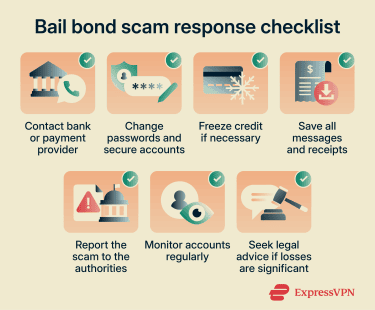
Report the bail bond scam
Reporting a bail bond scam creates an official record that may support your own recovery, and it gives law enforcement the information needed to identify patterns, connect cases, and act against organized fraud operations.
Depending on your location, you may consider reporting the incident to:
- Local law enforcement
- Consumer protection agencies
- Your state's attorney general
- The Federal Trade Commission (FTC)
- The Internet Crime Complaint Center (IC3)
If the scam involved a fake website, reporting the website might also help prevent additional victims from being targeted.
When to seek legal assistance
Some scams involve substantial financial losses, identity theft, contracts or financial agreements, denied transaction disputes, or the misuse of personal information. In these situations, consulting a consumer protection attorney or other legal professional might help you understand your options. An attorney can explain the remedies available under local laws and advise you on the next steps.
FAQ
Do bail bond companies accept gift cards or cryptocurrency?
Can I bail someone out over the phone?
Can scammers fake jail or court phone numbers?
Can a bail bondsman contact family members?
How quickly should a bondsman provide paperwork?
What information should I never share with a bondsman?
Never share your Social Security number, bank account, credit card details, or online account passwords with someone claiming to be a bail bond agent, especially over an unsolicited call or text. A legitimate agent only needs information directly tied to the bail transaction, such as the defendant's name and case details, and even then, only after you've verified the agent's identity.
Can I dispute a fraudulent bail bond payment?