ChatGPT age verification: What it means for your privacy and access


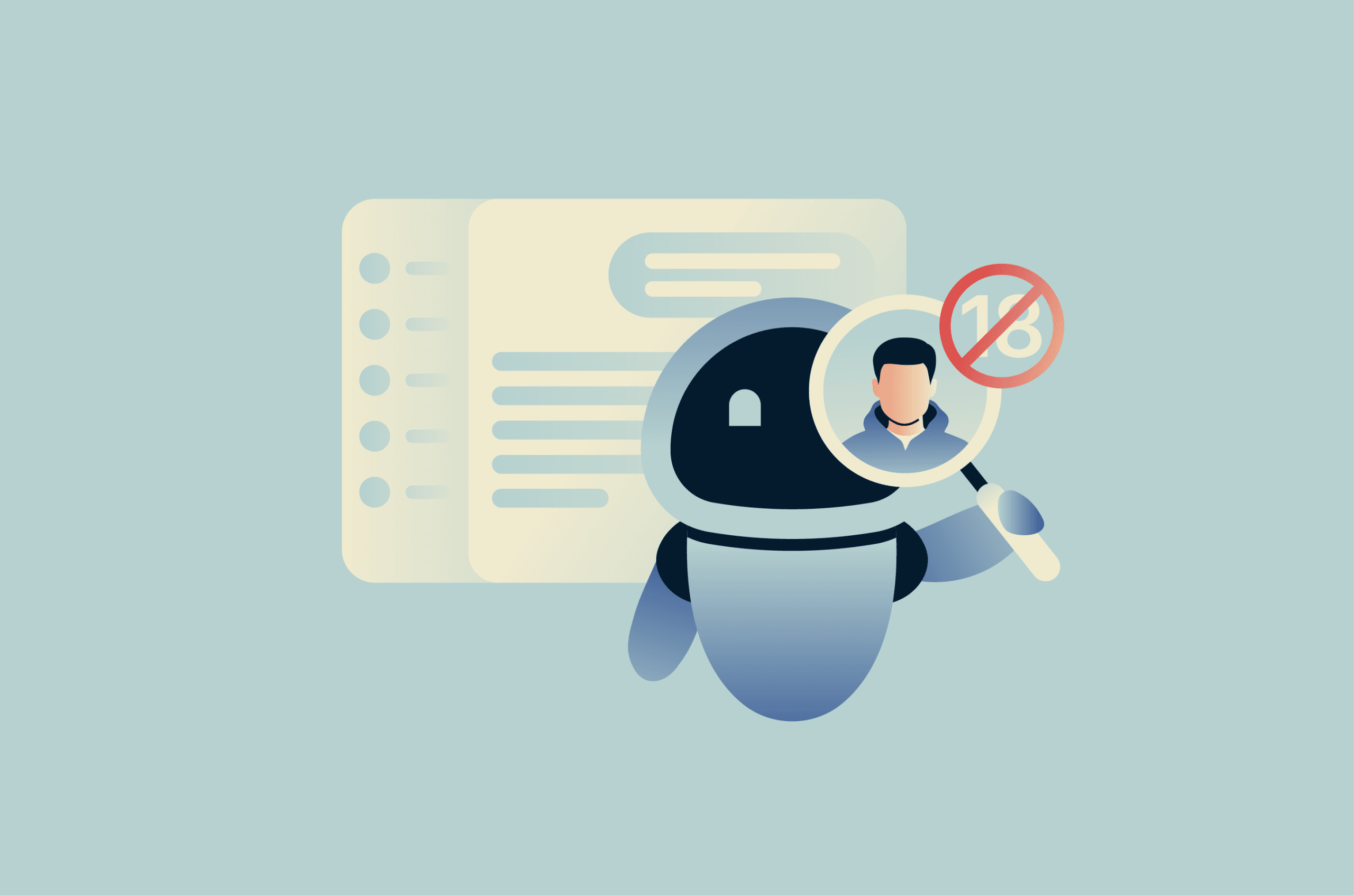
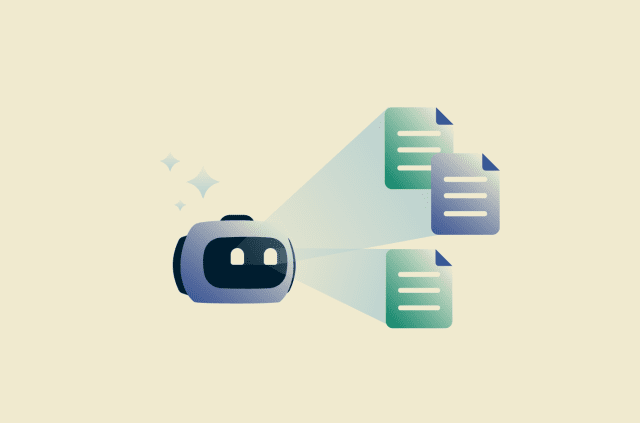
In January 2026, OpenAI introduced an age prediction system that identifies whether a ChatGPT account likely belongs to a user under 18 and applies stricter content rules to those accounts, framing the feature as part of its broader teen safety work.
What is ChatGPT age verification?
ChatGPT age prediction is OpenAI's system for automatically identifying when a user is likely to be under 18 and applying additional restrictions accordingly.
ChatGPT has long applied stricter rules to accounts where users self-identified as being under 18 at signup. What's new is the automated layer: ChatGPT now estimates age from account activity and usage patterns, so the under-18 experience can apply even if a user didn't declare their age or provided a false one.
If an adult account gets placed in the under-18 experience, the user can verify their age through a third-party service using a selfie, a government ID, or both.
OpenAI's terms set 13 as the minimum age for using ChatGPT, with parental consent required for users under 18. Accounts placed in the under-18 experience can encounter stricter limits around topics like self-harm, sexual content, and dangerous activities.
The context around ChatGPT's age checks
OpenAI has framed age prediction as a way to apply the right safeguards to accounts that likely belong to teens. In a September 2025 blog post, OpenAI CEO Sam Altman said the company would prioritize teen safety over privacy and freedom. He acknowledged that ID checks in some countries would be a privacy tradeoff for adults but said that this was a worthwhile tradeoff.
The rollout has happened against a backdrop of public scrutiny over how AI chatbots affect users. In August 2025, the parents of a 16-year-old in California sued OpenAI. Their son had died by suicide earlier that year. The complaint alleges that ChatGPT contributed to his death. OpenAI denied liability in November 2025, and the case is ongoing. Other lawsuits making similar claims have since been filed against OpenAI in California state courts.
OpenAI has also tied verification to product changes for adults. In October 2025, Altman announced that verified adults would gain access to more permissive content, including erotica. He described the change as part of treating adult users like adults.
Regulators have also been examining how AI chatbots affect minors. The Federal Trade Commission (FTC), the U.S. agency that oversees consumer protection, opened a formal inquiry in September 2025 that named OpenAI among seven companies whose chatbots it would study. The inquiry focuses on how these chatbots affect children and teens.
How ChatGPT may estimate your age
An ID check usually only happens after the age prediction model has already flagged an account. It may also be required in certain regions to keep using ChatGPT, regardless of how the model has classified the account.
Account signals and usage patterns
OpenAI's age prediction model uses a combination of behavioral and account-level signals to estimate whether an account belongs to someone under 18. These include how long the account has existed, the typical times of day the account is active, usage patterns over time, and the age the user entered at signup. Users can check whether safeguards have been added in their account settings.
Why predictions can be wrong
OpenAI has acknowledged that the model isn't always accurate and that when it's uncertain about a user's age, it defaults to the under-18 experience. Because the model relies on signals like account history, usage timing, and behavioral patterns rather than direct identity checks, accounts that fall outside typical adult patterns can be flagged incorrectly.
Adults placed in the under-18 experience by mistake can confirm their age through Persona, a third-party identity verification service.
What the under-18 experience looks like
Accounts flagged as likely belonging to a minor see a narrower version of ChatGPT. The user can still ask questions, learn, and create. The model just handles certain topics differently.
Restricted content and features
For linked teen accounts, OpenAI applies a set of automatic content protections, including reduced graphic content, viral challenges, sexual or romantic roleplay, and extreme beauty ideals. Parents can turn this setting off, but teens cannot. OpenAI also doesn't show ads in accounts placed in the under-18 experience.
Parental controls and notifications
OpenAI rolled out parental controls in September 2025. A parent links their account with their teen's account through an email or phone invitation and manages settings from a single control page.
On top of the automatic content protections, parents can set quiet hours, turn off voice mode, turn off memory, remove image generation, and opt the teen's conversations out of model training.
Parents can also receive an alert if OpenAI's systems and trained reviewers detect possible signs of serious self-harm risk. Alerts can be delivered by SMS, email, or push notification.
Parents don't get access to the teen's conversations, only a notification with information needed to support the teen's safety. OpenAI has said that in a rare emergency, if it can't reach a parent, it may involve law enforcement as a next step. Teens can unlink the account at any time, and the parent is notified if they do.
Related: Internet safety for kids: 10 rules every parent must know
How the verification process works
Verification runs through a third-party service rather than OpenAI itself. The provider depends on your location.
Selfie and ID checks through Persona
For most regions, OpenAI uses Persona. The verification option appears in Settings > Account when an account is in under-18 mode.
Depending on the country, Persona may ask for a live selfie taken through a phone or webcam, a photo of a government-issued ID such as a driver's license or passport, or both.
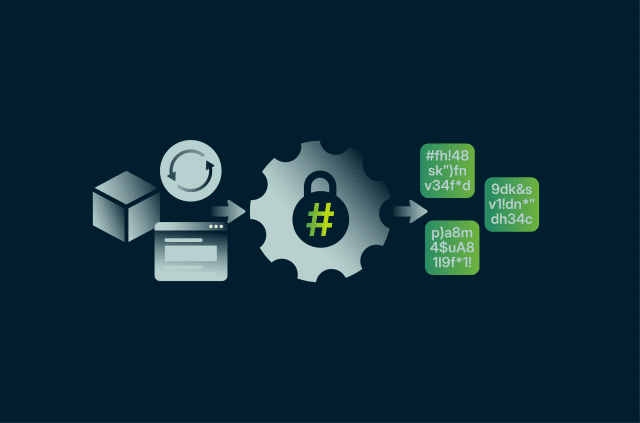
Persona checks the date of birth on the ID and confirms the selfie matches the ID photo. OpenAI's help center states that OpenAI doesn't receive the ID or selfie. It receives only the user's date of birth or an age prediction. Persona deletes the ID or selfie within 7 days of verification.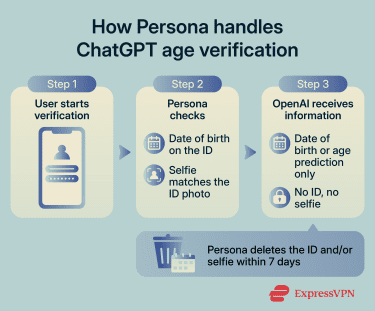
Yoti
OpenAI's help center separately describes a verification flow using a different third-party service called Yoti. In that flow, users see a banner at login asking them to verify within 60 days, after which access to ChatGPT is disabled until they complete the check. The check can involve a selfie, an ID upload, or the use of the Yoti app. Italy is the country OpenAI specifically names as using Yoti in its age prediction article.
A third service, Stripe, is also referenced in OpenAI's help materials, though OpenAI doesn't describe when a user would encounter it.
Privacy and safety considerations of age verification
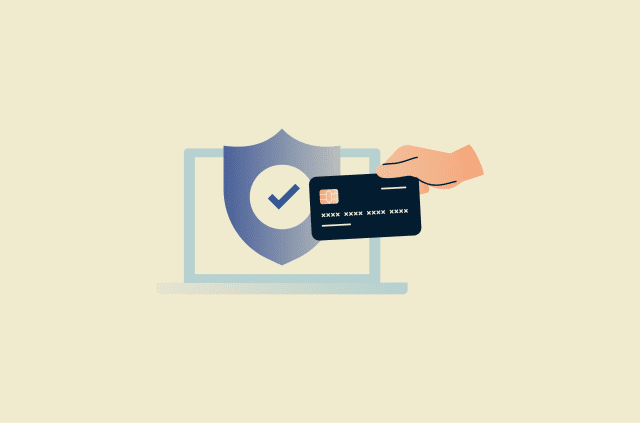
A face photo and a government ID are sensitive data, and the verification process raises real questions about what gets collected, who can access it, and for how long.
What data is collected and how long it's kept
Persona's privacy policy lists what the company collects during a check: a scan of facial geometry from the selfie and ID photos, plus standard identity details like name and date of birth. Persona describes itself as a processor acting on behalf of its customers, with retention set by those customers.
For Persona-based ChatGPT verifications, OpenAI's policy sets a 7-day deletion period for the ID or selfie. Persona's broader policy states that, where customer instructions allow, facial geometry data can be retained for up to three years from the user's last interaction. But OpenAI's 7-day instruction is what applies to ChatGPT verifications.
For users who verify through Yoti, Yoti acts as a processor on behalf of the client requesting the age check (OpenAI, in the case of ChatGPT). Yoti's policy states that for most age-checking methods, the selfie or ID data is deleted as soon as the check is complete. The results of the check, such as a date of birth or over-18 confirmation, are stored by Yoti on behalf of the client for 6 months, unless the client deletes them sooner.
Related: Is ChatGPT safe?
How to handle a verification prompt safely
Phishing campaigns have been known to impersonate well-known AI brands, and an age check request is something attackers can mimic. In March 2026, cybersecurity research team SpiderLabs uncovered fake ChatGPT and Gemini iOS apps on the Apple App Store. The apps were marketed as advertising and business tools. Once installed, they prompted users to enter their Facebook logins through a fake sign-in screen.
In January 2026, marketing professional Adriaan Dekker exposed a separate scam on Apple's TestFlight, a service developers use to distribute beta versions of their apps. The scam impersonated OpenAI and invited marketers to test a fake "OpenAI Advertising GPT" product.
Neither scam specifically targeted age verification, but the same playbook of impersonating OpenAI through plausible-looking pages or apps could just as easily be used to push fake verification prompts. That’s why it’s essential to confirm the request is really from OpenAI.
Real verification starts from inside ChatGPT once you're signed in, not from a link in an unsolicited message. If you get an email, SMS, or notification claiming to be from OpenAI about age verification, ignore the link and open ChatGPT yourself.
OpenAI's age check asks for a government ID photo and, depending on the country, a live selfie. It doesn't need your home address, bank details, or anything else outside that scope. A page asking for more is a red flag.
Can you use ChatGPT without age verification?
In most markets, verification is offered as a way for adults to remove the under-18 restrictions, not as a requirement. If you don't verify, your account stays active, and you can keep using ChatGPT with the protections in place. Switching to a different AI platform that doesn't require an age check is another option.
Italy is the country OpenAI specifically names as requiring verification to keep using ChatGPT. The stricter rule reflects Italy's longer history of regulatory action regarding ChatGPT. The Italian data protection authority briefly banned the service in March 2023 over concerns about compliance with the General Data Protection Regulation (GDPR). Access was reinstated after OpenAI added age gating and other protections. The authority later fined OpenAI €15 million (about $15.58 million) in December 2024 over related violations (although a Rome court later annulled that fine).
How rules differ by region
The changes discussed above reflect a broader shift toward treating AI chatbots more like other online platforms that are expected to manage child safety risks proactively.
The pace of change varies by region. In the EU, ChatGPT falls under the Digital Services Act. This requires platforms to maintain a high level of safety, privacy, and security for minors. In the U.S., there's no federal law requiring AI chatbots to verify user ages. Several states, though, have begun passing laws of their own. These require chatbot operators to maintain self-harm protocols and clearly disclose to users that they're not speaking to a human.
How to stay safer when using AI chatbots
A few simple habits cut down on what data AI tools collect about you, regardless of whether you go through the age verification process or not.
Limit personal information in prompts
Don't share names, addresses, ID numbers, financial details, health information, or any sensitive data in your AI prompts. Anything you type into a chatbot may be stored and processed and, depending on your settings, could be used to improve the model.
Review privacy settings regularly
Even if you don’t verify your age, it’s still worth checking your ChatGPT data settings. If you don’t want your conversations used to train the model, turn off Improve the model for everyone under Settings > Data Controls.
For one-off questions you don't want stored, use Temporary Chat. Temporary Chats don't appear in your history, don't reference your saved memories, and won't be used to train OpenAI's models. You can start one by clicking the dotted-circle icon in the top-right corner of the ChatGPT interface.
Review what ChatGPT remembers about you under Settings > Personalization > Memory. From there, you can see saved memories, delete specific ones, or turn the memory feature off entirely.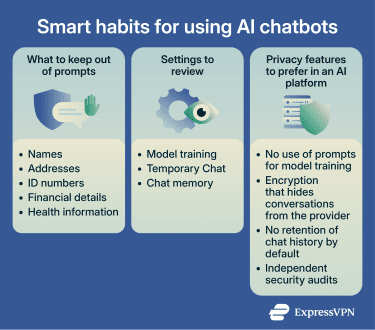
Use trusted security and privacy tools
Trusted privacy and security tools can reduce risks like data exposure, account compromise, and online tracking when using AI platforms.
A virtual private network (VPN) encrypts your internet traffic and hides your IP address. On public or shared Wi-Fi, this prevents the network operator and others on the same network from seeing which AI services you're using.
Furthermore, tools like ExpressKeys generate and store strong, unique passwords for each of your accounts. Reusing the same password across services means a breach of one account can compromise others, including your AI tools, where conversation histories and personal information may be stored.
Finally, switching to a privacy-first AI platform is another option, and likely the most impactful one in terms of improving your privacy. ExpressAI processes prompts inside confidential computing enclaves and uses zero-access encryption, so conversations aren't visible to ExpressVPN, model providers, or the host infrastructure. The architecture was independently audited by Cure53, a Berlin-based security firm that audits software code.
FAQ
Why did ChatGPT suddenly ask me to verify my age?
Does ChatGPT age verification mean OpenAI stores my ID?
Can parents manage ChatGPT access for teens?
What should I do if my age is detected incorrectly by ChatGPT?
Are ChatGPT age checks the same in every country?
How can I spot a fake ChatGPT verification page?