Filter bubble explained: How algorithms shape what you see online


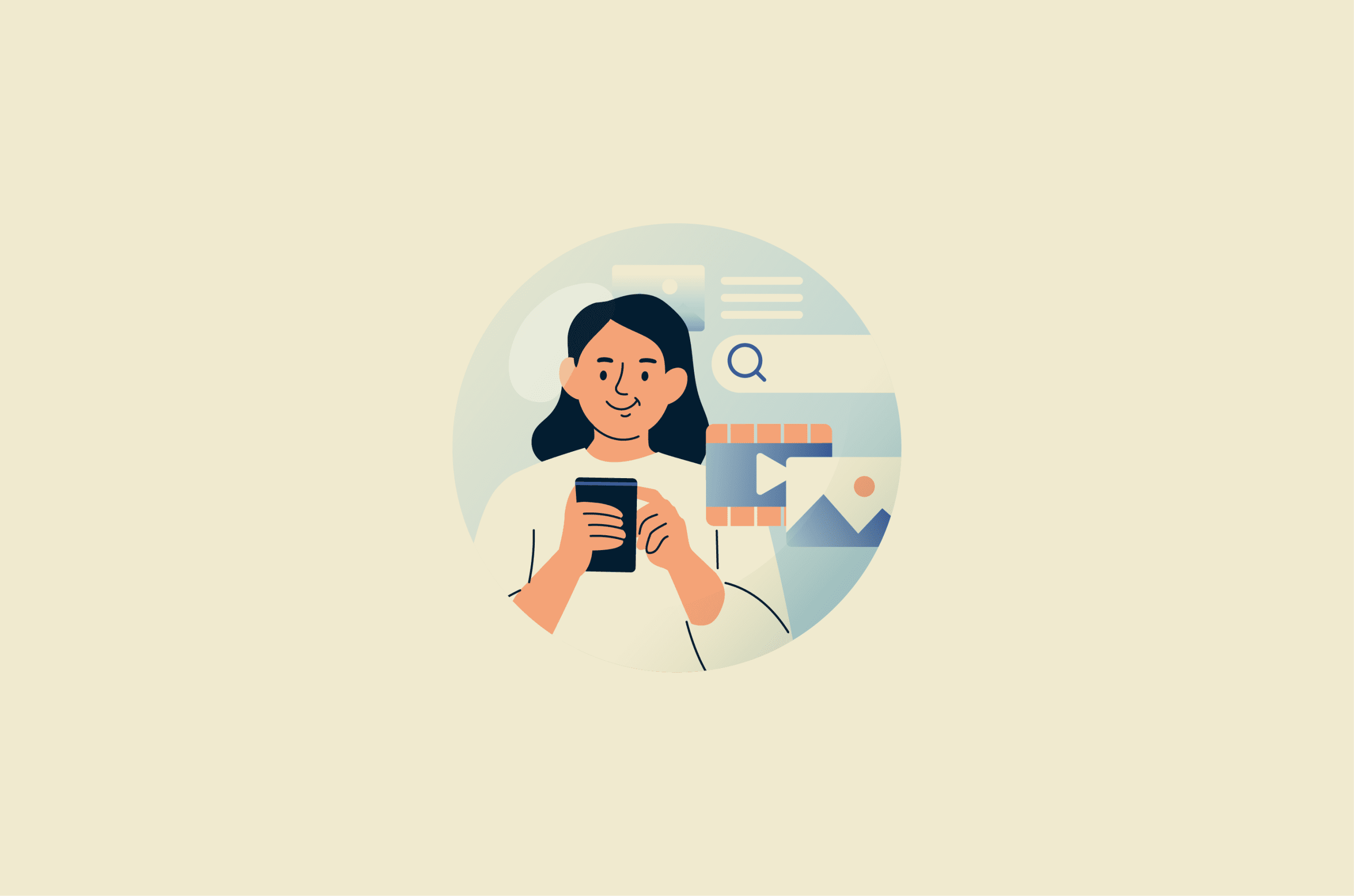
Online platforms, including search engines, social media apps, and video-sharing sites, try to show you content that you’re more likely to engage with. This can make the internet feel more relevant, but it can also create a filter bubble, an environment that limits your exposure to diverse viewpoints and information.
In this article, we explore how filter bubbles work, why they matter, and what you can do to broaden your online perspective.
What is a filter bubble?
The term “filter bubble” was coined in 2011 by internet activist and author Eli Pariser to describe a personalized digital environment that can limit the range of content and viewpoints you’re exposed to.
For example, if you often read articles about wildlife, when you search for “jaguar,” you might get a lot of results relating to the animal. Your friend, who is a car enthusiast, might search the same term and see more results about the car brand. Both you and your friend are in your own filter bubbles.
How do filter bubbles work?
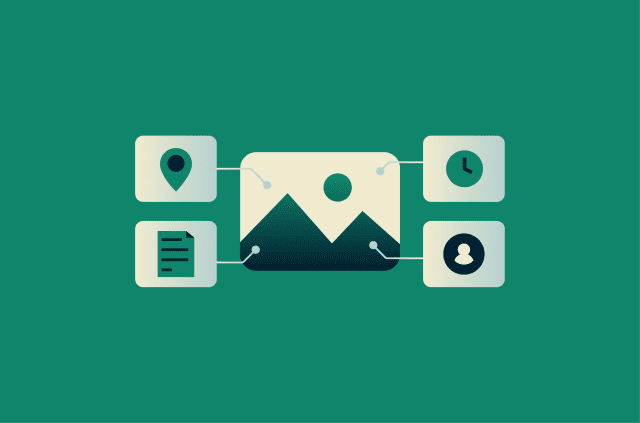
Filter bubbles form because online platforms use personalization algorithms to decide what content to show each user. These are sets of rules and machine learning systems that analyze your activity to determine which content might be most relevant or interesting to you.
Activities taken into account may include:
- Searches you perform.
- Links you click on.
- Videos or articles you watch or read.
- Likes, shares, and comments you make.
- Accounts, pages, or communities you follow.
Filter bubbles are also often self-reinforcing. If you engage with content the algorithm presents based on its analysis, it's taken as another signal of your interest, which pushes more content of that type into your feed.
Filter bubble vs. echo chamber
The terms “filter bubble” and “echo chamber” are often seen in close proximity and may even be used interchangeably by some people. However, they’re not the same thing.
An echo chamber is a situation where a user is exposed mostly to information that reinforces their existing beliefs. For example, a community forum for people of a particular political ideology might be considered an echo chamber because the posts and discussions there are likely to reflect similar viewpoints.
A filter bubble, on the other hand, is created by algorithms. Online platforms personalize what you see based on your past behavior, so you’re more likely to be shown content that you’ll be likely to engage with, which often aligns with your existing interests or views.
Filter bubbles can contribute to the formation of echo chambers by limiting exposure to diverse perspectives. However, echo chambers can also form naturally, as people tend to seek out and connect with others who share their views, even without algorithmic influence. In short, filter bubbles are driven by algorithms, while echo chambers are driven by human behavior, but the two often reinforce each other.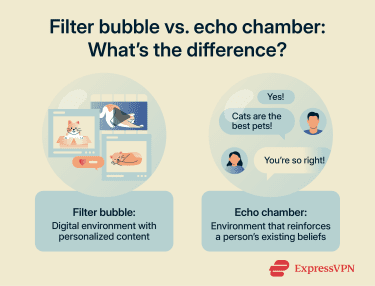
Real-world filter bubble examples
Filter bubbles can appear in a lot of the online spaces we use every day. Some common examples include:
- News and political content: News sites may highlight stories based on your reading history. As a result, you might see certain political viewpoints or policy issues more prominently on your front page or in the “related articles” sidebar.
- Social media feeds: Social media algorithms decide which posts, videos, or accounts appear in your feed based on your previous interactions (e.g., likes or comments) and the types of accounts you follow. Short-form video platforms like TikTok, YouTube Shorts, and Instagram Reels are examples of where highly responsive algorithms can rapidly reinforce your interests, creating strong feedback loops.
- Search results and online shopping: Search engines and e-commerce sites may rank results and product recommendations based on your previous searches, clicks, or purchases. This can make some topics or products more or less visible to you.
Why filter bubbles matter
Filter bubbles matter because they can limit the types of information we receive, and what we know shapes the choices we make. At the same time, there are sound arguments for why we might not want to get rid of personalization entirely.
Benefits of personalized content
For online platforms, personalizing content improves user retention, increases engagement, and ultimately drives revenue through ads or subscriptions.
For individuals, there are also some clear benefits. The first is relevance. You’re more likely to see content, products, or posts that match your interests. This can make browsing the web feel more efficient, useful, and engaging.
Second, personalization can reduce information overload. If a music streaming service didn’t recommend playlists or tracks that fit your tastes, finding a new song or artist to listen to could be a daunting task because of the vast number of options out there.
Risks of limited information exposure
One of the biggest issues with personalization algorithms and filter bubbles is how they can limit the diversity of information and perspectives we encounter online.
This could have several negative effects, including:
- Limiting social and cultural exploration: Filter bubbles can reduce chances to discover new communities, experiences, or ideas outside a person’s usual online habits.
- Amplifying extreme content: Narrow exposure may increase the prominence of extreme or polarizing content over time.
- Undermining critical thinking: Seeing mostly similar viewpoints can reduce opportunities to question assumptions or consider alternative perspectives.
- Reinforcing existing inequalities or stereotypes: Because personalization algorithms are designed by humans and may be trained on historical data, they can unintentionally favor certain topics or viewpoints, perpetuating existing biases.
Some research suggests that young people are especially vulnerable because their thinking and social understanding are still developing. They also tend to spend more time online and rely heavily on digital platforms for information and social interaction. However, adults are certainly not immune.
The issue of limited information exposure is exacerbated by the fact that personalization algorithms often operate with limited transparency to users, and users may have limited awareness or understanding of how their online experience is being shaped.
How to break out of a filter bubble
Educating yourself on filter bubbles and how they shape the information you receive is a first step, but actually changing your online environment will take ongoing effort. Here are some tips.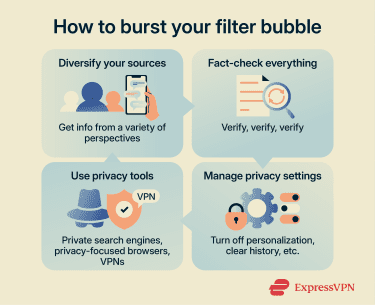
Diversify the sources you follow
Every source has its own biases. For example, a news site you frequent might lean toward a particular political ideology, which can affect what they choose to report and how they cover it.
If you’re trying to break out of a filter bubble, it can help to follow a mix of news outlets and creators. Diversifying your information diet can help reveal any blind spots and provide a broader perspective.
It can be helpful to occasionally engage with content from differing viewpoints, even if what they say makes you frustrated or uncomfortable. Shutting yourself off from perspectives you disagree with can limit your understanding of complex issues.
Remember that passive scrolling tends to reinforce filter bubbles, while actively searching for information or comparing sources can help counteract them.
Fact-check what you read
Filter bubbles tend to deliver content you like and agree with. They prioritize content you’re likely to engage with, rather than considering whether it’s accurate or balanced.
The problem is, sometimes the important truths are unpleasant or disagreeable. Therefore, it's important to approach everything you see online with a critical eye. Verify claims using multiple sources and be prepared to adjust your understanding if new information emerges.
Reset and refine your recommendations
On some online platforms, you can manage what appears in your feed by adjusting personalization settings or clearing your search and watch history. This can reset what the platform's algorithm “knows” about you, exposing you to a wider variety of content.
Use private search and browsing tools
Online platforms can collect lots of data on your online activity by using trackers to follow you across sites and apps. This allows them to personalize content, including targeted ads and recommended posts or products, and can contribute to the formation of filter bubbles.
To limit this form of online tracking, you can use private search engines like DuckDuckGo. These search engines are designed not to store your search history or build detailed user profiles for personalization, unlike many mainstream search engines. You can also try switching between multiple search engines to get a diverse range of results.
You might also consider using a privacy-focused browser like Brave or Firefox. These browsers tend to have built-in features that block trackers and limit the data that websites can collect about you, especially when you’re not logged into accounts.
Finally, using a virtual private network (VPN) like ExpressVPN can help protect your privacy while browsing by masking your IP address, a unique number that websites and advertisers can use to track your device across the internet. It’s important to note, though, that a VPN won't stop platforms from tailoring content based on other signals, like your past searches, clicks, or account activity.
FAQ: Common questions about filter bubbles
Can filter bubbles influence political opinions?
Are filter bubbles always harmful?
How can I tell if I’m in a filter bubble?
Do search engines create filter bubbles?
Can a VPN reduce a filter bubble?
Take the first step to protect yourself online. Try ExpressVPN risk-free.
Get ExpressVPN