AliExpress scams explained: The most common tricks and how to avoid them


AliExpress is one of the world’s most popular online marketplaces. It offers a diverse range of products at affordable prices, attracting millions of shoppers. Unfortunately, the platform’s popularity also makes it a prime place for scammers to operate.
This guide explores the various types of AliExpress scams to watch out for, along with tips on how to spot scammers, how to avoid them, and what to do if you fall victim to a scam.
What are AliExpress scams?
AliExpress scams are various fraudulent and deceptive tactics that cybercriminals use to trick shoppers on AliExpress. While they vary in terms of methodology, the end goals are often the same: to deceive a user into buying a fake, low-quality, or non-existent item or to trick them into taking some other action, like giving away their personal information.
Why shoppers get scammed on AliExpress
AliExpress has become a popular hunting ground for scammers for several reasons:
- Popularity: Millions of people shop on AliExpress, which gives scammers a huge pool of potential victims to target. While many may be technologically savvy enough to spot and avoid their tricks, others may fall into their traps.
- Low barriers to entry: It’s quite easy to start selling on AliExpress. This allows scammers to quickly set up new accounts and launch scams without having to pass background checks, etc.
- Low prices: AliExpress is famous for its affordable prices, which is largely due to the fact it lets shoppers buy through cross-border listings that often involve lower overhead, intense seller competition, and fewer layers of retail markup.
Is AliExpress safe to use?
Generally speaking, AliExpress is safe to use. It’s a legitimate online shopping platform with several consumer protection features in place designed to keep buyers safe, including:
- Buyer Protection program: AliExpress' Buyer Protection covers eligible items with the label “Buyer protection” and grants buyers the right to dispute transactions and request refunds if they're not satisfied with the items they receive or if their items fail to arrive.
- Reviews and ratings: Sellers on AliExpress are rated by shoppers, who can also write reviews for items they buy. While this system is not perfect and can be manipulated, it still helps shoppers discern between trusted and suspicious stores.
- Badges and tags: AliExpress also attaches special badges and tags (for example, “Brand+”) to stores that meet certain criteria.
Read more: Unsure about a website? Learn how to tell whether a shopping website is fake.
The most common AliExpress scams
The first step to minimizing the risk of online shopping fraud on AliExpress is understanding the types of scams that exist on the platform. From lying about their products to providing fake tracking numbers, there are numerous ways in which AliExpress scammers operate.
Price switching
Price switching or bait-and-switch scams involve sellers tricking buyers into thinking that they’re getting an item much cheaper than they really are. They usually do this by creating a listing that contains multiple products, with some being much cheaper than others, and market the listing using the cheapest possible price.
For example, a seller might list a variety of power bank models and charging cables in the same listing. The cables will naturally be much cheaper than the power banks themselves. So, the scammer creates the listing to look as though the cable price is actually the price for a power bank. Some users will think they’re getting a great deal, so add a power bank to their cart.
Often, it’s only on the checkout page that the real price may appear. By that point, some users may already be distracted or in a hurry to check out.
Misleading product descriptions
Some scam sellers create product listings that make products look much better than they really are. The listings may include edited or AI-generated images, as well as exaggerated claims and false specifications in the product description.
Some scammers take this a bit further by hiding what a listing is actually selling in plain sight. A product page might be technically accurate, including the item name, dimensions, and specifications are all there, but the headline image and title are designed to draw attention away from those details. A buyer focused on the photos can easily miss that what's actually being sold is a phone stand rather than the phone or a watch strap rather than the watch.
The biggest problem with these listings is that buyers can sometimes struggle to get a refund, as sellers may argue that the buyer simply didn’t read the product page properly.
Non-delivery scams
This involves scammers setting up fake storefronts with no intention of shipping anything at all. They may use AI and stock images to create eye-catching product listings, while also setting low prices to lure in more potential victims. In reality, they usually don’t have anything to actually sell.
Once payment is collected, they usually disappear, or in some cases, ship something near-worthless like an empty parcel so they can argue that an order was delivered.
These sellers count on buyers not following through with the dispute process. Going through it takes time and effort, and scammers hope that a portion of victims will simply give up, letting them keep the money before their store is eventually reported and removed.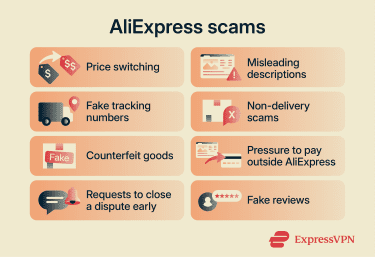
Counterfeit products
As mentioned above, AliExpress has buyer-protection and enforcement systems, but counterfeit and illegal listings still appear on the platform. Sellers may market something as being a premium quality or made by a well-known, trusted brand but actually ship out fake or imitation goods instead.
Pressure to pay outside AliExpress (Payment fraud)
Payment fraud scams on AliExpress usually involve sellers messaging customers, asking them to pay for their products outside of the platform. They might even offer the buyer an incentive, like a discount, if they pay them via bank transfer or some other method instead of using the payment options on the app/site itself.
However, more often than not, any request to pay off-platform is the first step in a scam. The seller can simply take the money and not send you any items, and the buyer won’t be covered by AliExpress's payment security or Buyer Protection program, since the platform won’t have any record of the transaction.
Requests to close a dispute early
Some buyers report that sellers respond to complaints about missing, damaged, or not-as-described items by asking them to close the dispute first, often while promising a refund, replacement, or extra time for delivery.
This can be risky: once the dispute is closed, the buyer may be relying mainly on the seller’s promise, and if they wait too long, they may miss AliExpress’s dispute window. That can make it much harder to recover the money through the platform if the seller never follows through.
Fake reviews and inflated ratings
Many buyers check product reviews and average ratings to help them decide what to order, but you can’t always trust the reviews you see on digital marketplaces, AliExpress included. Sellers can manipulate them in various ways, like messaging customers and offering them discounts or other incentives in exchange for a five-star review.
Some sellers also use brushing scams to inflate their product ratings. This involves scammers setting up fake accounts with real people's details, sending unsolicited packages to those individuals, and then using the fake accounts to leave positive AliExpress reviews. Sellers can even manipulate their listings, switching out highly rated products for inferior alternatives.
How to check if an AliExpress seller is legit
Taking the time to research the seller may help you avoid wasting money or falling victim to the various AliExpress scams listed above.
Evaluating seller ratings
The fastest way to learn more about a seller is to look at their average store rating and the percentage of positive reviews they’ve received from customers. As a rule of thumb, look for store or seller ratings of 4.5 or higher and positive review scores of 95% or higher.
Read recent reviews carefully
Keep in mind that reviews can be faked or manipulated by scammers. Be wary of any five-star reviews that sound very generic and don't provide specific details about the item. To filter out the real reviews from possible fakes, it's also advisable to look for those that have images attached.
Checking store history and order volume
On every seller's page, you can see when their account was created and how many reviews they have. Individual product pages also show you how many units of that particular item have been sold so far. This can help you see if a seller is relatively new or has been on the platform for some time.
As a general rule, it’s best to buy from stores that have been around for at least a year, as scammer stores often get taken down quite quickly due to negative reviews and refund requests.
How to avoid AliExpress scams
Once you've found a seller worth considering, there are several steps you can take at the point of purchase to minimize your risk further.
Watch for unrealistically low prices
While AliExpress is known for its attractive, affordable prices, there are limits to its deals and discounts. Scammers on the platform may attempt to lure in victims by offering seemingly high-end goods at prices far lower than other stores or designer products for a fraction of their usual retail rates. This is usually a big red flag.
Double-check before confirming an order
Before hitting confirm, take a moment to verify the order total on the checkout page, as bait-and-switch listings sometimes only reveal the real price at this stage. It's also worth checking exactly what the listing is selling rather than just going by the headline image. A listing might be technically accurate in its specifications while being designed to draw attention away from the fact that it's selling an accessory rather than the main product. Words like "replica" or "imitation" in a product description usually indicate counterfeit goods, and slightly misspelled brand names are a common giveaway too.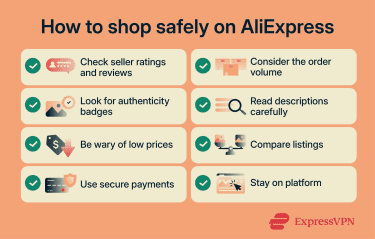
Compare listings before you buy
Many items on AliExpress are sold by multiple sellers. So, if you find something you’d like to buy, you’ll probably be able to find at least a couple of other stores selling the same thing. It’s worth looking at those other listings, reading the reviews and checking that the product details and pictures line up with one another to help you spot potential scam listings.
Use secure payment methods
AliExpress accepts a wide variety of payment methods, including credit and debit cards, digital wallets (like Apple Pay), and its own proprietary payment system: Alipay. It's best to opt for the most secure methods when buying from this platform, like:
- PayPal: This method isn’t accepted by all AliExpress sellers but is a good choice when available, as it allows you to dispute any suspicious/fraudulent charges via the PayPal website or app.
- Alipay: AliExpress’ native payment system works by holding funds in escrow and not releasing them to the seller until you've confirmed receipt of your item(s).
- Virtual or prepaid cards: Using a virtual or prepaid card with a limited balance ensures that even if your card information is stolen or compromised somehow, thieves won’t be able to steal more than the card’s maximum balance.
- Credit card: Major credit card providers will allow you to request chargebacks for fraudulent purchases. This should make it easier to get your money back when dealing with disappearing or unresponsive sellers.
Note that not all of these payment options are available in all regions.
Keep all communication on AliExpress
As a general rule for AliExpress and similar platforms, it’s best to only communicate with sellers on the site itself. Some sellers may ask you to contact them via other services, like WhatsApp or Facebook, or ask you to send money directly to their bank account. It’s much better to have a complete record of all your messages on the AliExpress platform as evidence if you need to open a dispute and request a refund.
What to do if you get scammed on AliExpress
If you’ve been scammed on AliExpress, you should report the incident and request your money back. The platform offers several ways to do this.
How to report a seller to AliExpress
You can report a seller to AliExpress’ moderation team for them to review. This can lead to fraudulent product listings being removed, sellers being warned, or stores being shut down entirely. Here’s how to do this on the AliExpress mobile app:
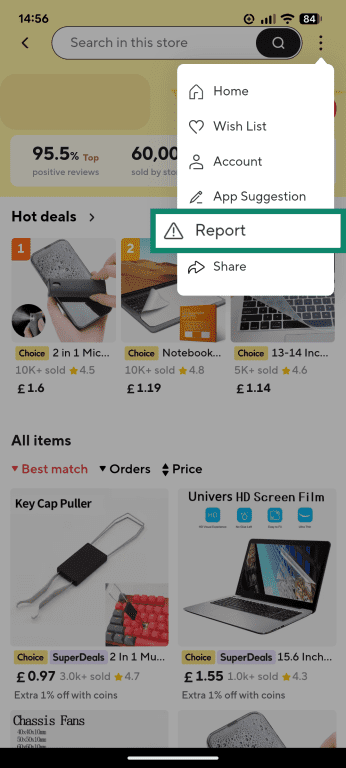
- Go to the page of the seller or store you wish to report and press the three dots button in the top-right. Then select Report.
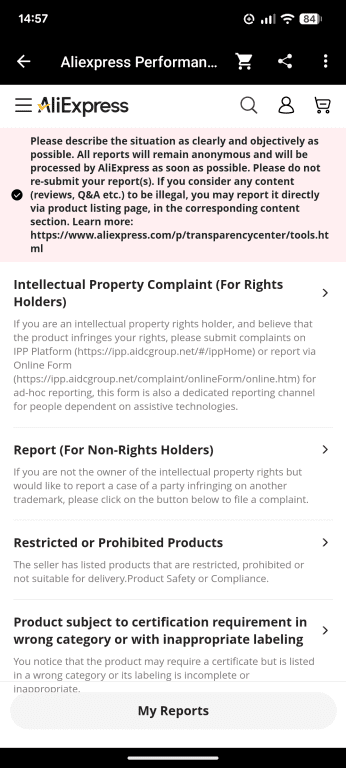
- Select the most relevant option from the list of reporting reasons, like “Restricted or Prohibited Products” or “Report (For Non-Rights Holders)” to continue.
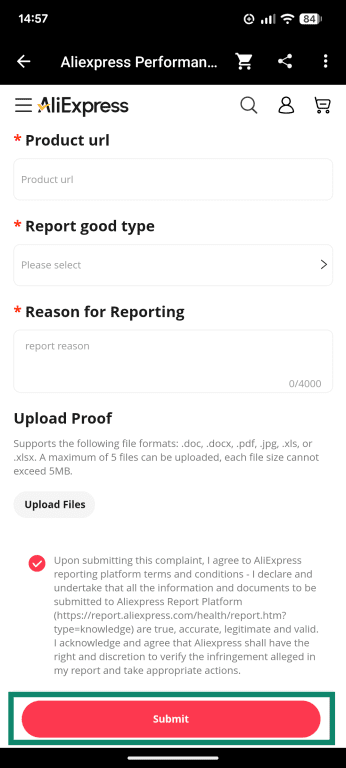
- Provide information about why you’re reporting the seller, including a URL for the product you’re complaining about and your reason for reporting. You can also submit proof in the form of images or documents. Select the Submit button to finish.
How to open a dispute
If you’ve bought an item that hasn’t arrived, didn’t match the description, or is broken or faulty, you can open a dispute via the AliExpress website or app. Here’s how to do this on the site:
- Click or tap on the Account button and go to Disputes & Reports.
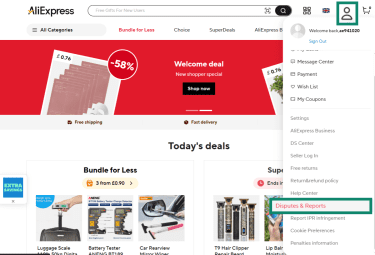
- Select the Open Dispute button.
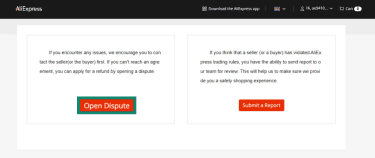
- Find the order you wish to dispute and select Open Dispute again. You can also find this option via the app by going to My Orders and clicking View Detail on the order you want to complain about.
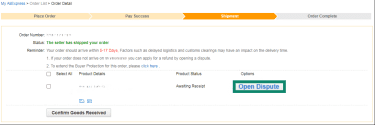
- You’ll be asked to provide some information about why you’re opening a dispute and you can also upload evidence to back up your claim, if needed. Enter the requested information and click Submit when finished.
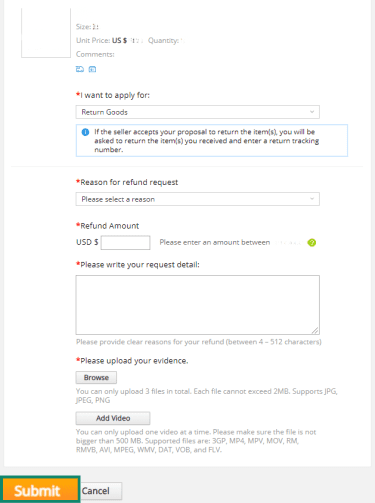
Note that there is a strict window for opening disputes: you can only do so from the 11th day after an item was marked as shipped or up to the 15th day after it arrived at the destination. After that, AliExpress’ Buyer Protection period expires, so it’s important to file disputes promptly to avoid disappointment.
Getting your money back after a scam
Opening a dispute on AliExpress and providing a clear explanation of what happened, backed up with relevant evidence, is usually the most effective way to get your money back. However, there may be other options, depending on how you paid. If you paid via PayPal, for example, you can use the PayPal Resolution Center to request a refund.
When to contact your bank or card provider
If you paid a fraudulent or scam seller via bank transfer or credit or debit card payment, you can also reach out to your bank or card provider and ask them to step in. Different banks and providers will have different policies on this, so results may vary. Credit card providers should be able to initiate a chargeback as long as you can show that you didn’t receive your item(s) or that it was not as described.
FAQ: Common questions about AliExpress scams
Why are some items on AliExpress so much cheaper than elsewhere?
Can sellers on AliExpress manipulate product reviews?
How long does it take to get a refund from AliExpress?
What happens if my order never arrives?
Can I get a refund if the product looks different from the photos?
Take the first step to protect yourself online. Try ExpressVPN risk-free.
Get ExpressVPN