 Celebrate with up to 80% off
-

Third-party vs. first-party cookies: What’s the difference and why does it matter?
First and third-party cookies are different ways websites store and access data in your web browser. First-party cookies are set and used by the website you visit, while third-party cookies come from ...
-

Online gaming security: How to stay safe from hacks, scams, and toxic players
Gaming is about more than just playing games. These days, players also chat, use voice calls, share content, and make trades. All this can happen in-game and on third-party platforms. While this adds ...
-

How to kick people off your Wi-Fi and stop them coming back
Your Wi-Fi network connects all the devices in your home, from phones and laptops to smart TVs and other connected devices. When an unknown or untrusted device joins that network, it doesn’t just us...
-
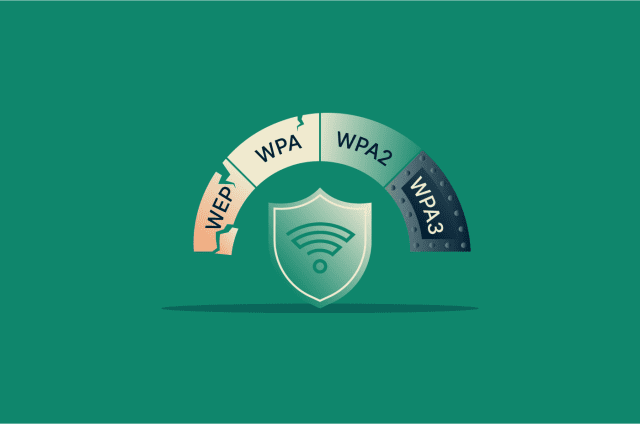
WEP vs. WPA vs. WPA2 vs. WPA3: Which Wi-Fi security keeps you safe?
Wi-Fi security standards protect wireless networks from unauthorized access and data exposure. These standards have evolved over time, from Wired Equivalent Privacy (WEP) to Wi-Fi Protected Access (WP...
-
Kronos Private Cloud (KPC) ransomware attack: What happened and what can be learned
When a payroll platform goes offline, the disruption can extend far beyond a single company. That’s what happened during the Kronos Private Cloud (KPC) ransomware attack, disclosed in December 2021,...
-

Understanding the purpose of an SPI firewall in cybersecurity
Many home routers ship with a firewall setting called Stateful Packet Inspection (SPI). When connections drop, games lag, or apps misbehave, it’s often one of the first things people think about tog...
-
How to effectively remove Chromium virus
Seeing unexpected browser behavior or an unfamiliar Chromium-based application on a device can raise questions. The term “Chromium virus” is often used as a catch-all label for a range of browser-...
-
What is Google DNS, and how does it work?
Google Public DNS is a recursive resolver in the Domain Name System (DNS) that translates domain names, such as expressvpn.com, into IP addresses. This guide covers how it works, its features, how thi...
-
Is Ahmia safe to use? What you need to know before you search
Ahmia is generally considered a legitimate search engine for browsing the dark web. It indexes publicly available sites and filters out illegal or malicious content where possible. Many users turn to ...
-

Logic bomb: Definition, examples, detection, and prevention
Among the many forms of cyberattacks, logic bombs can be particularly difficult to address. Rather than immediately attacking a system, a logic bomb is embedded in software or a system and can remain ...