Expressvpn Glossary
Network operations center (NOC)
What is a network operations center?
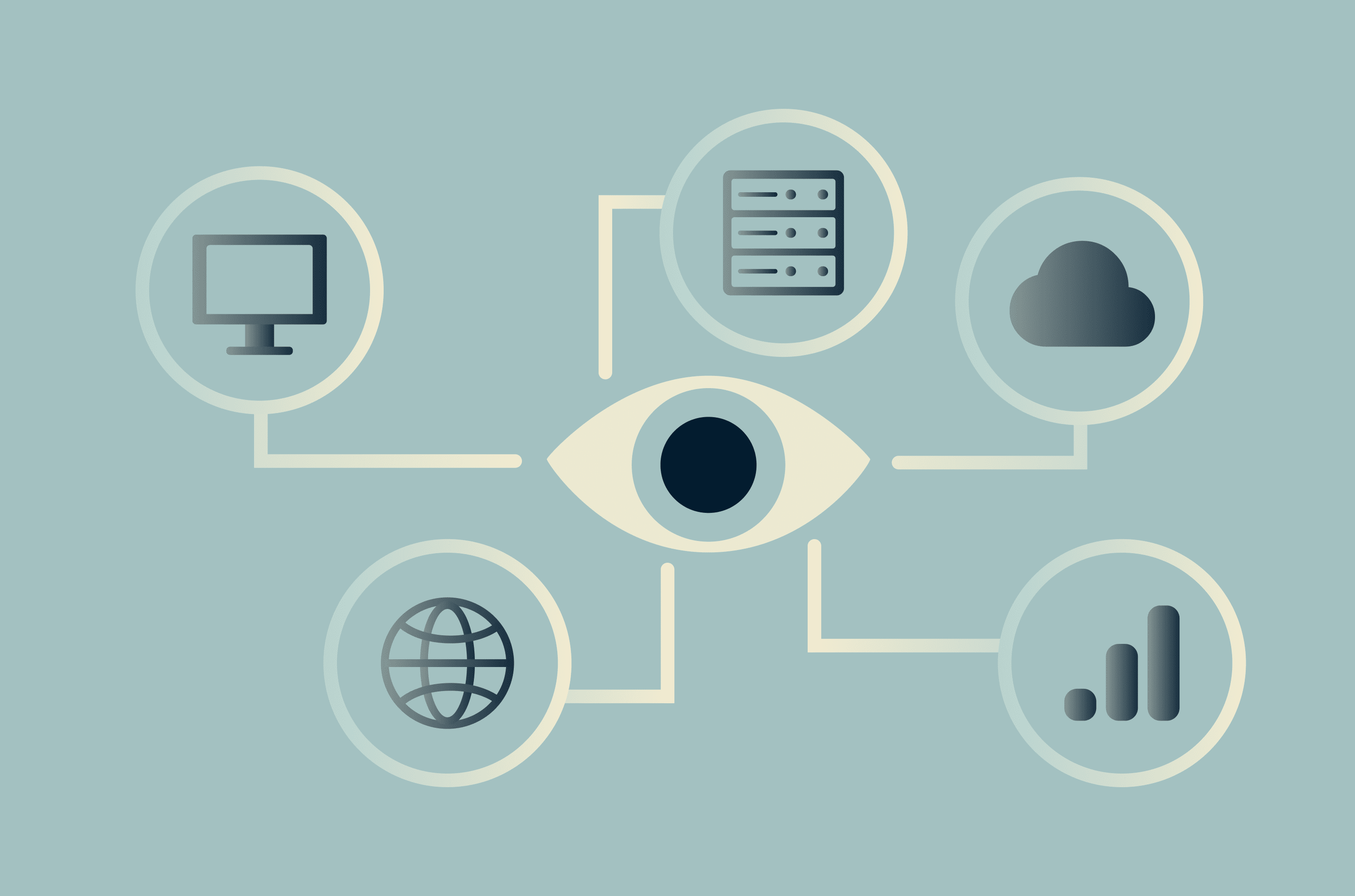
A network operations center (NOC) is a central location where IT teams monitor and manage an organization’s computer and communications networks.
From this center, technicians track network performance and availability, detect issues such as slowdowns or outages, and, when necessary, work to restore normal operations quickly to minimize disruption.
NOCs typically operate 24/7. They differ from security operations centers (SOCs), which focus on identifying and responding to cybersecurity threats rather than maintaining overall network performance.
How does a NOC work?
NOCs keep networks running smoothly by performing the following functions:
- Monitoring telemetry from infrastructure: A NOC collects real-time performance data from network components such as servers, routers, switches, firewalls, and databases. This visibility allows teams to assess system health and identify anomalies early.
- Using monitoring tools and dashboards: Technicians rely on specialized monitoring platforms to track alerts, performance trends, and key health indicators from a centralized interface.
- Correlating alerts and identifying root causes: When systems generate alerts, NOC staff analyze related signals together to determine the underlying issue rather than treating each notification as an isolated problem.
- Executing runbooks and routine changes: Teams follow documented procedures to apply fixes, perform maintenance tasks, install updates, or adjust configurations to restore normal operations.
- Escalating complex issues: NOCs operate with tiered support structures. More advanced or persistent problems are escalated to senior engineers or external vendors when required.
Why is a NOC important?
A NOC supports businesses through the following functions:
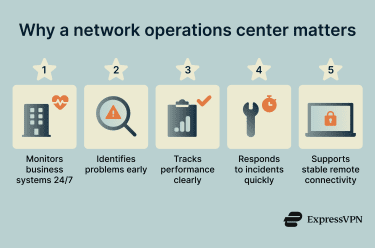
- Reduces downtime and revenue loss: A NOC monitors networks 24/7 to minimize interruptions that disrupt business operations and lead to financial loss.
- Detects outages before users notice: By analyzing real-time telemetry and historical performance data, NOC teams can identify emerging issues and resolve them before users are affected.
- Improves service level agreement (SLA) compliance and reporting: NOCs measure performance against SLAs and generate reports that document uptime and system health, supporting accountability and compliance.
- Speeds incident response and recovery: When issues occur, dedicated NOC staff investigate, coordinate fixes, and restore normal operations as efficiently as possible.
- Supports secure, stable virtual private network (VPN) services: Through continuous oversight of network devices and connections, a NOC helps maintain reliable and secure VPN connectivity for remote access.
Where is a NOC used?
NOCs are typically used by organizations that depend on continuous network availability. These include:
- Internet service providers (ISPs) and telecom networks: ISPs and phone providers use NOCs to monitor and manage large, complex communication networks so customers stay connected.
- Enterprises with complex wide area networks (WANs): Big companies with networks spanning many offices use NOCs to oversee WANs and keep internal systems working reliably.
- Data centers and cloud providers: Organizations hosting servers and cloud services rely on NOCs to watch performance and react to issues quickly.
- Critical infrastructure and healthcare: Hospitals, universities, and government agencies use NOCs to ensure networks stay up for critical operations.
- VPN providers’ backbone and gateways: Companies that offer VPN services depend on NOC teams to support secure, stable connections for users.
Real-world examples of a NOC
Some real-world applications of NOCs include rerouting traffic during a fiber cut. When a fiber-optic line breaks, the NOC detects the outage and moves traffic to backup paths so services stay up while repairs take place.
NOCs also monitor traffic patterns and can detect unusual surges that signal distributed denial-of-service (DDoS) activity.
Another use case for NOCs is rolling back configurations after an outage. If a configuration change causes disruption, NOC teams can revert to the last known good setup to restore service quickly.
Further reading
- How to get internet in rural areas
- What is routing, and why does it matter in networking?
- What are network protocols? A complete guide