Expressvpn Glossary
Industrial Internet of Things (IIoT)
What is the Industrial Internet of Things?
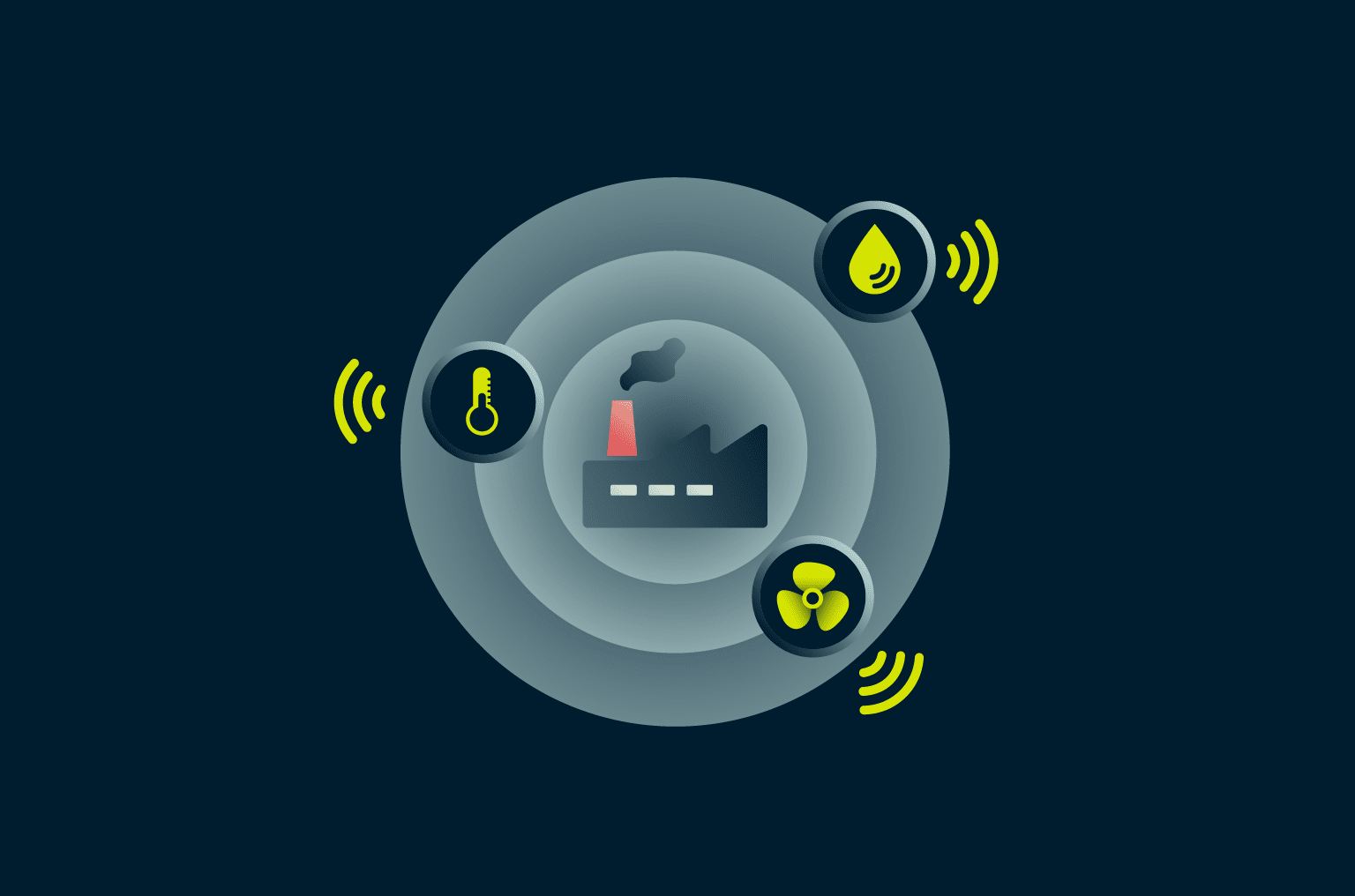
The Industrial Internet of Things (IIoT) refers to the use of connected machines, sensors, and software systems in industrial environments to collect data, automate processes, and improve operational outcomes. It’s the application of IoT technologies in industrial settings (such as manufacturing, energy, utilities, and logistics).
The common goal of IIoT is to turn real-world machine data into insights that help organizations reduce downtime, improve productivity, and support faster operational decision-making.
How IIoT works
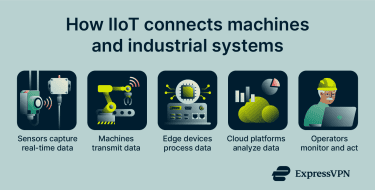
IIoT systems connect physical equipment to digital systems. The process typically follows these steps:
- Data collection: Sensors gather real-time data from machines and industrial equipment.
- Connectivity: Devices transmit data over industrial networks or wireless systems (often through gateways).
- Data processing: Information is processed locally (edge) and/or sent to cloud platforms.
- Analysis and automation: Software analyzes data, optimizes performance, triggers alerts, or initiates automated actions.
- Monitoring and control: Operators track system health and productivity using dashboards and control interfaces.
Key components of IIoT systems
IIoT systems rely on several core technical components working together to collect, transmit, process, and act on industrial data.
- Smart sensors and actuators: Sensors measure conditions (temperature, pressure, vibration), while actuators carry out actions (open a valve, slow a motor).
- Industrial gateways and protocols: Gateways connect “legacy” equipment to IP networks and translate common industrial protocols.
- Industrial connectivity networks: Wired or wireless links designed for reliability and predictable performance on the factory floor.
- Edge computing devices: Process data close to machines for low latency, resilience, and reduced bandwidth use.
- Cloud platforms and analytics tools: Centralize storage and analytics across sites and support longer-term insights.
- Operational technology (OT) systems: Systems used to monitor and control industrial operations.
Benefits of IIoT
When implemented effectively, IIoT delivers practical advantages to firms. With such systems in place, organizations can gain the following benefits:
- Enhanced visibility: Continuous insight into machine performance and process health.
- Reduced downtime: Early detection of abnormal conditions to support proactive or predictive maintenance.
- Higher productivity: Process optimization and more consistent operations by reducing manual checks and delays.
- Lower operating costs: Potential reduction in maintenance, energy use, and operational expenses in the long run.
- Improved safety: Detection of hazardous conditions to protect workers and equipment.
- Greater operational transparency: Better visibility across complex and distributed industrial environments.
Security risks and vulnerabilities
Because IIoT systems connect industrial equipment to digital networks, failures or security incidents can have serious operational and safety impacts. This can increase their attractiveness as targets, especially in critical infrastructure and other environments where availability is essential. Without strong security and rigorous access policies, firms implementing these systems risk:
- Legacy system exposure: Older equipment may lack modern security controls, increasing the risk of compromise or disruption.
- Expanded attack surface: Each connected device, service, or interface can become a potential entry point.
- Physical harm: Attacks or system failures can damage infrastructure or create safety hazards for workers.
- Weakened authentication: Poor credential management increases the likelihood of unauthorized access.
- Remote access risks: External access for vendors or operators can expose industrial systems if not tightly controlled and monitored.
- Data manipulation: Intercepted or altered data can lead to incorrect decisions, unsafe commands, or process disruption.
- Network threat propagation: Inadequate segmentation can allow an intrusion to spread across systems and zones.
Common industrial use cases
IIoT systems have been deployed in a wide range of industries to support a number of distinct goals. Examples include:
- Predictive maintenance: Monitors equipment health to support proactive maintenance and reduce unplanned downtime.
- Smart energy management: Monitors and optimizes energy use and grid operations to improve efficiency for utilities and large industrial sites.
- Connected operations: Tracks vehicles, shipments, and assets to improve logistics and supply chain visibility.
- Remote equipment monitoring: Oversees the status of distributed or hard-to-reach equipment (for example, in mining and oil and gas operations).
- Smart factory automation: Supports machine and workflow coordination to improve throughput and quality in manufacturing environments.
- Environmental monitoring: Measures emissions and air quality to support reporting and compliance in regulated industries.
IIoT vs. IoT
Although related, IIoT and IoT often serve different purposes. IIoT applies IoT technologies to industrial systems such as factories, utilities, and transport networks, while IoT is a broader category that also includes consumer devices and smart environments.
IIoT deployments typically place greater emphasis on reliability, safety, and continuous operation. Compared to many consumer IoT environments, failures in industrial settings can result in financial disruptions and, in some cases, safety risks.
These systems also rely on specialized protocols and rugged hardware designed for demanding environments, and they often require more stringent security controls and monitoring.
Further reading
- What is data privacy and why it matters: A complete guide
- What is the Internet of Things?
- What are IoT networks? A complete guide