Expressvpn Glossary
HTTP proxy
What is an HTTP proxy?
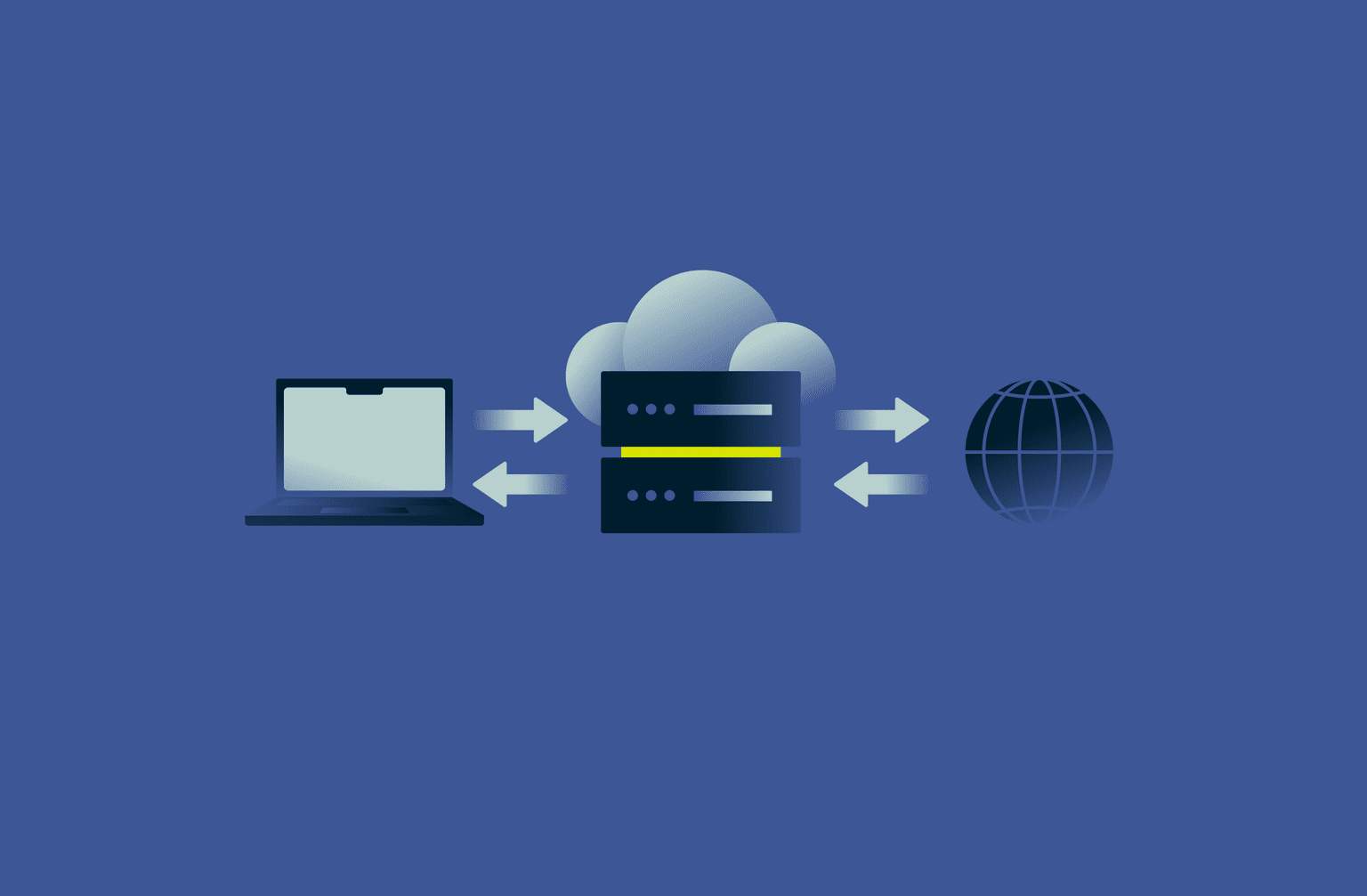
An HTTP proxy is a type of web proxy that accepts and forwards HTTP requests from client devices to web servers, then returns the responses to the clients. This makes it appear to websites as if the user’s traffic originates from the proxy server rather than their own network (depending on configuration).
HTTP proxies can support content filtering, performance optimization (e.g., caching), and location-based routing.
How does an HTTP proxy work?
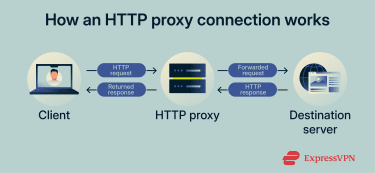 An HTTP proxy accepts HTTP web requests from a user. It then relays these requests through one of its servers before forwarding them to the destination. When the website responds, the data passes through the proxy first before being routed back to the user.
When traffic is sent over unencrypted HTTP, requests and responses are visible to the proxy. The contents may be logged, filtered, or modified by the proxy operator.
Types of HTTP proxies
There are various types of forward HTTP proxies that differ in their intended use and level of privacy:
- Transparent proxies: Common in enterprise settings and typically don’t try to hide the user’s identity. They may add an X-Forwarded-For header that passes the user’s IP address to the destination.
- Anonymous proxies: Add a layer of privacy by not including the user’s IP address in forwarding headers (such as X-Forwarded-For), so the destination typically sees the proxy server’s IP instead.
Benefits of using an HTTP proxy
HTTP proxies have several advantages for specific use cases:
- Can mask the user’s IP address: Websites often see the proxy server’s IP address instead of the user’s IP address, though some proxy configurations may forward the client's IP address in headers.
- May help bypass website restrictions: Routing traffic through an intermediary can help in some scenarios, such as basic IP-based blocking or network-level filtering, depending on how access controls are implemented.
- Filters or blocks unwanted content: Some HTTP proxies can be configured to enforce policies, such as blocking certain categories of sites or requests to known ad/tracker domains.
- Provides limited privacy for basic browsing: Some proxies can remove or modify identifying HTTP headers, but privacy varies by configuration, and is not guaranteed.
- Useful for simple testing or caching: Proxies can help test how a website behaves from different network endpoints, and some can cache frequently requested content to improve performance.
Limitations and security risks
HTTP proxies don’t use end-to-end encryption (E2EE) for unencrypted HTTP traffic. This means the proxy operator can view the contents of requests and replies, the websites visited, and the user's location.
It’s best to avoid sensitive tasks, such as entering login credentials or credit card details, when connected to an HTTP proxy.
HTTP proxy vs. HTTPS proxy
The main difference between HTTP and HTTPS proxies is that the latter uses encryption while HTTP proxies generally transmit data as plaintext. Most HTTPS proxies use Transport Layer Security (TLS) to encrypt traffic between the user and the proxy server. This is the same form of encryption used by websites that support HTTPS.
For this reason, an HTTPS proxy can be more secure in transit between the user and the proxy, but overall security still depends on the proxy’s configuration and operator.
Further reading
- How to hide your IP address and protect your online privacy
- What is data privacy and why it matters: A complete guide
FAQ
Is an HTTP proxy safe to use?
Web-based proxies, especially free or from unknown services, should not be trusted with any personal or sensitive activities, such as logins, payments, or sharing personal data.