Expressvpn Glossary
Data aggregation
What is data aggregation?
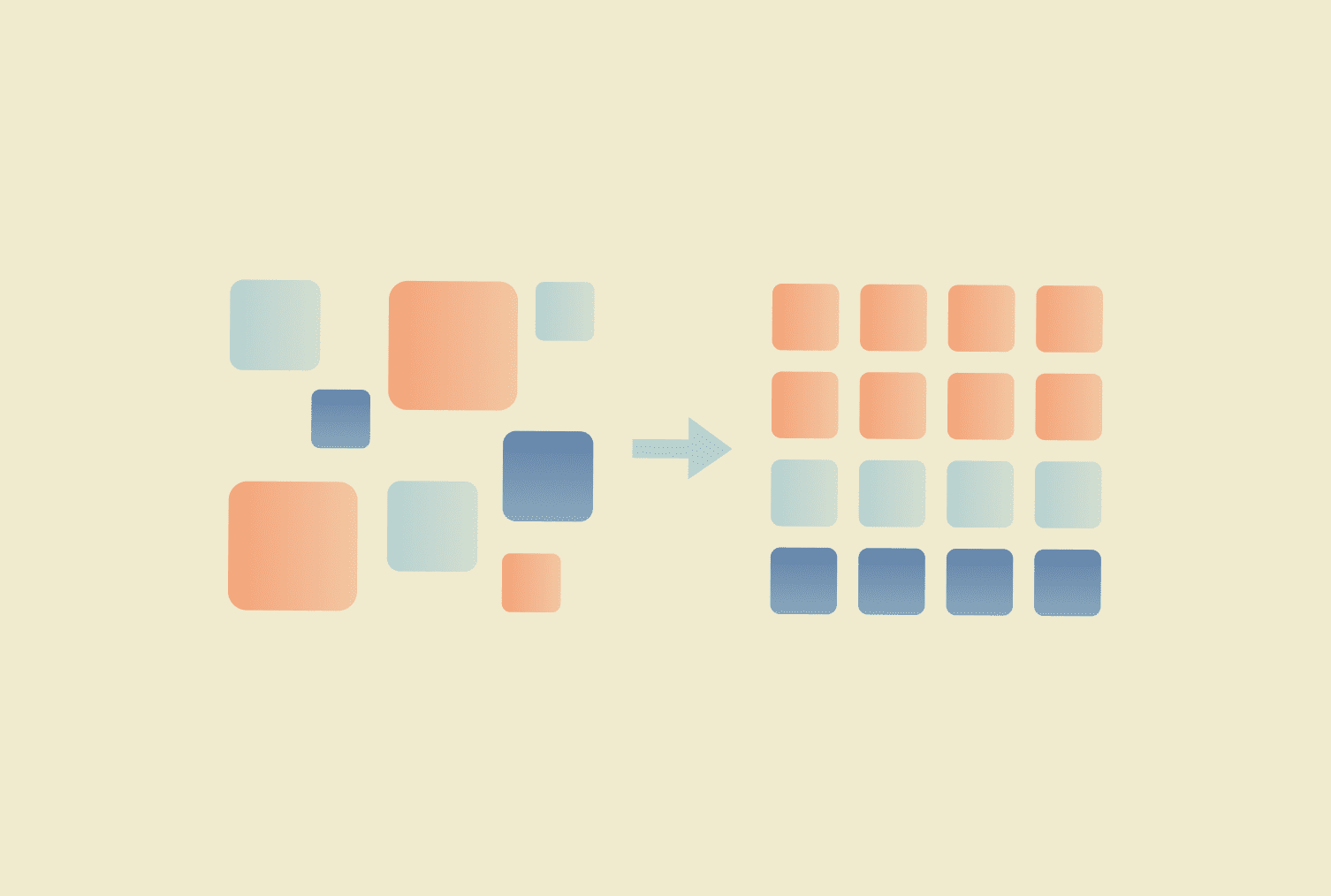
Data aggregation is the process of collecting and combining data from multiple sources into a single dataset. It organizes and summarizes raw information, which makes it easier to analyze large or fragmented datasets to spot trends, anomalies, and other insights. This data can then be used for reporting or informed decision-making.
How does data aggregation work?
Data aggregation can be either manual or automatic. Manual aggregation involves people collecting and summarizing data using tools like spreadsheets. However, automated aggregation relies on software systems to collect, process, and combine data at scale or in real time.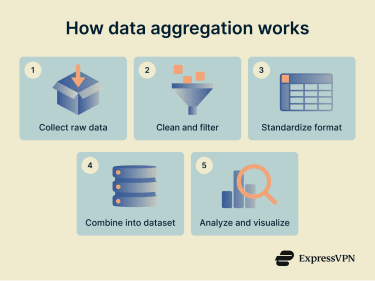
The data aggregation process typically includes the following:
- Data collection: Systems gather data from different applications, databases, or devices.
- Data cleaning: Teams or automated tools remove errors, duplicates, and inconsistencies from raw data.
- Data standardization: Systems convert data into a consistent format so information from different sources can be combined and compared accurately.
- Data aggregation: Tools summarize, group, or combine multiple data points into a single, structured dataset.
- Data analysis and visualization: Teams analyze aggregated data and present results through reports or dashboards to highlight patterns or insights.
Types of data aggregation
Organizations use different types of data aggregation to summarize data based on specific conditions, which include:
- Time-based aggregation: Groups data based on time intervals, such as minutes, hours, days, or months, to analyze changes over time.
- Spatial aggregation: Groups data based on physical or spatial relationships, often using coordinates or mapped areas to analyze patterns across space.
- Location-based aggregation: Organizes data according to geographic areas, such as cities, regions, or countries, to compare activity by location.
- Category-based aggregation: Combines data based on shared attributes or classifications, such as product types, user groups, or event categories.
- Hierarchical aggregation: Summarizes data at different levels of a hierarchy, starting with individual records and grouping them into departments, regions, or organizational units.
- Real-time aggregation: Processes and combines data as it is generated, allowing systems to monitor activity or trends as they happen.
- Statistical aggregation: Applies statistical functions, such as averages, totals, or counts, to summarize large sets of data.
Why is data aggregation important?
Data aggregation simplifies large volumes of raw data into information that’s easier to understand and work with. Instead of reviewing individual data points in isolation, teams can rely on aggregated data to see broader patterns and summaries.
A clearer overview of information means teams can make faster, more accurate decisions. Using this information, they can compare results, measure performance, and respond to changes using consistent summaries rather than fragmented datasets. This also helps with improving reporting accuracy.
Aside from clearer overviews of information, data aggregation is important for supporting security monitoring and business intelligence. Because aggregated data makes trends easier to identify, it can help teams identify anomalies or suspicious activity that may not be visible in raw data.
Examples of data aggregation tools and methods
Organizations can use a variety of tools and methods to aggregate data, depending on the scale and purpose needed. These include:
- Structured Query Language (SQL) queries: Databases use SQL queries to group, summarize, and combine data using functions such as counts, totals, or averages.
- Business intelligence platforms: Analytics platforms aggregate data from multiple sources to generate dashboards, reports, and visual summaries.
- APIs and data collectors: Applications use APIs and data collection tools to gather data from different systems before aggregating it into a central dataset.
- Big data systems: Distributed data processing systems aggregate large datasets across multiple servers to support large-scale analysis.
- Security analytics tools: Security systems aggregate logs, network activity, and event data to monitor behavior and detect potential threats.
Further reading
- What are data brokers? People search sites and privacy tips
- What is a data warehouse? A complete guide for secure data management
- What is OPSEC, and why do you need it?