Bait-and-switch explained: how to spot it, avoid it, and protect yourself


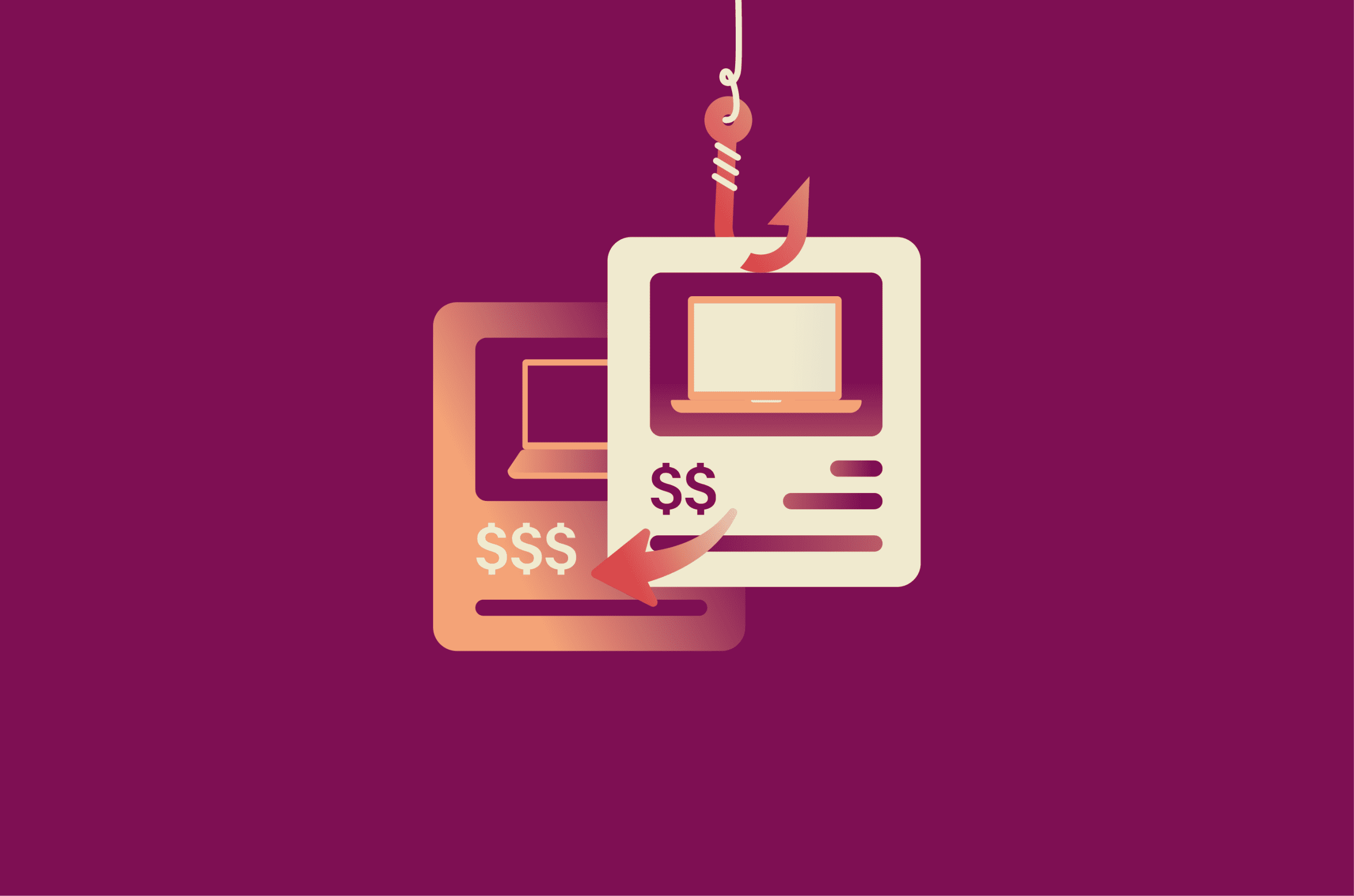
Bait-and-switch is a deceptive sales practice that can appear in both online and in-store offers. A deal may be advertised to attract interest, but once you try to act on it, the terms can change or the offer may be unavailable, while alternative options are promoted instead.
This guide explains how bait-and-switch works, the common signs to watch for, and practical steps you can take to document and report it.
How bait-and-switch works
Bait-and-switch tactics usually follow the same basic pattern: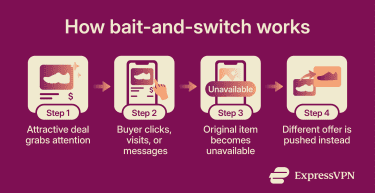
- A seller advertises an appealing offer: That could be a very low price, a special promotion, or a product that seems much better than similar offers.
- The buyer responds to the offer: They click the ad, visit the store, message the seller, or start the checkout process.
- Once the buyer is engaged, the original item becomes difficult to buy: The seller may say it’s out of stock, available only in limited numbers, delayed, defective, or not a good choice after all.
- The seller then redirects the buyer to something else: This replacement might be a pricier version, a bundle with extra costs, or a lower-quality alternative.
By the time the redirect happens, the customer has already invested time and effort and may feel pressured to follow through with the purchase instead of walking away. That makes it easier for the seller to push for a quick decision.
Common examples in online and retail sales
Bait-and-switch can show up in many different shopping situations. Sometimes it happens in a physical store. Other times, it appears in online listings, ads, or checkout pages. Here are some of the most common examples:
- Retail and electronics: A store advertises a TV at a steep discount to drive foot traffic. When customers arrive, staff claim it's sold out and redirect them to a more expensive model.
- Car dealerships: A dealer promotes a base-model vehicle at a low monthly payment, then insists it's unavailable and pushes a higher trim or add-on package instead.
- Home improvement: A contractor quotes an unusually low price to win a job, then reveals hidden fees or claims the original materials aren't available, leaving the homeowner to accept a costlier option.
- Timeshare sales: High-pressure presentations promise luxury vacations at attractive rates, but the advertised units turn out to be unavailable or come with undisclosed fees.
- Online shopping: Fraudulent listings offer trending products at very low prices. After payment is collected, the seller either ships a cheaper substitute or claims the item is out of stock and offers something else entirely.
- Lead generation sites: Some websites pose as legitimate job boards, insurance comparison tools, or government benefit portals to collect personal contact information. Instead of delivering the promised help, they sell that data to third-party marketers.
- Apps and browser extensions: Software is marketed with certain features or benefits, but those features are limited, unavailable, or only accessible after additional costs that are not clearly disclosed upfront.
- Subscription services and tickets: Companies advertise free access or a low one-time fee, then charge hidden fees at checkout or automatically enroll users in recurring paid subscriptions.
What isn’t considered bait-and-switch?
Not every low-price or promotional tactic is illegal. Retailers can legitimately offer extremely low prices for products with limited quantities or use upselling techniques to encourage customers to choose upgrades.
Pricing errors
If a seller accidentally lists a product at the wrong price due to a system error or human mistake, that generally isn’t bait-and-switch as long as the business corrects it promptly and transparently.
Limited quantities
Advertising discounted items in limited supply is typically lawful as long as the business discloses the limitation and makes a good-faith effort to meet demand. Transparency and reasonable availability are what distinguish it from bait-and-switch.
Upselling vs. bait-and-switch
Upselling is a legitimate sales technique where the seller offers a customer a premium version of what they came for. For example, if a customer asks for the base model and it's genuinely in stock, but the salesperson suggests an upgraded model, an add-on, or a premium warranty, it’s considered upselling.
If the base model never existed as an available product or wasn’t available at the stated price, that's bait-and-switch.
How to spot bait-and-switch
Recognizing the warning signs of bait-and-switch tactics empowers consumers to avoid fraud and take action. Scammers often use similar strategies across industries.
Warning signs to watch for
Some warning signs manifest early, while others emerge once the buyer is already involved. Here’s what to look out for: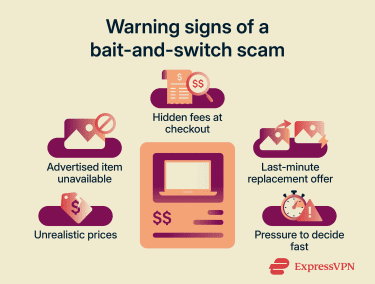
- The price seems unrealistically low: Offers significantly below market value may be designed to grab attention rather than reflect a genuine deal. If a price seems too good to be true, it often is.
- The advertised item is suddenly unavailable: The seller claims the product is out of stock, defective, or not worth buying. Refusing to show the item or take orders for it may indicate a bait-and-switch scheme.
- Extra charges appear at checkout: Fees for processing, service, or other add-ons that weren't mentioned upfront are added at the final step, making the actual price significantly higher than advertised.
- A substitute is pushed before you've made a decision: The seller steers toward a more expensive or lower-quality alternative, often framing it as a better value without being asked.
High-pressure tactics and misleading fine print
Bait-and-switch tactics are often paired with pressure. A customer may be told the deal is about to expire, that they'll miss out if they leave, or that the "better" option is the only sensible choice. These tactics reduce the time available to think critically.
Misleading fine print plays a supporting role. Sellers sometimes bury the conditions that make a deal far less attractive, such as hidden fees, cancellation penalties, and automatic price increases in places few people read. If the terms of an offer are genuinely difficult to find or understand, that's worth treating as a warning sign on its own.
Is bait-and-switch illegal?
Bait-and-switch advertising is illegal in many jurisdictions. Laws vary, but many consider it a form of fraud or false advertising, and regulators can impose hefty penalties on companies that engage in it.
Consumer protection laws
We’ll look at how consumer protection rules are handled in the United States, Canada, the United Kingdom, the European Union, and Australia, focusing on the main laws, what they prohibit, and when a misleading offer crosses the line.
United States
In the U.S., the Federal Trade Commission (FTC) enforces Section 5 of the FTC Act and 16 C.F.R. Part 238, which prohibits bait advertising. The regulation forbids advertisers from making offers when they don’t intend to sell the product or from using statements or illustrations that create a false impression of the product’s quality or availability.
It also prohibits refusing to show or sell the advertised item, disparaging it, or failing to stock sufficient quantities without disclosing the limitation.
Canada
According to Canada’s Competition Act (section 74.04), bait-and-switch occurs when a product is advertised at a “bargain” price, but it is not available for sale in reasonable quantities.
The law provides specific exemptions: a business isn’t in violation if it can show the shortage was beyond its control, that it obtained reasonable quantities but demand exceeded reasonable expectations, or that it offered customers a rain check when supplies ran out.
United Kingdom
Under Schedule 20 of the Digital Markets, Competition and Consumers Act 2024 (DMCCA), certain sales practices are automatically considered unfair. These include advertising products at a low price without reasonable grounds to supply them in adequate quantities, as well as promoting an offer and then refusing to show or supply it while directing customers toward an alternative.
European Union
The Unfair Commercial Practices Directive prohibits misleading actions and omissions, including practices commonly associated with bait-and-switch advertising. EU member states implement this directive through national laws, such as France’s Consumer Code and Germany’s Unfair Competition Act.
Australia
Section 35 of the Australian Consumer Law prohibits advertising goods at a low price when there are reasonable grounds to believe they will not be able to supply them in reasonable quantities for a reasonable period. This sits alongside the broader prohibition on misleading or deceptive conduct under Section 18, which applies regardless of intent.
Potential consequences for businesses
Penalties for bait-and-switch schemes vary by jurisdiction and the scale of the fraud. In the United States, companies can face civil penalties, restitution to consumers, and injunctive orders. For example, in 2024, the FTC secured more than US$1.25 million in refunds for LASIK surgery customers after the company advertised promotional prices but forced patients into higher-priced options.
In Canada, the Competition Tribunal can order companies to stop deceptive practices and impose administrative penalties. UK authorities can bring criminal charges for unfair trading, which may result in fines or imprisonment.
How to protect yourself from bait-and-switch scams
A few practical habits can help reduce the risk of encountering this tactic, online and offline.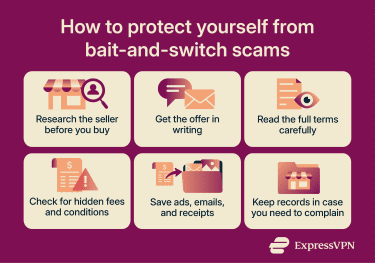
Research sellers before you buy
Before committing to a purchase, it helps to take a quick look at who you’re dealing with.
- Check reviews and ratings: Look up the seller on trusted platforms and see what other customers say. Beware of profiles with little history or mostly negative feedback.
- Verify contact information: Legitimate businesses provide physical addresses and customer service numbers. If you can’t reach anyone or the address doesn’t match the business, proceed with caution.
- Cross-check prices: Compare the advertised price with other sellers. An unusually low price is a red flag. Use price‑comparison tools to see if the discount is realistic.
- Learn how to spot a fake shopping website: Verifying the domain name carefully, checking for secure connections, and looking up the site's age and reputation can help distinguish legitimate retailers from fraudulent lookalikes.
Get the offer in writing
When a seller makes an attractive offer verbally or through live interactions, like for a car purchase, a contractor quote, or a subscription offer over the phone, written confirmation from the seller is essential before committing. An email, a signed quote, or even a text message confirming the key terms creates a record that's much harder to dispute later.
Read the terms carefully
Before completing any purchase, the terms and conditions attached to the offer deserve a close read, especially the fine print. Key areas to check include availability restrictions, price change clauses, eligibility criteria, and cancellation policies. Don’t finalize the purchase if the final price differs significantly from the advertised amount.
If a "free" product or service has unclear terms around how personal information is used, that warrants scrutiny before signing up.
Keep records of the promotion
For advertised deals, like online listings, promotional emails, and in-store signage, the record needs to come from the buyer's side. Screenshots of the ad, the URL, and any promotional communications create a clear reference point if the offer changes or disappears. Having timestamped evidence of what was originally advertised is often the difference between a successful dispute and an unresolvable one.
What to do if you experience bait-and-switch
If you suspect you’ve been targeted by a bait-and-switch scheme, consider the following steps.
Document the offer and your experience
Collect everything relevant: screenshots of the ad, copies of emails or texts, photos of in-store signage, receipts, and a written record of what was said during the interaction, including approximate times and names of any employees involved. For online incidents, get the URL, any redirect paths, and records of the transaction or attempted transaction. The more evidence you have, the easier it is to support your complaint.
Contact the business
Start by contacting the business directly and outlining your concerns. Some companies may resolve the issue quickly when confronted with specific documentation and may offer the original deal, issue a refund, or provide compensation. It’s a good idea to keep a record of this communication as well.
If you purchased through a third‑party marketplace, file a claim through the platform’s resolution center if you believe the seller has been misleading.
Report the incident to the right agency
If the seller refuses to resolve the issue or you suspect fraud, consider reporting the incident to the appropriate authority:
- United States: File a complaint with the FTC through ReportFraud.ftc.gov. You can also contact your state attorney general’s office.
- Canada: Submit a complaint to the Competition Bureau or your provincial consumer protection agency.
- United Kingdom: Report unfair trading practices to Trading Standards via the Citizens Advice Consumer Service.
- Australia: Contact your state or territory’s consumer affairs office or the Australian Competition and Consumer Commission (ACCC).
- Other countries: Check with your national consumer protection agency or ombudsman. For cross‑border scams, you can also file a complaint with the International Consumer Protection and Enforcement Network (ICPEN).
FAQ: Common questions about bait-and-switch
How can I prove that a bait-and-switch happened?
Can a bait-and-switch happen online?
Is bait-and-switch the same as false advertising?
Can a store refuse to honor an advertised price?
If a price changes or the advertised offer is unavailable, what matters is whether the situation was clearly communicated and not misleading.
What agencies handle bait-and-switch complaints?
Take the first step to protect yourself online. Try ExpressVPN risk-free.
Get ExpressVPN