Charity scams explained: How to spot red flags and donate safely


Every year, thousands of people donate money to causes they believe are genuine, only to discover their hard-earned cash never reached anyone in need. By donating, they became the unwitting victims of charity scams, which often prey on human compassion and generosity.
Understanding how charity scams work makes it easier to recognize suspicious requests before sending money or sharing personal information. In this guide, we explain common types of charity scams, how scammers approach donors, and the steps you can take to verify a charity before donating. You’ll also learn how to protect your financial information, what to do if you suspect fraud, and where to report charity scams if they occur.
What are charity scams?
Charity scams are fraudulent schemes in which bad actors pretend to represent a humanitarian cause to solicit donations. The scammer might claim to support a cause such as disaster relief, medical treatment, or community programs and pose as an individual fundraiser, crowdfunding campaign, or informal aid effort.
Sometimes, scammers don’t limit themselves to donations. In some cases, they also collect personal information and payment details from donors, which they can later use to make unauthorized charges.
These scams can happen through phone calls, emails, text messages, messaging apps such as WhatsApp, social media posts, crowdfunding pages, or fraudulent websites designed to look like official nonprofit pages. They can also occur in person, such as through door-to-door requests or street fundraisers by people claiming to represent a charitable cause.
How charity scammers manipulate donors
Charity scammers manipulate donors by exploiting the same emotions that motivate legitimate giving. Real charitable appeals often center on suffering, urgency, and compassion, especially after natural disasters, public tragedies, or other crises. That makes this type of scam particularly effective, as scammers can imitate the tone of genuine fundraising campaigns and rely on the fact that people already expect charity appeals to be emotional and time-sensitive.
Their first goal is usually to pull the donor’s attention toward the cause itself rather than the organization behind it. They may describe injured animals, sick children, displaced families, or communities in crisis in order to create a strong emotional reaction. Once a person is focused on the pain or urgency of the situation, they are less likely to stop and ask practical questions about who is collecting the money, whether the charity is real, and how the donation will actually be used. In that sense, the manipulation is not just about making people feel sympathy. It is about using sympathy to short-circuit scrutiny.
Scammers also try to make the appeal feel trustworthy by borrowing signals of legitimacy. They may present themselves as representatives of a familiar charity, a local community effort, or a cause that seems connected to a recent news event. Some go further by adding fabricated testimonials, inflated donor numbers, or false endorsements to suggest that the fundraiser is already established and widely supported. These details are meant to reduce hesitation by making the donor feel that others have already vetted the appeal.
Timing plays an important role, too. Charity scams often increase after natural disasters, public emergencies, or widely reported events. In situations like these, people are most emotionally engaged and most ready to give. Donation campaigns appear quickly across news sites, social media, and crowdfunding platforms. The high level of public attention creates opportunities for scammers to blend in with legitimate fundraising efforts.
It’s important to note that this doesn’t mean that you should avoid charitable giving during crises. It means you should take an extra moment to verify before contributing.
Common types of charity scams
Charity scams can reach you in various ways, but most follow similar patterns. Scammers either create fake organizations or pretend to represent real ones, then ask for donations through websites, messages, or phone calls.
Fake websites
In these cases, scammers create donation pages that appear to support a real or made-up cause, such as disaster relief, medical treatment, or community projects. The campaign might include photos, personal stories, and progress updates to make it look authentic. Some also rely on emotional, highly shareable content that can spread quickly on social platforms and make the fundraiser seem more credible than it is and lure more victims.
These campaigns often appear on social media, messaging apps, or crowdfunding platforms. Some are completely fake, while others copy information from legitimate fundraisers.
Phishing emails
Some online charity scams use phishing emails to trick victims into sending donations or stealing personal or financial information. They use messages designed to look like official emails from well-known, trusted charities, fundraising platforms, or payment services, asking the recipient to click a link, log in, confirm their details, or send a contribution.
The scammers might use a name nearly identical to a legitimate nonprofit's or copy its branding and logos. Because people recognize the names of established charities, they might assume the request is legitimate without checking the source.
Besides soliciting donations, the messages might include links leading to a malicious website designed to look like an official one. If the user enters their login information, credit card number, or other personal data, the scammer can use it for fraud or identity theft. In some cases, the message claims there’s a problem with a donation, a payment failed, or additional verification is required.
Social media and crowdfunding scams
Social media platforms and crowdfunding sites make it easy to share fundraising campaigns quickly, without the need to create a website for the purpose. A post may ask for donations for a local emergency, a personal hardship, or a nonprofit project, often with a link to a payment page or fundraising platform.
Crowdfunding platforms themselves aren’t scams, and many major sites have systems in place to help protect donors. These can include identity checks for organizers, fraud monitoring, secure payment processing, and refund or dispute policies if a fundraiser is found to be misleading. However, because anyone can create a campaign on many of these sites, it’s still important to review the organizer’s details, look for outside verification, and confirm the fundraiser’s purpose before donating.
How to spot charity scams
As discussed above, fraudulent campaigns often look similar to legitimate fundraising efforts. Instead of relying on a single warning sign, it’s better to look at the overall situation, including how the request is made, what information is provided, and how the donation is handled.
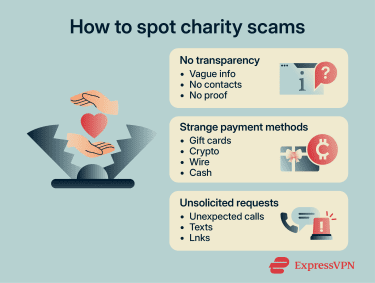
Lack of transparency
Legitimate charities are generally open about how they operate, where their funding comes from, and how donations are spent. A reluctance to share this information, or its absence entirely, is a warning sign that something might be wrong.
Specific signs of a lack of transparency include:
- Vague mission statements: Descriptions like "helping vulnerable people worldwide" or "supporting communities in need" without any concrete detail about programs, locations, or outcomes make it impossible to assess what a charity actually does.
- Unverifiable claims: Statistics, impact figures, and outcome data that can't be cross-referenced with independent sources or official reports should be treated with caution.
- No named leadership or contact information: A legitimate nonprofit typically lists its leadership team, registered address, and official contact details. Bear in mind, though, that this information can sometimes be copied or fabricated, so it’s important to check whether the details can be verified through official registries or independent sources. Organizations with missing, inconsistent, or unverifiable contact information should be treated with caution.
- Unwillingness to provide documentation: If a charity representative declines to send written materials, direct you to an official website, or confirm registration details, treat this as a warning sign.
Unusual payment requests
Established nonprofits usually accept standard payment methods and do not place unnecessary restrictions on how you give. When it comes to how you’ll make your donation, their aim is to make the process as simple and convenient as possible so potential donors are not put off by unnecessary complexity. Not so with scammers, who have an additional goal: steering people toward payment methods that are harder to trace, dispute, or reverse. Be cautious if a charity asks for:
- Wire transfers: These are difficult or impossible to reverse and offer no consumer protection if the recipient turns out to be fraudulent.
- Gift cards: Some legitimate organizations may accept gift cards as donations, but this is unusual. Treat these requests with caution and verify the organization before giving.
- Cryptocurrency: While some established charities do accept cryptocurrency, an exclusive or heavy emphasis on it, particularly from an unverified organization, warrants extra scrutiny.
- Cash only: Some charities do collect cash donations, especially during street collections or in-person fundraising. However, requests for cash that can’t be verified, come from unsolicited callers, or involve pressure to give immediately can be difficult to trace and offer little recourse if misused. When possible, confirm the fundraiser is officially connected to the organization before donating.
Unsolicited contact
Receiving an unexpected donation request, whether by phone, email, text, or social media message, doesn't automatically mean it's fraudulent. Many legitimate charities do reach out to potential donors directly. The issue arises when the contact is unexpected and the organization can't be independently verified.
Sudden changes in what’s being requested are also a warning sign, as some scams begin with an offer to share information, send materials, or sign you up without payment but later shift to asking for credit card details or immediate donations.
If you receive an unsolicited request, consider the following:
- Don't use contact details provided in the message: Look up the charity independently and reach out through its official website or registered phone number to confirm the campaign is real.
- Be cautious with links: Clicking a link in an unsolicited email or text and donating through the resulting page carries real risk. Instead of using the link provided, type the charity’s official website directly on your browser, search for the organization independently, or donate through a trusted fundraising platform.
- Verify before responding to disaster-related appeals: Unsolicited messages referencing a recent crisis are a common approach used by scammers. Take a moment to confirm the organization exists and is responding to the event it claims to be addressing. The steps below explain how to verify a charity before donating.
How to verify a charity before you donate
Taking a few minutes to confirm a charity's legitimacy before donating can help reduce the risk of donating to a fraudulent campaign. Here are a few ways to do that.
Check the charity’s registration
Many countries require nonprofit organizations to register with a government authority or regulatory body. Looking up a charity in an official registry can help confirm that the organization exists and is allowed to collect donations. For instance, in the US, using the IRS’s Tax Exempt Organization search tool will show you whether a charity is a legally registered non-profit.
When checking registration, look for:
- The full legal name of the charity
- A registration or identification number
- Contact information that matches the official listing
- The country or region where the charity operates
If the name in the donation request is slightly different from the official listing, it may be worth checking further to make sure the organization isn’t being impersonated.
Keep in mind that registration rules vary by location, and some small or local charities may operate under different requirements. The absence of a listing doesn’t automatically mean the charity is fraudulent, but it does mean you should verify the organization using additional sources.
Review financial transparency
Reputable charities make their financial information publicly available. This includes annual reports, audited accounts, and breakdowns of how donations are allocated between programs, administration, and fundraising costs.
If a charity is reluctant to share this information, or if it simply doesn't exist, that's worth more investigation.
Verify email addresses and website domains
Donation requests should come from a charity’s official email, phone number, or verified social media account. Scammers often create addresses or website links that look similar to the real ones but contain small differences.
Before clicking a link or sending money, check:
- The email domain after the “@” symbol
- The full website address in the browser
- Spelling differences in the charity’s name
- Extra words, numbers, or unusual characters in the link
For example, a fake message might use a domain that looks similar to the real one but adds extra letters or changes the ending. Instead of following the link in the message, you can visit the charity’s official website directly by typing the address yourself.
If there are links in the email, hover over them before clicking to see where they actually lead. If the destination URL doesn't match the charity's official domain, don't proceed.
Many email services, browsers, and security tools use automated phishing detection to scan messages and links for known scam patterns. These systems can warn you about suspicious emails or block dangerous websites, but they aren’t perfect, so it’s still important to confirm addresses manually.
Use trusted charity watchdogs
Charity watchdog organizations independently evaluate nonprofits and publish ratings, financial summaries, and accountability assessments. Checking a watchdog site before donating can give you useful additional information about how an organization operates.
Well-known watchdog organizations in the U.S. include CharityWatch, Candid (GuideStar), Charity Navigator, and the Better Business Bureau (BBB) Wise Giving Alliance. In England and Wales, the Charity Commission publishes a public register that includes financial filings and regulatory history.
That said, not all legitimate charities appear on watchdog sites. Smaller or newer nonprofits may not yet be listed or may not meet the size threshold required for evaluation. The absence of a charity from a watchdog database doesn't automatically mean it's fraudulent. It means you may need to do additional verification through other channels.
Protecting yourself from charity scams
Even when a fundraiser appears genuine, using safe donation practices can reduce the risk of fraud, payment disputes, or misuse of your details. Here are a few steps on how to keep yourself safe during the donation process.
Donate through official channels
One of the safest ways to avoid charity scams is to donate through the organization’s official website or verified donation page. Instead of following links from emails, messages, or social media posts, type the website’s address directly into your browser.
Using official channels helps reduce the risk of being redirected to fake websites designed to collect payment or personal information.
If you receive a donation request through a message or phone call, you can still support the cause, but it’s safer to locate the charity’s official contact details yourself before making a payment.
These precautions are especially important for older internet users, who may be more frequently targeted by scam campaigns. Adhering to general online safety tips for seniors can help reduce the risk of fraudulent donation requests.
Use secure payment methods
Your chosen payment method can affect how easy it is to recover your money if something goes wrong. Established charities usually accept common payment options that offer some level of protection for donors.
Safer payment methods include:
- Credit cards
- Debit cards through secure websites
- Trusted online payment services
- Bank transfers to verified organizational accounts
These methods often provide transaction records and, in some cases, dispute or refund options.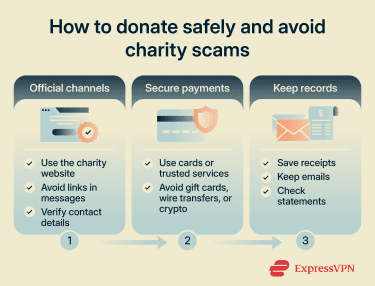
Keep records of your donations
Keeping a record of your donation can help you track your payments and respond more easily if there’s a problem later. Legitimate charities usually provide receipts, confirmation emails, or transaction numbers after a donation is made.
It’s useful to save:
- Donation receipts
- Confirmation emails
- Screenshots of the payment page
- Bank or card statements showing the transaction
These records can help if you need to contact the charity, report suspicious activity, or dispute a charge with your bank or payment provider. They may also be useful for tax purposes in places where charitable donations are deductible. Keeping documentation doesn’t prevent scams by itself, but it makes it easier to investigate a transaction and take action if you believe the donation request was not legitimate.
What to do if you’ve been scammed
If you believe you’ve donated to a fake charity or shared payment details with a fraudulent fundraiser, acting quickly can help reduce the risk of further loss. The steps below cover what to do in the immediate aftermath and how to make sure the scam is properly reported.
Contact your bank or payment provider
The first practical step after identifying a fraudulent transaction is to contact your bank or payment provider as soon as possible. The sooner you report it, the better your chances of recovering funds or preventing further unauthorized activity.
When you get in touch:
- Report the transaction as fraudulent: Explain that you believe you've been the victim of a charity scam and provide as much detail as you can about the payment, including the date, amount, recipient name, and any reference numbers.
- Ask about a chargeback: If you donated by credit or debit card, your provider may be able to reverse the transaction. Success isn't guaranteed and depends on the payment method and how quickly you act, but it's worth pursuing.
- Request a freeze if necessary: If you shared bank account details or believe your financial information has been compromised, ask your bank about temporarily freezing your account or issuing a new card to prevent further unauthorized transactions.
Report the scam
Reporting a charity scam helps authorities track fraudulent operations and can protect other donors from falling victim to the same scheme. Even if you're unable to recover your funds, a report contributes to a broader picture that regulators and law enforcement use to identify and shut down scammers.
Where to report charity scams depends on your location and how the scam reached you:
- In the US: Report to the Federal Trade Commission (FTC), the FBI's Internet Crime Complaint Center (IC3), and your state's charity registration office or attorney general.
- On a crowdfunding or social media platform: Use the platform's built-in reporting tools to flag the fraudulent campaign or account. Most platforms have dedicated processes for this.
- To your email provider: If the scam arrived via email, reporting it as phishing helps the provider identify and block similar messages.
Save evidence of the scam
Keeping evidence can make it easier to report the scam and support any dispute or investigation. Try to save any information related to the donation request before deleting messages or closing the webpage.
Useful evidence may include:
- Emails, texts, or social media messages
- Screenshots of the fundraiser or website
- Payment confirmations or receipts
- Account statements showing the transaction
- Contact details used by the fundraiser
Having clear records can make it easier for authorities, banks, or payment providers to review the case and decide what action to take.
Monitor your accounts
If you shared payment details or personal information with a fraudulent fundraiser, keep a close eye on your bank accounts, credit card statements, and online accounts for unusual activity. Scammers may try to reuse stolen information later, even if the original donation seemed small.
Check your transaction history regularly and review any alerts from your bank or payment provider. You may also want to monitor your credit reports or use identity-protection tools such as Identity Defender, which can notify you if your personal information appears in known data breaches. Note that Identity Defender is currently available only to U.S. ExpressVPN users on eligible plans.
FAQ: Common questions about charity scams
Are crowdfunding fundraisers always legitimate?
Before donating, check who created the fundraiser, whether the organizer is connected to a real organization, and whether the same campaign is mentioned on the charity’s official website or social media pages. If you can’t confirm the details, it’s safer to research further before contributing.
Is it safe to donate through social media links?
What payment methods should I avoid when donating?
Take the first step to protect yourself online. Try ExpressVPN risk-free.
Get ExpressVPN