Expressvpn Glossary
Static IP

What is a static IP?
A static Internet Protocol (IP) address, or fixed IP address, is an IP address that doesn’t change over time. It allows services, applications, or other devices to connect to a specific device without updating IP records or configurations for each connection.
How does a static IP work?
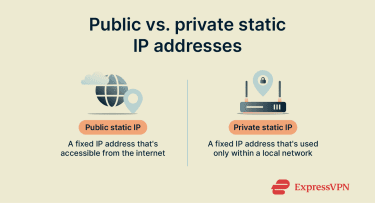
A static IP works by keeping the same network address assigned to a device at all times, rather than having the address change automatically. How the address functions depends on the type. There are two types of static IP addresses:
- Public static IP: A fixed, internet-facing address assigned by an internet service provider (ISP) or virtual private network (VPN) provider.
- Private static IP: A fixed address used within a local network, assigned through a router or network configuration on the device itself.
Why are static IPs important?
Static IPs are important because they provide a fixed, reliable address that other systems can consistently reach. A public static address allows websites, remote-access services, and VPN endpoints to be reached at a single, permanent internet location. A private static address keeps local services accessible at a consistent address inside a network, including file servers, printers, and cameras.
Static IPs also simplify managing Domain Name System (DNS) records, firewall rules, and port forwarding.
Static IP vs. dynamic IP
| Static IP address | Dynamic IP address | |
| What it is | A fixed IP address that remains the same | An IP address that changes periodically |
| How it works | Stays constant through device restarts and network resets | Changes when the device reconnects or after set intervals |
| What it’s used for | Hosting servers, websites, email systems, and remote access | Routine activities such as browsing, streaming, and general internet use |
| How it’s set up | Assigned manually by an ISP or network administrator | Assigned automatically by an ISP |
| Privacy | Easier to identify and can increase exposure to attacks | Harder to trace due to frequent changes and reuse |
Security considerations for static IPs
A static IP address is easier to track and target if left unprotected because it gives attackers a consistent point to scan, monitor, and probe for vulnerabilities. Open ports, weak authentication, or misconfigured services increase this exposure, making strong security controls essential.
Protecting systems that use static IPs typically involves strong security controls such as properly configured firewalls, access restrictions, and encrypted connections. These tools help block unauthorized access and hide network traffic from outside monitoring.
Additional safeguards, such as pairing a static IP with a VPN, reviewing access logs, or rotating the address when operationally feasible, can further reduce the likelihood of misuse.
Further reading
- Does ExpressVPN offer static or dynamic IPs?
- How to set up a static IP address
- What is IP rotation, and how does it work?
FAQ
What is a static IP used for?
A static IP address is used when a device or service must remain reachable at the same address. It is common for hosting websites, operating email servers, and enabling remote access. For instance, an organization may assign a static IP to an internal server so it can be accessed reliably.
How is a static IP different from a dynamic IP?
The difference between a static and a dynamic IP address is that a static IP stays the same, while a dynamic IP changes over time or per session. Static IPs are usually assigned manually for services that require consistent access, such as websites and servers. Dynamic IPs are typically assigned automatically by an internet service provider (ISP) for everyday activities like browsing and streaming.
Can I get a static IP from my VPN provider?
Some VPN providers, including ExpressVPN, offer dedicated IP addresses as an optional feature. These addresses remain the same each time the dedicated IP is selected and are not shared with other users, which can help with access to certain services and reduce issues related to IP reputation.
Is a static IP address more secure or more risky?
A static IP address is generally riskier than a dynamic IP because the fixed address is easier to track and target. Attackers have more time to scan and attempt to exploit exposed services. Strong network security, restricted ports, and regular monitoring are important for reducing this risk.