Expressvpn Glossary
Digitalization

What is digitalization?
Digitalization refers to adapting traditional workflows and systems to incorporate digital technologies. For businesses, this can mean replacing repetitive manual processes with automated solutions that are more efficient and resilient.
How does digitalization work?
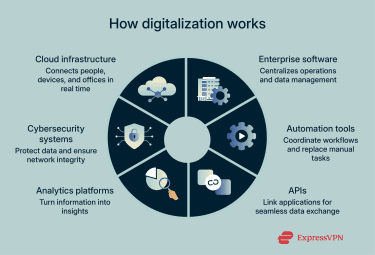 Transforming analog media and systems into digital alternatives is multifaceted. A variety of solutions may be employed, depending on what needs to be converted. These include:
- Cloud infrastructure: By storing and synchronizing resources in cloud environments, teams can work together in real time.
- Enterprise software: A wide range of programs support initial digitalization and allow for the management of teams and systems during the transition.
- Automation technologies: Various tools can automate routine processes, reducing the need for manual input.
- Application programming interfaces (APIs): APIs connect disparate systems to support more unified workflows.
- Analytics platforms: Transitioning data and systems into digital environments makes analysis far easier, supporting greater overall optimization.
- Cybersecurity tools: Digitalization introduces new risks and must be accompanied by new security measures.
Together, these technologies improve communication, enable real-time decision-making, and increase efficiency across the organization.
Why is digitalization important?
When handled well, digitalization can increase productivity and operational efficiency by replacing time-consuming and repetitive processes with automated ones. It usually improves data accuracy as well by connecting different information sources and reducing the chance that human error will introduce mistakes.
By facilitating remote access and digital collaboration, digitalization can also enable teams to collaborate effectively from anywhere. This helps drive innovation and makes it easier to find new business opportunities.
Additionally, many customers have come to expect a high degree of digitalization, so businesses that delay the process risk falling behind.
Examples of digitalization
Across many industries, digitalization is changing how organizations manage and share information. Here are a few examples:
- Banking: Online payments, mobile apps, and digital records are more convenient and, when properly secured, more reliable than physical records.
- Healthcare: Electronic health systems store patient data, streamline communication, and support more accurate diagnoses.
- Education: E-learning platforms make lessons, assignments, and resources accessible from anywhere.
- Government: Digital services and documentation reduce paperwork and improve access to public services.
Digitalization vs. digitization
Though closely related to each other, digitalization and digitization are distinct. Digitization refers to the conversion of analog information into digital forms. As such, it can be considered a part of digitalization. Beyond digitization, digitalization also encompasses the overall adoption of digital technologies to transform operations, workflows, and broader systems.
| Definition | Example | |
| Digitization | Converting analog information into a digital form | Scanning physical documents and uploading the resulting files to the cloud |
| Digitalization | Using digital data and technology to transform processes | Using those digitized files within a cloud-based document management system to automate workflows |
Challenges of digitalization
While digitalization can save companies money and resources once implemented, it’s not without potential drawbacks. These may include:
- High implementation costs and infrastructure needs: Upgrading systems and integrating new platforms can be expensive.
- Cybersecurity concerns: Transitioning to digital workflows brings with it the risk of cyberattacks, which could lead to data theft.
- Need for upskilling and training: Introducing new technologies to employees can take time and might require new hires to facilitate implementation.
- Internal resistance to change: Automating tasks can harm morale if employees fear losing their jobs or they simply prefer the status quo.
Further reading
- What is cybersecurity? A simple guide for beginners
- What is cloud networking? A comprehensive overview
- What is shadow IT, and why it matters for security
- Security concerns in cloud computing and how to address them