Expressvpn Glossary
Digital piracy
What is digital piracy?
Digital piracy is the unauthorized copying, sharing, distribution, or online access of copyrighted material via the internet. It includes downloading, streaming, or sharing content such as movies, music, software, and e-books without the rights holder's permission. Some piracy operations are run by organized networks that generate revenue through advertising, subscription fees, donations, or data collection, though piracy can also occur through non-commercial file sharing.
Digital piracy can overlap with cybercrime, as pirate services may expose users to malware, phishing, data scraping, or other criminal activity.
How does digital piracy work?
Pirated content is typically copied from legitimate sources and distributed through torrent networks, file-sharing platforms, unofficial streaming sites, and dedicated pirate apps. Cracked software and license-bypassing tools are also common methods for accessing paid products without authorization.
These distribution channels can expose users to hidden malware, fake installers, phishing attempts, data scraping, and other security threats, as well as pirated content.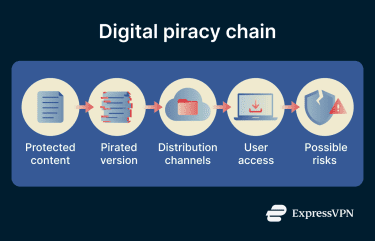
Types of digital piracy
Digital piracy takes different forms depending on how content is copied, accessed, or distributed without authorization.
- Streaming piracy and illegal Internet Protocol television (IPTV): Unauthorized websites, apps, and IPTV services redistribute copyrighted streams to deliver movies, television shows, or live content.
- Software cracking and keygens: Cracked programs and key generators bypass access controls, activation systems, or license checks on paid software.
- Counterfeit apps and modified Android Package Kits (APKs): Fake or modified APKs are distributed outside official app stores, often imitating legitimate services or unlocking paid content without authorization.
- E-book and game piracy: Digital books, games, and similar media are copied, downloaded, or shared through unauthorized platforms.
Consequences of digital piracy
Digital piracy has economic, legal, and ethical impacts across the digital ecosystem. It reduces revenue from legitimate sales and subscriptions, affecting industries such as film, music, publishing, and software. This loss can reduce incentives or resources for investing in new content and services.
Ethically, piracy challenges the principle that creators should be compensated for their work. Accessing or sharing content without permission disregards the intellectual property rights that enable creative industries to function.
Widespread availability of free pirated content also undermines legitimate digital marketplaces. Legal platforms may lose users, affecting their ability to compete and grow.
Legally, copyright infringement can result in fines, penalties, or civil and criminal liability, depending on the scale of the activity and applicable laws.
Risks and privacy concerns
Using pirated content can expose users to security and privacy risks, particularly when downloading files or using untrusted apps and websites.
- Malware bundled with pirated files: Pirated downloads can contain hidden malware that can damage devices, steal data, or grant attackers access.
- Fake sites harvesting personal data: Some piracy websites mimic legitimate platforms to trick users into entering personal or financial information.
- Spyware hidden in cracked software: Cracked programs and key generators may include spyware that monitors user activity or collects sensitive data.
- Unsafe permissions in pirated apps: Unofficial apps or APKs may request excessive permissions, increasing the risk of data misuse or unauthorized access.
- Tracking by advertisers or attackers: Piracy platforms may track user behavior through ads, trackers, or malicious scripts, potentially enabling further attacks.
Further reading
- Risks of downloading pirated, or "cracked", software and games
- What is spyware? Types, examples, and how to prevent it
- What is Trojan malware? Full guide to risks and protection
- How to know if your computer has a virus (Windows and Mac)
- What your internet service provider knows from your online traffic