Expressvpn Glossary
Data collection
What is data collection?
Data collection is the process of gathering and storing information. Data can be acquired from many sources, using a variety of methods, and for various reasons. For example, search engines like Google analyze user queries and interactions to refine search ranking algorithms. Online advertisers track ad impressions, clicks, and conversions to measure how well their campaigns perform.
How does data collection work?
Most data collection today happens digitally. Many operating systems include telemetry tools that automatically send diagnostic and performance information to help improve the software.
Websites and apps gather data using embedded scripts, cookies, local storage, and application programming interfaces (APIs) that allow them to read or write identifiers in a user’s browser or device. When the same third-party trackers appear across multiple sites, these identifiers can link a user’s activity across domains. Fingerprinting techniques can also identify users by combining device attributes, even when cookies are blocked.
Servers routinely log IP addresses, timestamps, and device details for security, analytics, and troubleshooting. Mobile apps may collect additional data through built-in software development kits (SDKs) and permissions, such as location or unique device identifiers.
Why is data collection important?
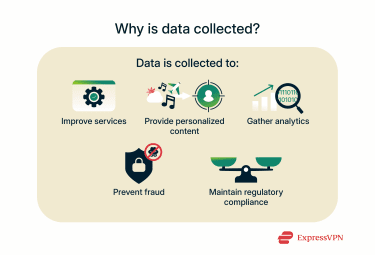 By collecting data, companies and individuals gain various insights. This can be used to support:
- Service improvement: User data helps businesses deliver personalized content, fix common issues, and more.
- Analytics: Accurate data lets organizations analyze performance and forecast trends.
- Advertising: Tracking supports targeted advertising and measures its efficacy.
- Security: Automatic data collection is used to detect and block fraudulent transactions and account breach attempts.
- Legal compliance: Some companies must log certain types of customer data to meet regulatory requirements.
Where does data collection happen?
Digital data collection happens at multiple levels. Scripts and cookies track users across sites, while voice assistants collect voice triggers, usage patterns, and location data. Email platforms, ad networks, and network services log metadata, such as timestamps, IP addresses, and device details, to support service functionality, analytics, and security.
Further reading
FAQ
What kind of data is collected online?
Websites and apps collect users’ data, including things like IP addresses, device details, location, browsing history, usage patterns, and metadata. Ad trackers may also infer demographic segments and purchase interests, and, in some cases, receive demographic or purchase data from advertisers, data brokers, or logged-in accounts.
Is data collection legal?
Data collection is generally legal, but it depends on both the type of data that is collected and the method used to acquire it. For example, the General Data Protection Regulation (GDPR) requires consent to be freely given and specific. In contrast, the California Consumer Privacy Act (CCPA) and California Privacy Rights Act (CPRA) give Californians the right to know when data is sold and to opt out.
How can I limit or block data collection?
In some cases, it's possible to opt out of data collection when installing software or by adjusting settings. Beyond that, disabling third‑party cookies and scripts and limiting app permissions can restrict the extent to which data is collected. Using privacy-focused browsers often automatically blocks tracking cookies.
Do VPNs help prevent data collection?
A virtual private network (VPN) can add a layer of privacy. It doesn't block data collection outright, but it hides the user's real IP address and encrypts traffic, making network-level tracking more difficult. Websites and apps can still collect data tied to accounts, device identifiers, or browser characteristics.