Expressvpn Glossary
Client-server network
What is a client-server network?
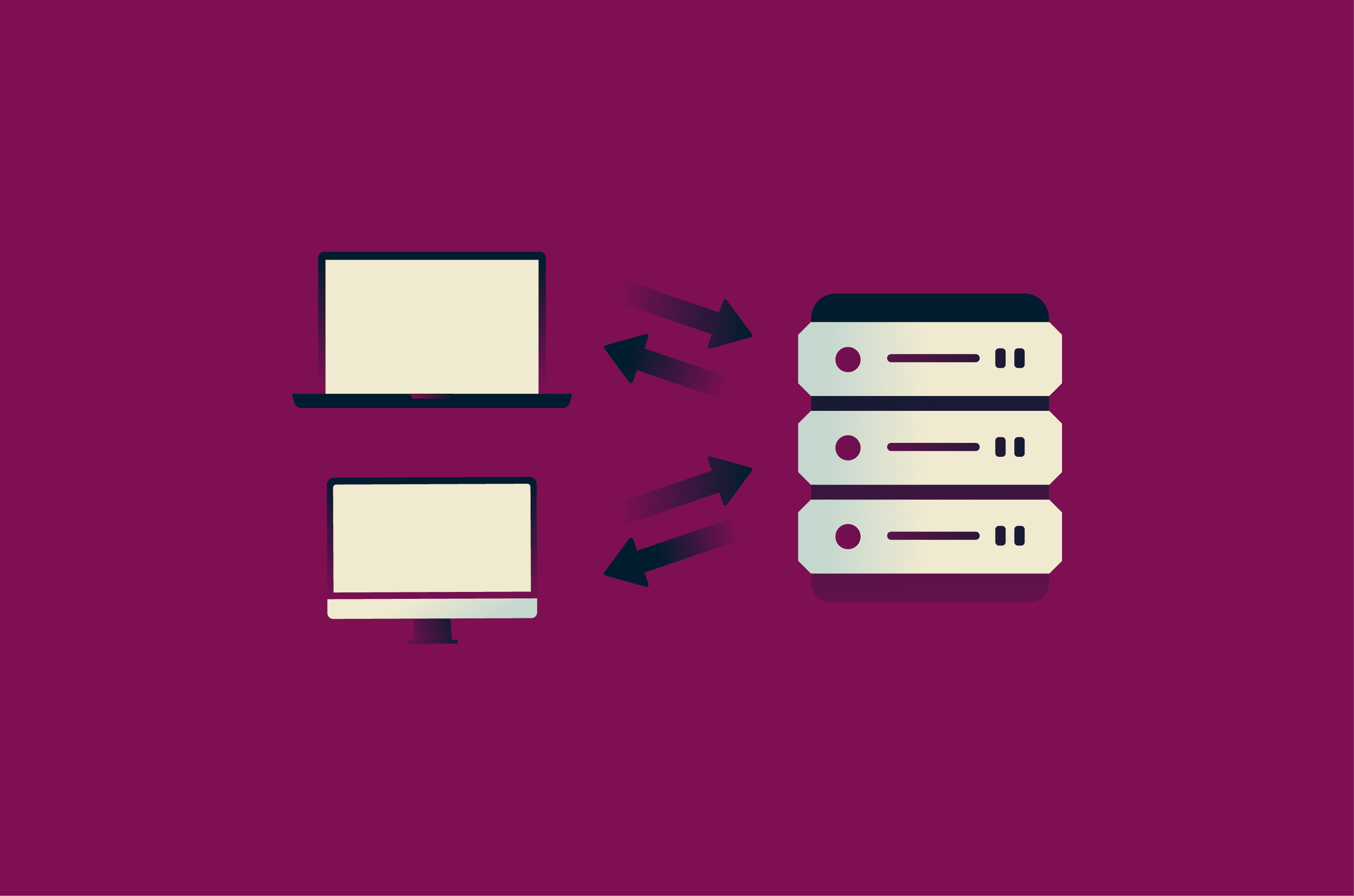
A client-server network is a network architecture in which clients make requests for services or information and servers respond to those requests. This is one of the two main network models; the other is peer-to-peer (P2P).
How a client-server network works
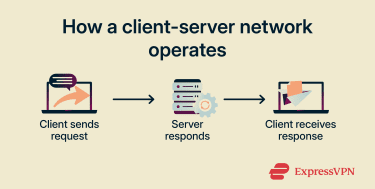 A typical client-server network interaction follows this simple two-step format:
- The client sends a request for data or services to the server.
- The server validates, processes, and responds to the request.
The server manages access permissions and serves as a centralized data repository. Network protocols, such as Hypertext Transfer Protocol (HTTP), File Transfer Protocol (FTP), and Simple Mail Transfer Protocol (SMTP), enable communication between clients and servers.
Security controls, like firewalls and passwords, are typically in place to protect the server’s resources, and the system scales well by adding clients or upgrading/adding servers as needed.
Examples of client-server networks
Well-known examples of client-server networks include websites (browsers act as clients, with web servers as the servers), email services, corporate file servers, cloud-based applications, and multiplayer gaming servers.
Advantages of client-server networks
- Centralized data management.
- Stronger security compared to P2P networks.
- Easier backups, recovery, and updates.
- Scalable infrastructure.
- Reliable resource sharing.
Disadvantages and limitations
- Server issues can affect all clients.
- Powerful and expensive hardware requirements.
- Risk of network congestion due to high numbers of clients and requests.
- Requires dedicated admin effort for maintenance, updates, and monitoring.
Client-server vs. peer-to-peer
| Model | Client-server | Peer-to-peer |
| Storage and management | Centralized | Decentralized |
| Best for | Organizations and cloud systems | Small networks and file sharing |
| Cost | Higher, due to the need for dedicated servers | Lower; no dedicated servers are needed |
| Stability | Higher and more predictable (with redundancy and proper hardware) | Generally lower (depends on peers staying online; resilient to single failures but prone to disruption from churn) |
Security considerations
To maximize security on client-server networks, it’s important for servers to have strong authentication systems and firewalls to filter incoming requests. Data encryption and smart access controls also help to protect client-server communications, while regular updates to client devices and servers can reduce vulnerabilities.
Further reading
- How does the internet work?
- Types of internet connections explained
- Internet speed for gaming: How fast do you really need?