Expressvpn Glossary
Broadcast storm
What is a broadcast storm?
A broadcast storm is a network condition in which flooded Layer 2 traffic overwhelms a local area network (LAN). It most often involves broadcast traffic, but excessive multicast or unknown unicast flooding can create similar effects. The surge in traffic consumes bandwidth and switch resources, which can delay or block normal communication and, in severe cases, bring part or all of the LAN down.
How does a broadcast storm work?
Normally, when a device needs to communicate with all other devices on a local network (for example, to find a device with a specific IP address), it sends a broadcast message. A network switch receives that message and forwards a copy to every device in the same network segment (except the device it was received on). Each device checks the message and responds only if relevant.
A broadcast storm occurs when these messages begin multiplying out of control. A common cause is a network loop, where switches are connected in a way that allows the same frames to circulate endlessly. Loops are the classic cause, although misconfigurations or faulty devices can also create excessive flooded traffic.
Since Layer 2 (the data link layer, responsible for moving frames between devices on the same local network) frames have no mechanism to expire as they circulate, switches can keep forwarding copies of them, quickly consuming bandwidth and device resources until the network becomes saturated.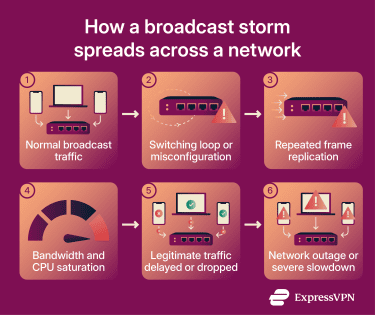
Impact of a broadcast storm
A broadcast storm can severely disrupt network operations and cause issues for both organizations and individuals:
- Overwhelming network resources: The excessive volume of broadcast messages consumes bandwidth and device CPU, causing legitimate traffic to be delayed or dropped. This can interrupt business operations and prevent users from accessing services.
- Resembling a denial-of-service (DoS) condition: The flood of broadcast messages creates sudden, high-volume network activity that resembles a DoS attack. IT teams may struggle to distinguish between a broadcast storm and a real cyberattack, delaying response to actual threats.
- Making troubleshooting harder: High traffic volumes, packet loss, and overloaded switches can reduce visibility into what else is happening on the network, making it harder to diagnose other incidents or performance problems during the storm.
- Exposing underlying weaknesses: Broadcast storms often reveal existing network design or configuration problems, such as switching loops, missing storm control, or poor segmentation, which can increase the overall risk of outages.
Where can a broadcast storm happen?
Networks using Ethernet switches are especially susceptible because switches flood broadcast packets within the same broadcast domain. If a loop or misconfiguration occurs, traffic can multiply quickly. Common environments include:
- Ethernet LANs and campus networks: Large Layer 2 networks with many connected devices can amplify the effect of a loop or misconfiguration because the storm can spread across a wider broadcast domain.
- Large flat network segments: Networks without proper segmentation allow broadcast messages to reach more devices, increasing the risk that excess traffic will accumulate and overwhelm the network.
- Virtual LAN (VLAN) environments with misconfigurations: VLAN or trunking misconfigurations can extend broadcast domains beyond intended boundaries or create Layer 2 loops, causing excessive traffic across multiple parts of the network.
- Branch offices and data centers: Networks with many switches and redundant connections are more complex, making loop-prevention errors more likely and harder to isolate.
- Home labs using inexpensive or unmanaged switches: These setups can be more vulnerable when the switches lack configurable safeguards, such as Spanning Tree Protocol (STP) or storm control, which can allow traffic to circulate unchecked if a loop forms.
Further reading
- What is Ethernet? A full guide for VPN and cybersecurity users
- What is a VLAN? A complete guide to virtual LANs
- What is a subnet? A complete guide to subnetting
- What is MAC flooding? How the attack works
- What is packet loss? Everything you need to know