Expressvpn Glossary
Alphanumeric password
What is an alphanumeric password?
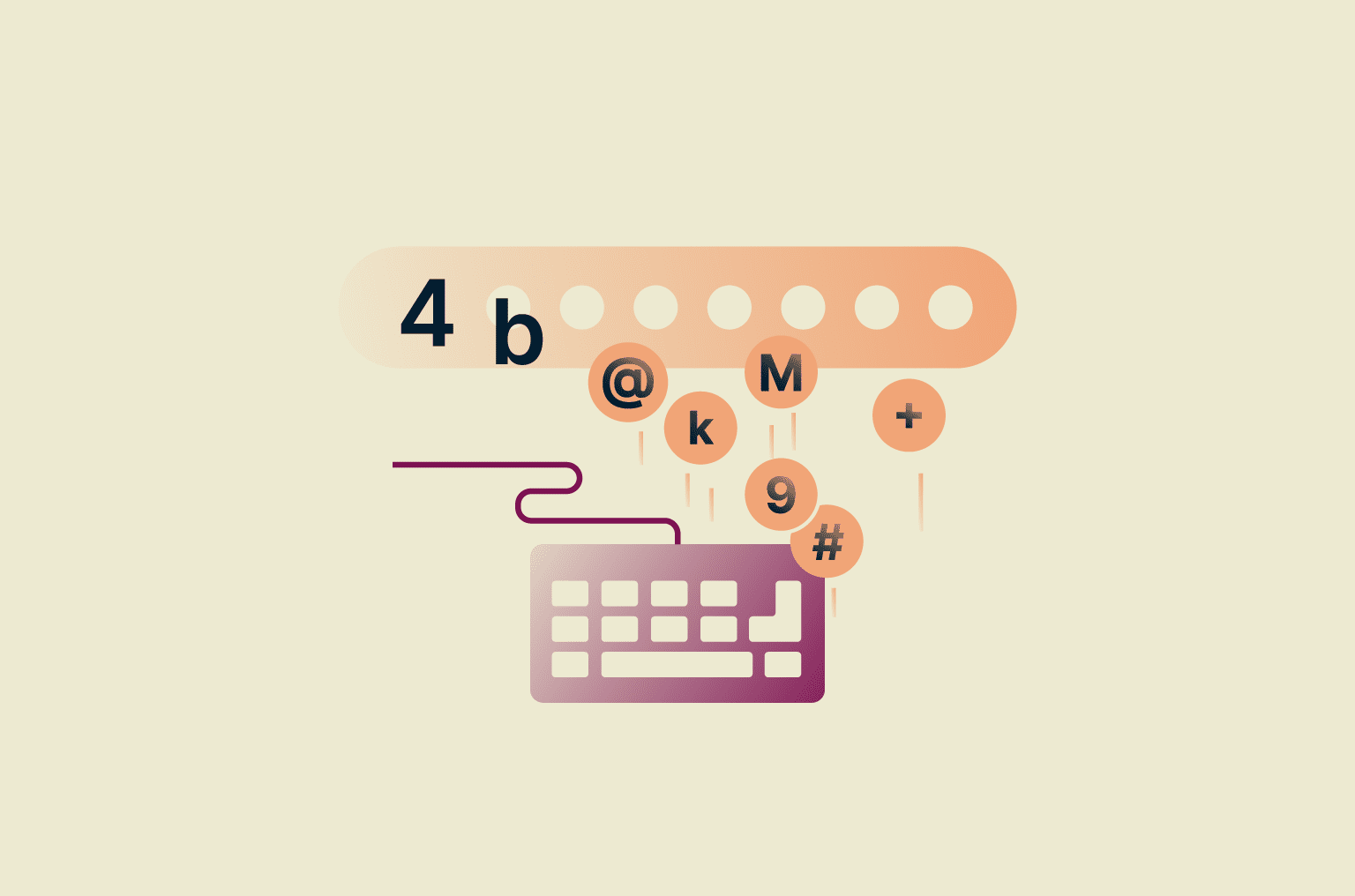
An alphanumeric password is one that contains both letters and numbers. Including more possible characters greatly expands the number of valid combinations. This can make alphanumeric passwords harder to guess than those containing only letters or only numbers.
In practice, passwords that include symbols (@, #, &, etc.) as well as letters and numbers are sometimes described as more "complex." Adding symbols can increase the search space, but real-world strength depends on how unpredictably they’re chosen.
Why alphanumeric passwords improve security
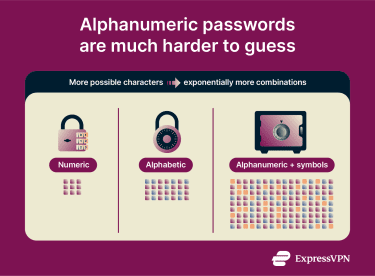 Mathematics can illustrate how the size of the character set affects the number of possible 8-character combinations:
- Numeric (0–9): 10⁸, or 100 million possible combinations.
- Alphabetic (a–z, lowercase only): 268, or 208 billion possible combinations.
- Alphabetic (A–Z, uppercase and lowercase): 528, or 53.5 trillion possible combinations.
- Alphanumeric: 628, or 218 trillion possible combinations.
If policies also allow passwords to include 32 special characters, the range of possibilities jumps to 948, or roughly 6.1 quadrillion combinations.
Depending on how the login system limits guessing attempts (e.g., rate limiting or lockouts), an 8-character password with a large character set can be time-consuming to brute-force in an online attack. In offline attacks (after a password-hash breach), guessing can be much faster. Longer passwords increase the number of possible combinations dramatically
Numbers aside, strength comes mostly from length and unpredictability. Many policies now focus on longer passwords (or passphrases) and blocking common or breached passwords, rather than requiring specific character types.
Examples of alphanumeric passwords
The actual strength of alphanumeric passwords depends on factors like length, randomness, and predictability. Below are examples of alphanumeric passwords with increasing complexity:
- Weak example: john1985
- Stronger example: R@inC0de82
- Even stronger example: ah@DcrEfs)k3TQCR
The first example is lacking, as the characters appear to have a clear meaning that could easily be guessed (a name and year).
The second is better, as it is longer, mixes upper- and lowercase letters, and introduces symbols. But it still contains real words that are simply masked with similar characters.
Created with a password generator, the last is both longer and truly random.
Security risks and vulnerabilities
Although alphanumeric passwords can be stronger, they aren’t inherently more secure. Added complexity can make them harder to remember, which may lead to unsafe habits. Practices to avoid include:
- Storing passwords carelessly: Plaintext files or unprotected notes can expose credentials; written passwords can be risky if they’re easily seen, copied, lost, or stolen.
- Following predictable patterns: Alphanumeric passwords may be vulnerable if they follow common patterns or use easy-to-guess personal details.
- Reusing passwords: Reuse across accounts increases exposure if one site is breached (credential stuffing). Using a password manager helps keep passwords unique.
- Keeping passwords short: Character-type requirements can push shorter passwords, which are more vulnerable. Length is a primary driver of strength.
Best practices for using strong alphanumeric passwords
Securing accounts involves more than just using alphanumeric passwords. Passwords should be long and hard to guess, avoiding predictable patterns and personal information that a stranger or acquaintance could guess.
Memorizing dozens of strong passwords is not feasible for most people. Rather than reusing logins (which can cause serious problems if one is compromised), the best solution is to use a password manager.
With such a tool, only one strong master password is needed to unlock the vault that stores all other passwords. Many password managers use strong encryption and a zero-knowledge security model, meaning vault data is encrypted in a way the provider can’t read.
Password managers also often include tools to generate strong passwords, flag reused credentials, and inform users if saved credentials appear in known breach data.
Finally, even with strong alphanumeric passwords, enabling multi-factor authentication (MFA) whenever possible adds protection if a password is compromised (though MFA strength varies by method).
Further reading
- What is a password manager, and why should you use one
- 4 tips to create a strong password and keep your accounts secure in 2026
- The best way to store your passwords securely