
Expressvpn Glossary
Website defacement
What is website defacement?
Website defacement refers to unauthorized changes made to a website or webpage that alter its visible content, appearance, or functionality. One can think of defacement as a form of digital graffiti. Defacers often tamper with publicly visible parts of a website.
The goal is often to cause disruption, share a pointed message, or harm the operator’s reputation. Website owners may suffer a loss of trust and credibility, even after the defacement has been removed. Visitors, in turn, may be unable to use parts of a targeted website until the problem is solved.
How does website defacement work?
To alter the content of a site, a defacer must first gain a way to modify the site’s content, files, database, administrative tools, or rendered output. This can be accomplished by:
- Abusing insider access to the website’s source code or backend administrative tools.
- Exploiting weak passwords or authentication vulnerabilities to take over user or employee accounts.
- Taking advantage of software vulnerabilities to access the web server or content management system (CMS).
- Injecting malicious code or content through vulnerabilities such as Structured Query Language (SQL) injection (SQLi), stored cross-site scripting (XSS), or remote code execution (RCE).
- Infecting the device of a privileged user with malware to gain remote access or steal credentials.
- Exploiting zero-day vulnerabilities in third-party services or plugins that grant elevated privileges.
The extent to which an attacker can disrupt a website depends on the level of access they have gained and the technology that the site is built on.
For example, a vandal might use the CMS to publish entirely new pages or delete existing ones. In other cases, they may make changes to the underlying HTML, CSS, PHP code, or database content. The end result may be a warped appearance, displaced visual elements, or pages becoming inaccessible to users.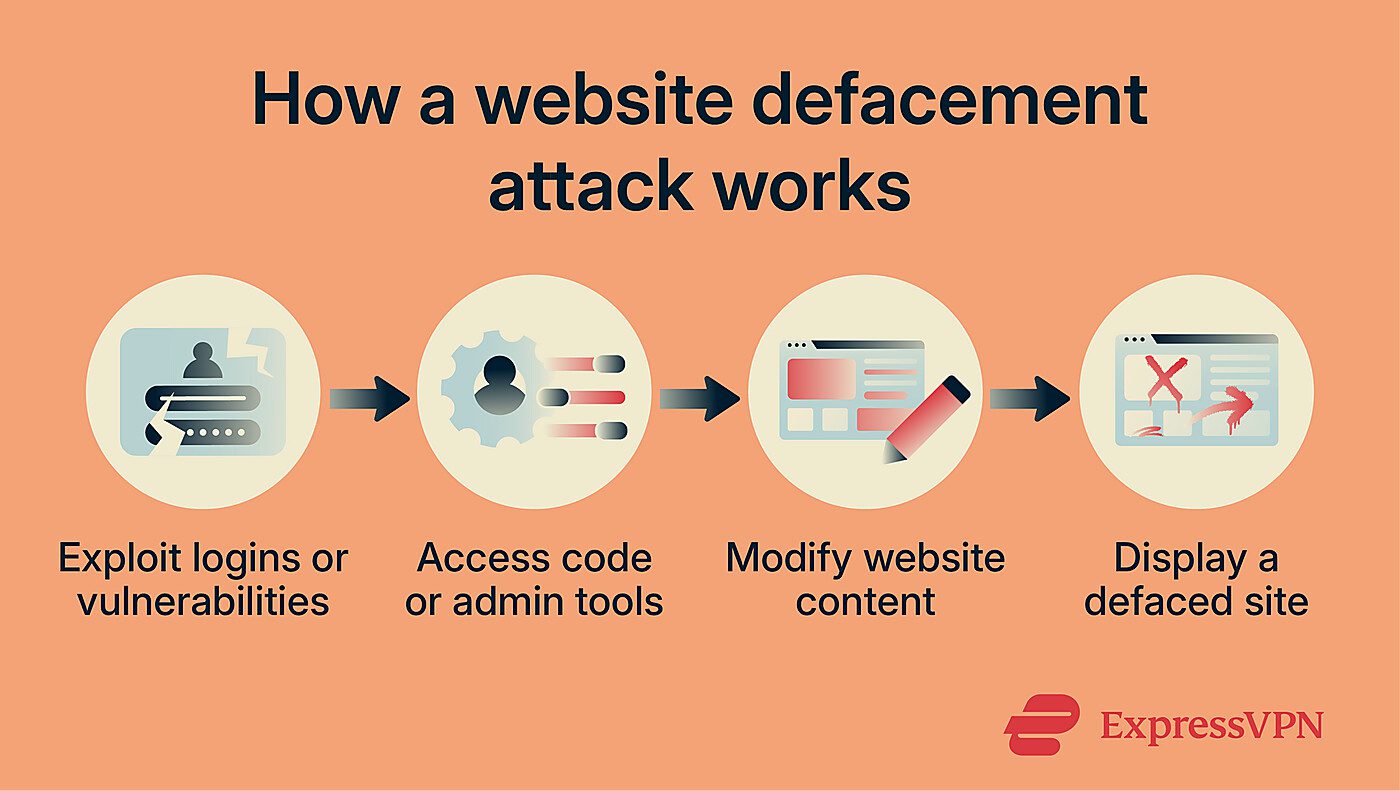
Why websites are defaced
Perpetrators may deface websites for many different reasons. Common motivations include:
- Political or ideological motivation to promote certain ideas or criticize specific organizations.
- Personal motivation to gain personal attention, recognition, or notoriety.
- Financial motivation to pressure website owners, demand payment, or advertise further compromise.
- Vindictive motivation to disrupt the site operator, employees, or visitors.
While many instances of defacement are carried out manually, some threat actors run automated mass campaigns using scripts, bots, or exploit tools to compromise many sites and display the same message.
Why is website defacement important?
Publicly visible defacement can harm an organization’s reputation by eroding user trust. Even if the defacement is swiftly removed, it can go viral and be documented across the internet.
Association with offensive or disturbing content may be the initial cause of reputational loss, but defacement also raises broader concerns about the website’s security. New or existing customers may feel at risk using the website or sharing information with the business, especially if the incident raises concerns about possible data exposure, malicious redirects, or scams.
Recovery can be time-consuming and costly. Removing defaced content might be simple, but auditing the incident, revoking unauthorized access, and fixing security vulnerabilities is often resource-intensive.
Risks and privacy concerns
Bad actors may abuse the same access used in a defacement campaign to carry out other attacks. These may have a more direct impact on a website owner’s finances, operations, and reputation:
- Attackers can inject malicious code into sites to steal sensitive information, redirect traffic, or maintain unauthorized access.
- Sites may be altered to spread phishing links, scam pages, or forms meant to harvest personal information.
- Defacers can steal administrator credentials, harvest visitor login details, or capture session tokens if other vulnerabilities are present, increasing the risk of account takeover or impersonation.
- Threat actors may escalate privileges, move laterally, or use the compromised site as a foothold for broader attacks, including supply chain risks when the site serves software, updates, or third-party resources.
Further reading
- Hacktivism: What it is and how it works
- What is a script kiddie? How they attack and why it matters
- What is SQL injection? How it works and how to prevent it
- Why software security audits matter