Expressvpn Glossary
Transactional data
What is transactional data?
Transactional data is the information that’s created whenever a transaction takes place between two parties, such as the exchange of money, goods, services, or digital assets. As such, it plays a key role in financial systems, e-commerce platforms, banking services, and many digital applications that rely on accurate records of activity.
What does transactional data include?
Transactional data usually captures the essential details needed to document and verify an exchange. The exact elements may vary depending on the system or industry, but common components include: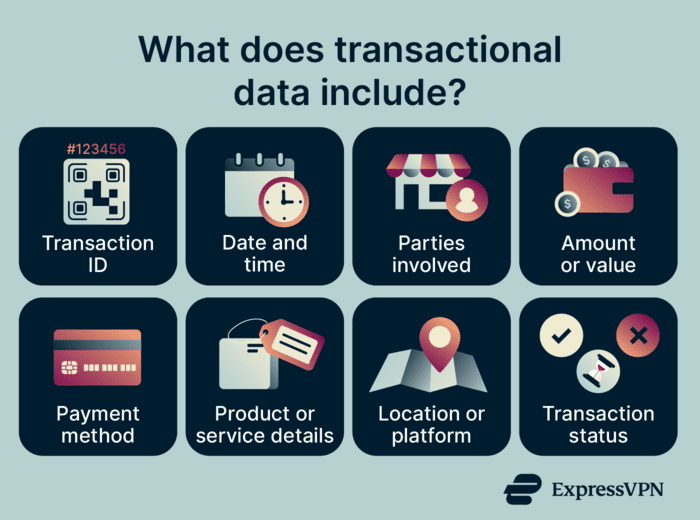
- Transaction ID: A unique identifier for each transaction.
- Date and time: When the transaction occurred.
- Parties involved: The buyer, seller, or participating accounts.
- Amount or value: The monetary value or quantity involved in the transaction.
- Payment method: The way the payment was made (e.g., credit card, bank transfer, digital wallet).
- Product or service details: The items purchased or services delivered.
- Location or platform: Where the transaction took place (e.g., store, website, or app).
- Transaction status: Whether the transaction was successful, failed, pending, or canceled.
How is transactional data handled?
Transactional data is usually handled in online transaction processing (OLTP) systems, which are designed to process large numbers of small, frequent actions and make the results available immediately in a consistent state. To keep records reliable, OLTP systems process each transaction as a complete unit.
For reporting and transactional analysis, organizations often move copies of this data into a data warehouse, a separate system optimized for complex queries, summaries, and trend analysis.
Organizations typically protect these records through several security practices due to their sensitive details. These include data minimization, encryption in transit and at rest, restricted access based on the principle of least privilege, and secure logging and monitoring.
Risks and privacy concerns
Transactional data often contains financial and personal information, so it can present privacy and security risks if not handled properly. Key concerns include:
- Behavior tracking: Repeated transactions can reveal patterns such as purchase habits, login times, locations, or account activity.
- Linkability: IDs, timestamps, and other metadata can help connect records across systems and build a more complete profile of a person.
- Exposure in data breaches: If attackers gain access to transactional data, the records may be used for fraud, identity theft, or the misuse of personal information.
- Profiling: Combined transaction records can be used to infer an individual's interests, routines, or other characteristics.
- Re-identification: Data that appears anonymous may still identify someone when matched with other datasets.
- Over-retention: Keeping transactional data longer than necessary increases the amount of sensitive information available if systems are misused or compromised.
Further reading
- Ultimate guide to the safest online payment methods
- Online shopping safety tips: How to protect yourself from scams
- Apple Pay scam: How to detect, prevent, and respond