
Expressvpn Glossary
Token ring network
What is a token ring network?
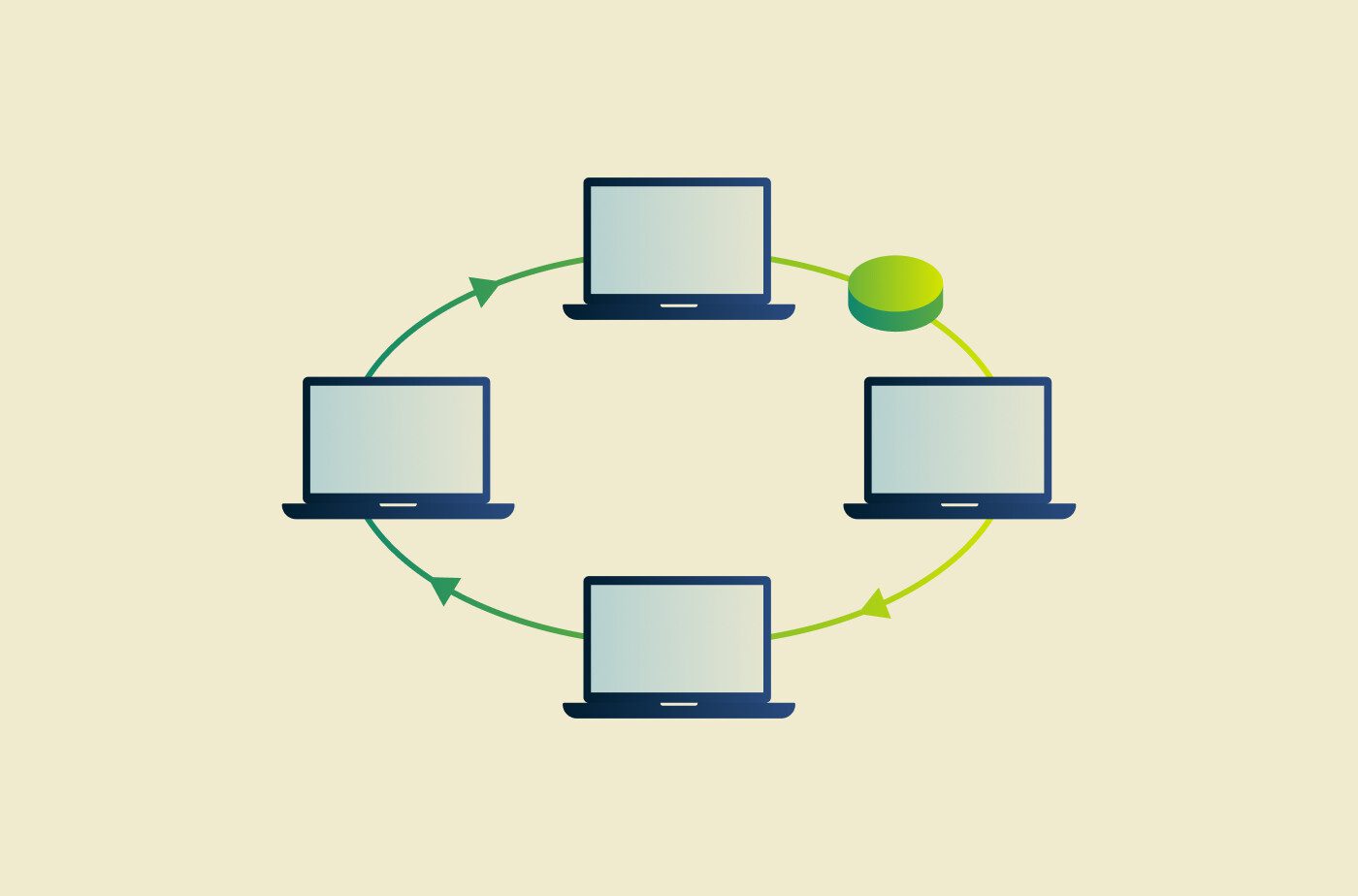
A token ring network is a type of local area network (LAN) in which devices are arranged in a logical ring and take turns transmitting data using token passing. Only the device holding the token can transmit at any given time, ensuring orderly communication.
The ring is logical rather than always physical. Devices connect in a star configuration to a central hub called a multistation access unit (MAU), which manages node connections and maintains ring continuity if a device fails. Token ring networks were common in IBM enterprise environments but are now considered legacy technology.
How does a token ring network work?
A small control frame called a token circulates continuously around the ring. When a device receives the token, it can attach data and send it along the ring. The destination device copies the data as it passes and marks the frame as received. The originating device sees this acknowledgement, removes the frame from the ring, and releases the token for the next device to use.
A designated device on the ring acts as the active monitor (AM), which detects conditions such as token loss and can generate a new token if necessary to restart communication.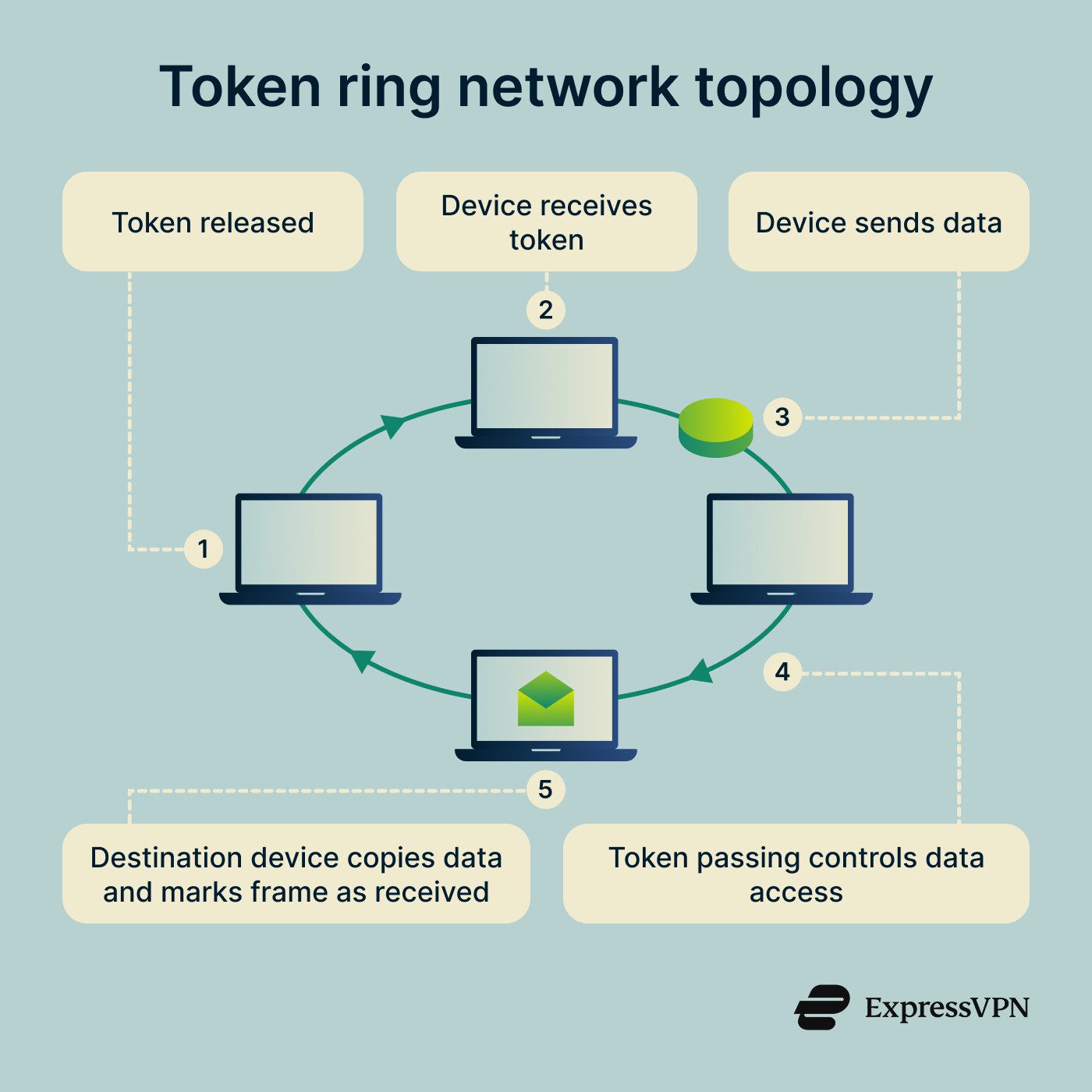
Token ring vs. Ethernet
While popular in the 1980s and 1990s for its reliability, token ring was largely replaced by Ethernet.
| Aspect | Token ring | Ethernet |
| Access method | Token passing | Carrier sense multiple access with collision detection (CSMA/CD) |
| Collisions | None | Possible (rare in modern switched networks) |
| Performance under load | Predictable and stable | Can degrade with congestion |
| Speed | 4–16Mbps | 10Mbps to multi-gigabit |
| Cost | Higher | Lower |
| Current use | Legacy | Standard |
Ethernet became the dominant standard because it is simpler, faster, and more cost-effective, while still offering strong performance in modern switched networks.
Why is token ring important?
Token ring networks introduced a structured method of controlling network access that reduced collisions compared to early Ethernet systems and improved stability in shared network environments.
Token ring also provides useful context for understanding how modern networking technologies evolved. It remains relevant for maintaining older network infrastructures and supporting networking education and certifications.
Where is it used?
Token ring networks are now limited to legacy environments, including:
- Older enterprise systems originally built on IBM networking technologies.
- Industrial systems that have not been upgraded.
- Educational settings for teaching networking concepts.
Limitations
Token ring networks have several practical drawbacks compared to modern networking technologies:
- Slower speeds than modern Ethernet.
- Configuration errors can disrupt network operation.
- MAU failure or token loss can interrupt communication across the ring.
- Limited compatibility with modern hardware and security controls.
- Higher cost and complexity.
- Increasing difficulty in sourcing replacement components.
Further reading
- What is network mapping? Complete guide to tools and best practices
- What is computer networking and how VPNs fit in
- What are network protocols? A complete guide
- Network topology: Best practices for modern networks
- What is Ethernet? A full guide for VPN and cybersecurity users