Expressvpn Glossary
Mobile network operator (MNO)
What is a mobile network operator?
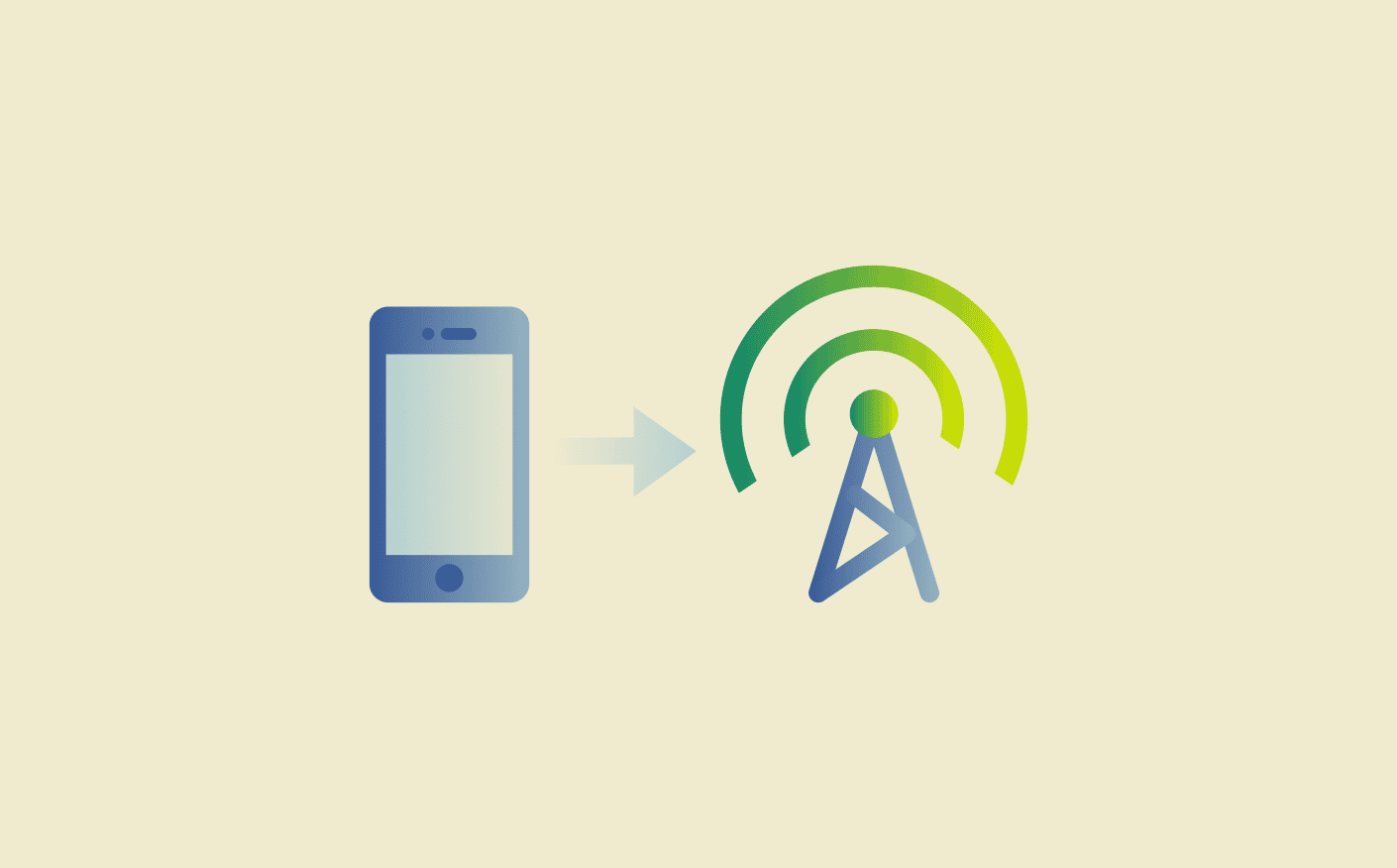
A mobile network operator (MNO) is a carrier that operates the main parts of a cellular network to provide voice, text, and mobile data services. It’s the primary provider of cellular infrastructure, managing everything from towers to the core network.
How does a mobile network operator work?
An MNO delivers connectivity through a series of steps:
- A mobile device connects to a nearby cell site using radio signals.
- Licensed spectrum gives the MNO exclusive access to specific frequency bands, allowing it to carry voice, text, and data signals reliably over wide areas.
- The mobile operator routes this traffic through its transport and core network, ensuring calls, texts, and data reach the correct destination.
- Subscriber authentication is performed via SIM or USIM credentials, stored on the device and verified by the network.
- As the device moves, the operator manages hand-offs between cells to maintain an active connection.
Roaming is part of that same model. When a subscriber moves outside the home carrier’s coverage area, the MNO can work with a partner network to keep service available. That’s how mobile service continues across borders or in areas served by another carrier.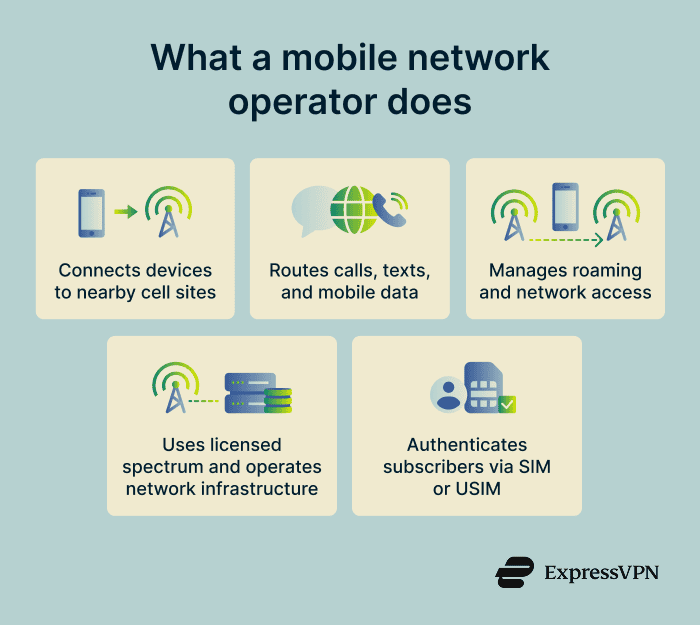
Why is a mobile network operator important?
An MNO is part of the communications backbone used by households, businesses, and public services. It supports mobile connectivity at scale, keeps voice and text services running, and helps connect devices such as phones, tablets, vehicles, and many Internet of Things (IoT) products.
This includes:
- Subscriber authentication and network access: MNOs control who can connect to the network using SIM or USIM credentials.
- Protection of sensitive information: Operators manage carrier-held data, which requires strong security measures.
- Public safety and emergency services: MNOs are integrated into national communications systems and emergency calling infrastructure, making them essential for safety and disaster response.
Risks and privacy concerns
MNOs handle sensitive network and subscriber data, which may pose a privacy risk. Mobile carriers can process location-related information and other metadata produced by calls, texts, and data sessions. That information is useful for network operations and emergency support but can be exposed if access controls are weak or the data is misused.
There are technical threats, too:
- SIM-swap fraud can let an attacker take over a phone number and intercept calls or one-time codes.
- Rogue cell towers, sometimes called fake base stations or international mobile subscriber identity catchers, can trick nearby devices into connecting.
- Legacy networks such as Global System for Mobile Communications (GSM) are exposed to downgrade and interception risks because they lack the stronger mutual authentication used in newer systems.
Further reading
- Who can see my mobile data history?
- Are eSIMs safe for travel and everyday use?
- Are mobile hotspots secure? A complete guide to staying safe
- Network connections: Everything you need to know
- The ultimate guide to phone security