
Expressvpn Glossary
Internetworking
What is internetworking?
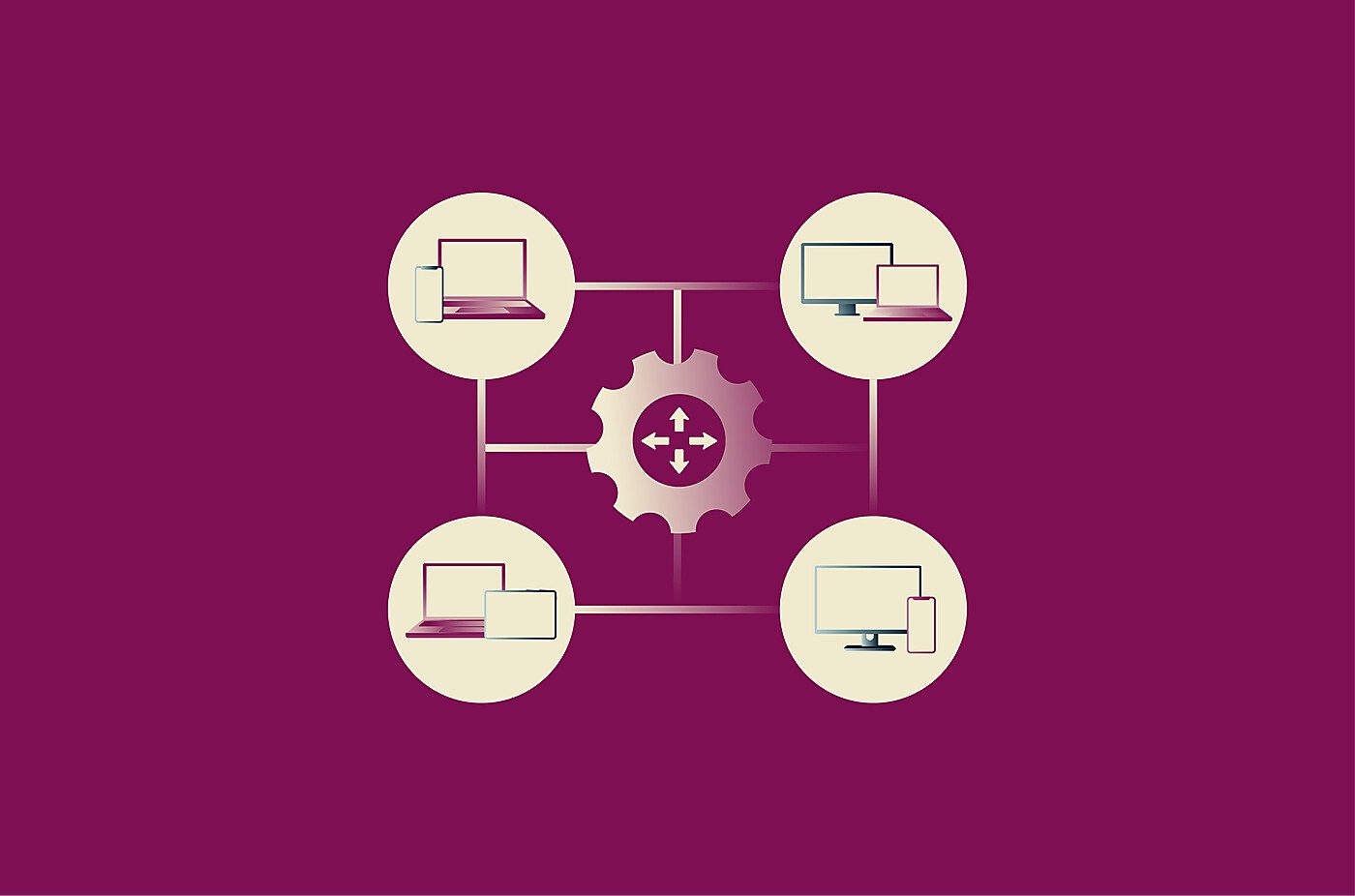
Internetworking is the process of connecting separate computer networks so they form a single interconnected system and can communicate across it.
Internet Protocol (IP), including IPv4 and IPv6, provides the addressing framework used to route traffic between networks.
How does internetworking work?
Internetworking moves data using packets, routing, and shared protocols. This typically follows a sequence:
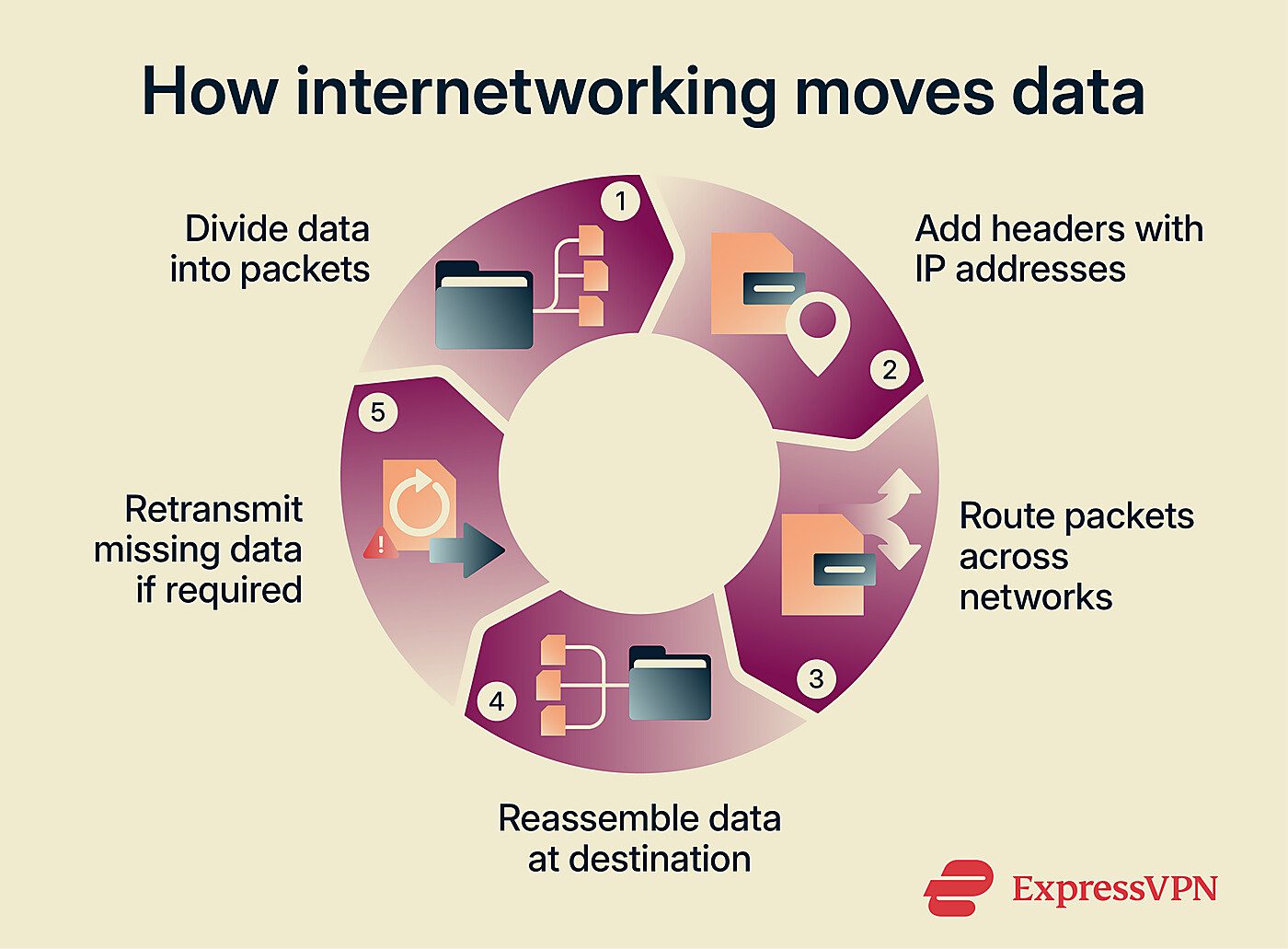
- Information is divided into packets with headers that contain control information.
- Each packet includes source and destination IP addresses to guide delivery.
- Routers forward packets based on routing tables and network conditions.
- Data travels across independent networks toward its destination.
- At the destination, IP helps deliver packets to the correct system, while Transmission Control Protocol (TCP) reorders the data and requests retransmission of missing packets if needed.
Where is it used?
Internetworking is used wherever multiple networks must operate together, such as:
- Enterprise environments connecting offices and internal systems.
- Internet service provider (ISP) networks carrying internet traffic.
- Cloud and hybrid setups integrating on-premises and cloud systems.
- Data centers and remote offices sharing systems and data.
- Internet of Things (IoT) and industrial networks connecting distributed devices.
Why is internetworking important?
Internetworking makes large-scale digital systems practical across locations, providers, and platforms. It:
- Links independent networks into larger systems for cross-network communication.
- Supports secure data exchange when networks use encryption or traffic controls.
- Reduces the need for every network to be directly connected to every other network.
- Allows online services to work end-to-end by carrying traffic across multiple networks.
Risks and privacy concerns
Internetworking increases exposure if connections and controls aren’t properly secured. For example:
- Misconfigured routing can expose traffic to unintended networks or external interception.
- Weak segmentation can increase the risk of movement between connected networks.
- Insecure protocols can expose data to interception during transmission across networks.
- Cross-network connectivity may allow attacks to spread beyond the initial entry point.
- Network monitoring may collect user data, raising privacy and data protection concerns.
Further reading
- What is routing, and why does it matter in networking?
- How does the internet work?
- Internet infrastructure: What it is and how it works
- What are network protocols? A complete guide
- What is computer networking and how VPNs fit in
FAQ
What is the difference between networking and internetworking?
Networking connects devices so they can communicate with each other, while internetworking connects separate networks so they can operate together as a larger system.
What devices are used in internetworking?
Routers are the primary devices used in internetworking because they forward packets between networks using IP addresses. Larger networks may also use Layer 3 switches, firewalls, and gateways to manage connections between networks.
Is internetworking important for cybersecurity?
Yes, because connecting multiple networks increases exposure, making controls like segmentation important to limit access and prevent attackers from moving between connected systems.
How does internetworking support the internet?
Internetworking enables the internet to function by linking many independent networks using shared standards and routing systems that exchange path information between them.
Can internetworking affect privacy and security?
Yes, because traffic can be observed as it moves across networks. While encryption helps protect data, monitoring and visibility requirements can introduce privacy tradeoffs.