Expressvpn Glossary
DNS amplification attack
What is a DNS amplification attack?
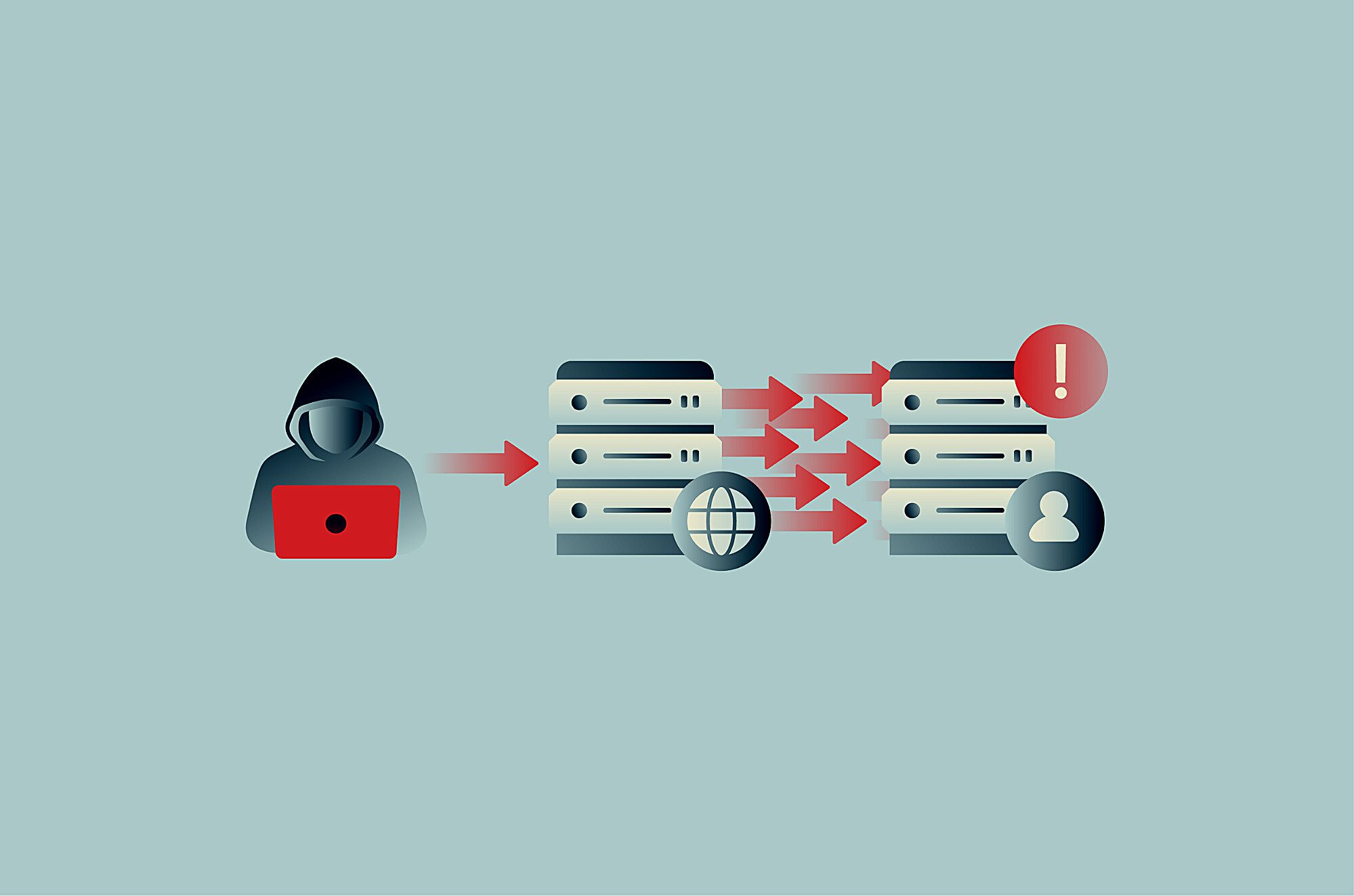
A Domain Name System (DNS) amplification attack is a type of distributed denial-of-service (DDoS) attack that uses IP spoofing, reflection, and amplification to overwhelm a target with traffic. Attackers send small DNS requests that trigger much larger responses, which are directed at the victim.
How does a DNS amplification attack work?
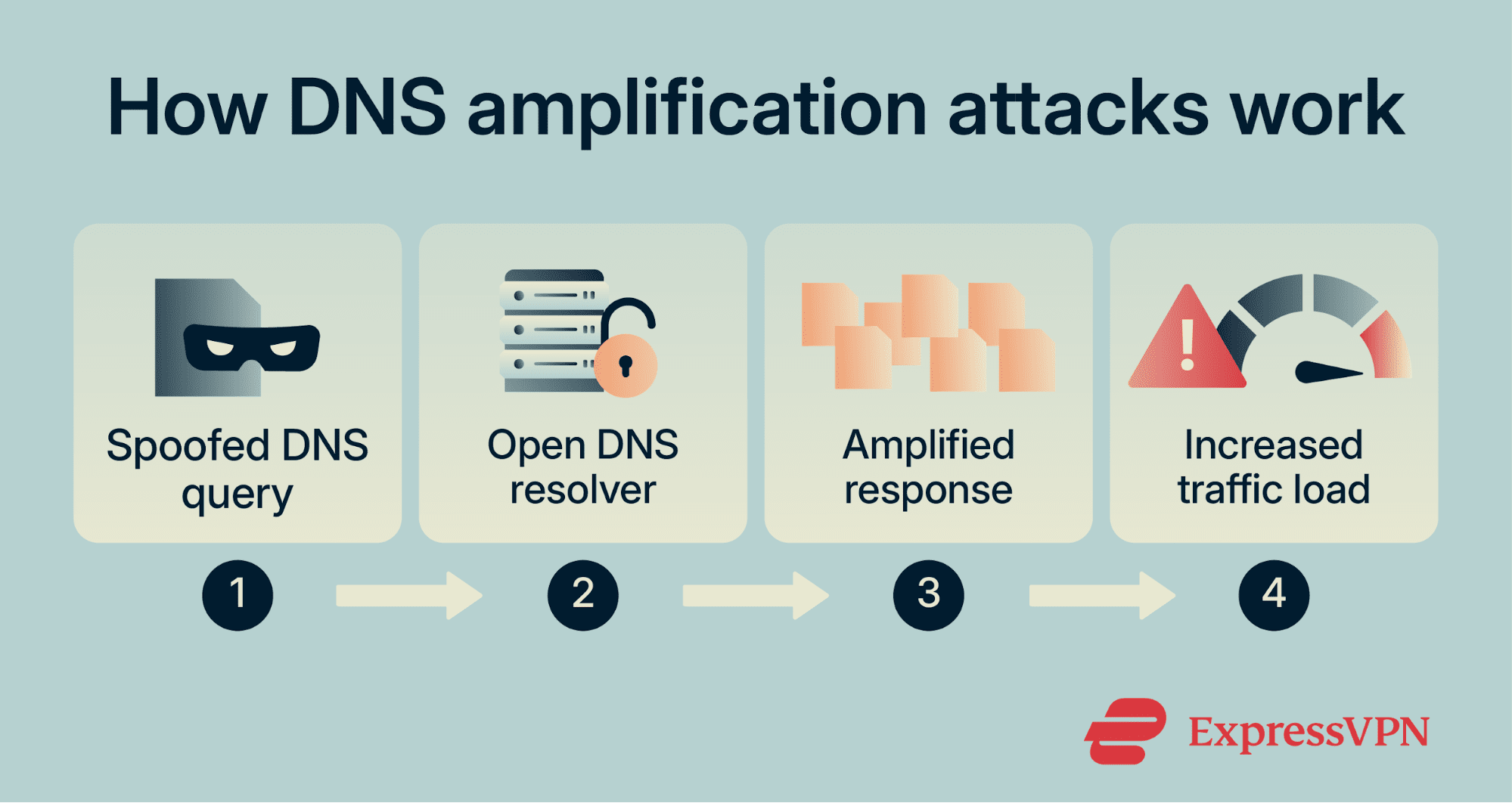
A DNS amplification attack begins with forged DNS requests sent to an open DNS resolver. Through IP spoofing, these requests appear to come from a victim’s device.
The server receives the spoofed requests, which trigger disproportionately large responses, amplifying the traffic sent to the victim. Botnets may also be used to increase the volume of requests and amplify the attack.
Who is targeted by DNS amplification attacks?
DNS amplification attacks can be used against a wide range of targets, including websites and web applications, gaming and voice over IP (VoIP) services, enterprise networks, and critical infrastructure.
They’re often used to disrupt a specific site or platform, taking websites offline and rendering services inaccessible.
Risks and privacy concerns
DNS amplification attacks carry risk because they can disrupt the availability and performance of online services by overwhelming systems with traffic. Since they target core infrastructure, their effects can extend beyond a single service and impact broader networks. They can:
- Cause service outages, making websites or applications temporarily unavailable.
- Create network congestion that slows or interrupts normal traffic.
- Disrupt access to data, systems, or online services that depend on affected infrastructure.
- Lead to financial losses and reputational damage for targeted organizations.
Further reading
- DNS security: How to protect your network from DNS threats
- What is a DNS flood attack?
- DoS vs. DDoS attacks: Key differences and how to protect yourself
- What is DNS spoofing? Learn how it affects your security
- DNS hijacking and how to prevent it