Expressvpn Glossary
Authentication server

What is an authentication server?
An authentication server is a system that verifies the identity of a user or device before granting access to a network, application, or service. It checks credentials such as usernames, passwords, certificates, or biometrics to confirm that a request is legitimate.
How does an authentication server work?
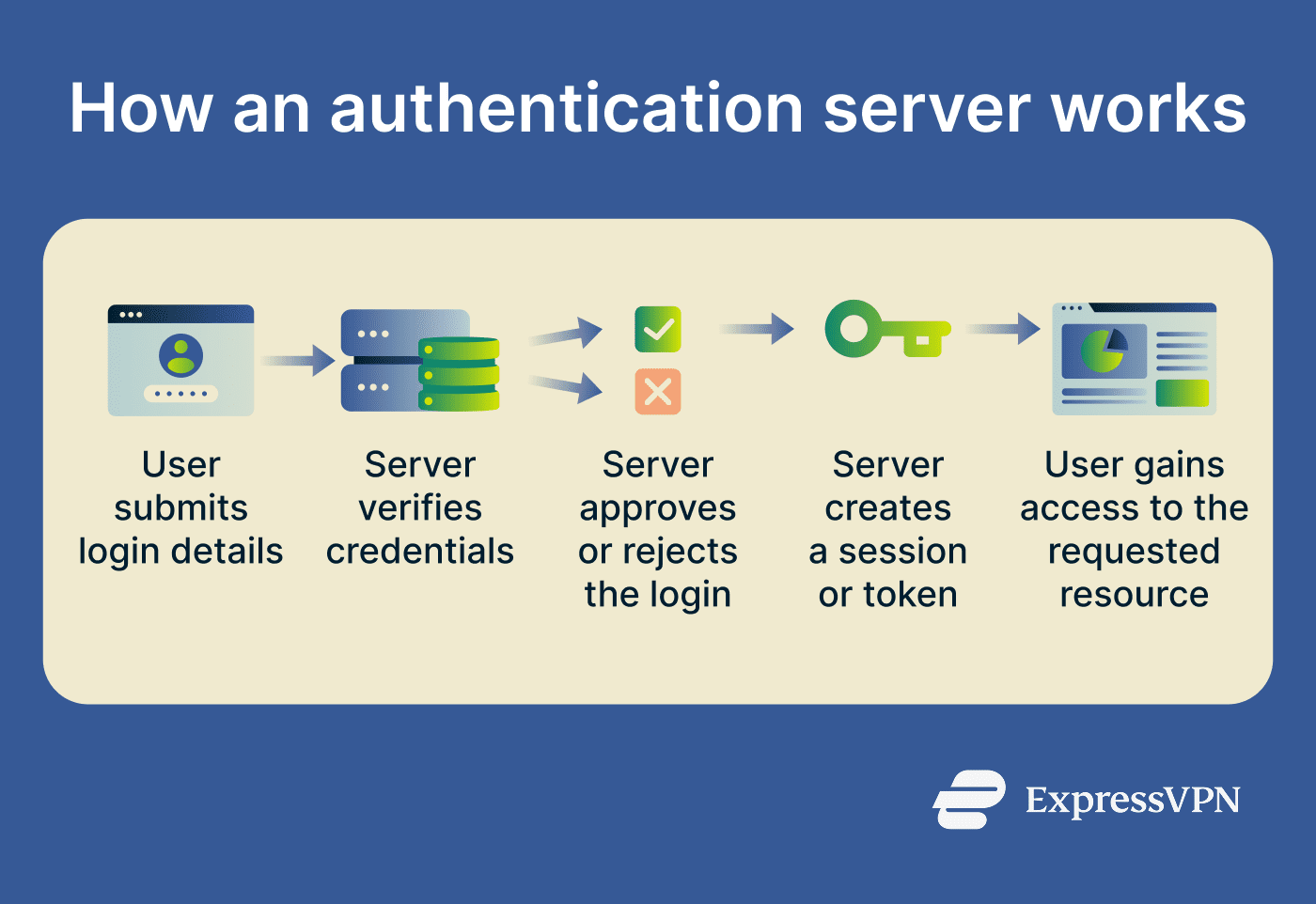
When a user or device attempts to access a protected resource, credentials such as a username and password or a security token are sent to the authentication server. The server checks these against an identity store (a database that holds user and device credentials).
If the credentials match, the server returns an "allow" decision, grants access to the requested resource, and may issue a session token that keeps them logged in for a set period. If the credentials don't match, access is denied.
Some authentication servers add an extra layer of protection by requiring multi-factor authentication (MFA), such as a one-time code sent to the user’s phone, before granting access.
Why is an authentication server important?
An authentication server is important because it:
- Prevents unauthorized system access: Verifies credentials before granting entry, helping block unapproved users or devices.
- Centralizes identity verification: Provides a single point for authentication, making it easier to apply consistent access rules across systems.
- Supports compliance: Helps meet regulatory requirements by enforcing access controls, maintaining authentication records, and supporting audits.
Where is it used?
Authentication servers are used across many environments where access needs to be controlled and verified, including:
- Enterprise networks and directories where employees need verified access to internal tools and resources.
- Virtual private network (VPN) and remote access systems to confirm the identity of users connecting from outside a network.
- Cloud apps and Software-as-a-Service (SaaS) platforms, which rely on centralized identity checks across distributed services.
- Wi-Fi and zero-trust environments, where access requests are continuously verified regardless of location.
- Banking and healthcare systems, which require strict access controls to protect sensitive data.
Risks and privacy concerns
Because an authentication server handles identity verification for an entire network, it's an important system to configure and maintain carefully.
If an authentication server is misconfigured, outdated, or poorly secured, it can increase the risk of unauthorized access to connected systems. Common risks include credential theft, brute force attempts, and credential stuffing.
Authentication servers can also introduce availability risks. Because they sit at the center of access control, they can become a single point of failure. If the server goes down, for example, during a denial-of-service (DoS) attack, users may be locked out of systems or services.
There are also privacy considerations. Authentication servers often log login activity, which may include metadata such as timestamps, IP addresses, and device details. If this data isn’t properly secured, it could be exposed or misused.
Organizations typically address these risks through MFA, regular audits, regular patching, and strong access controls.
Further reading
- Authentication vs. authorization: What’s the difference?
- What is OIDC? A complete guide to understanding the identity layer
- What is federated identity? Guide to secure authentication
- What is NTLM? Understanding this legacy authentication protocol
- 2FA vs MFA: Key differences and how to choose the right ones
- What is phishing-resistant MFA, and why does it matter?
- What is two-factor authentication (2FA), and how to set it up securely