
Expressvpn Glossary
VeriChip
What is VeriChip?
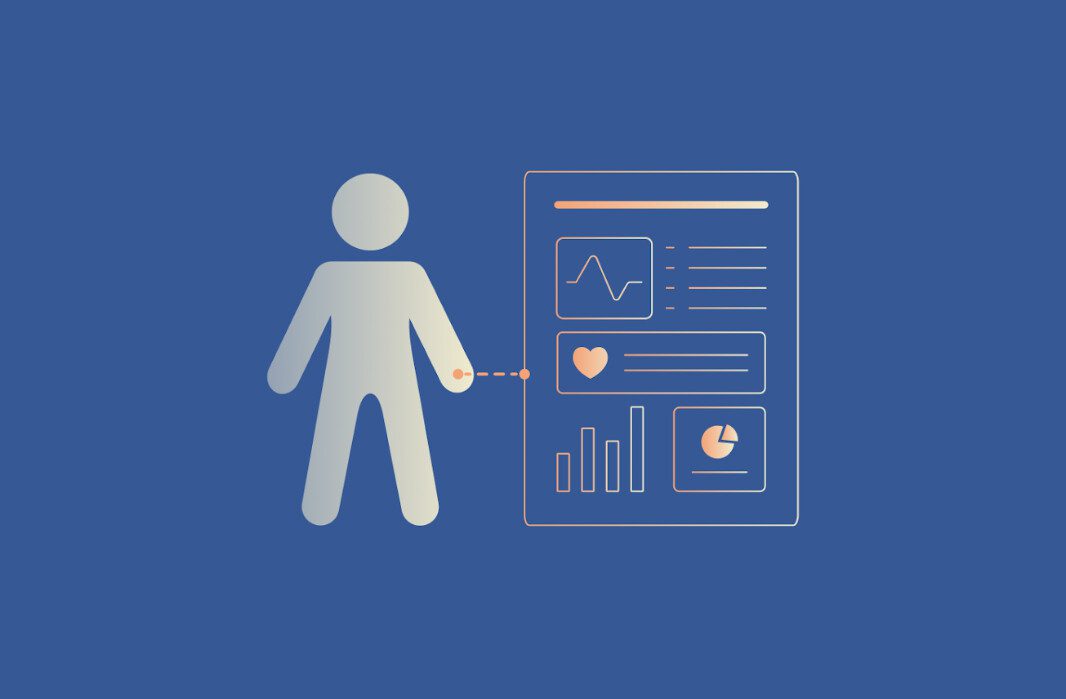
VeriChip was an implantable radio-frequency identification (RFID) microchip system designed for patient identification and access to linked health information. It's best understood as a historical example of implantable identity technology because it's no longer actively marketed or commonly used as a patient-identification system.
The chip itself didn't store full medical records. Instead, it contained a unique electronic code that could be used to access the patient's identity and corresponding health information stored in an external database.
VeriChip drew public attention because it embedded a digital identifier in the body, allowing a compatible scanner to read the ID code, which could be linked to a person’s records without external documentation.
How did VeriChip work?
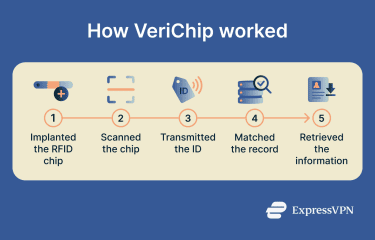
VeriChip worked by placing a small RFID microchip under the skin, typically in subcutaneous tissue.
When a compatible reader scanned the area, it used RFID to detect the chip and read its code. The chip then transmitted its unique identification number to the reader.
The connected system used that number to locate the corresponding record. What the system could access depended on how it was configured.
Why was VeriChip important?
VeriChip was important because it demonstrated that RFID could identify humans in a real-world medical system.
By tying an implanted identifier to external records, VeriChip became a reference point in discussions about how connected systems might verify, manage, and store personal identity.
Its significance goes beyond the device itself. VeriChip helped bring wider attention to questions about cybersecurity, consent, and control over personal data.
Where was VeriChip used or proposed?
Proposed and early applications of VeriChip included:
- Patient identification systems: VeriChip was designed for healthcare settings where a patient’s identity or health information needed to be accessed when the patient couldn't provide it themselves, such as during an emergency.
- Controlled-access environments: VeriChip and similar implantable RFID systems were proposed or trialed for access control, in which a scanned implant could verify identity for secure areas or systems.
- Identity verification discussions: Researchers cited VeriChip in discussions about implantable identity systems, including how physical implants could affect privacy, consent, cybersecurity, and control over personal data.
Risks and privacy concerns
VeriChip raised some privacy and security concerns because it relied on a wireless identifier linked to external records.
- Unauthorized scanning: Because RFID tags transmit wirelessly by compatible readers, a nearby scanner might detect a chip without the person's knowledge. This raised broader concerns about unauthorized identification, surveillance, and function creep.
- Cloning and spoofing: Researchers noted that implanted RFID identifiers could be cloned or spoofed, undermining trust if the chip were used for authentication or access control.
- Sensitive data exposure: The chip itself didn't store medical records, but the linked database could expose personal or medical information if access controls were weak, administrators misused access, or the identifier was linked to records without proper safeguards.
- Consent and ownership: The technology raised ethical questions about informed consent, removal, and control over access to the information associated with the implant.
Further reading
- What is RFID-blocking, and do you need it?
- What is biometrics? A complete guide to modern identity technology
- What is identity verification? A comprehensive overview
- Biometric data collection around the world