Expressvpn Glossary
Overlay network
What is an overlay network?
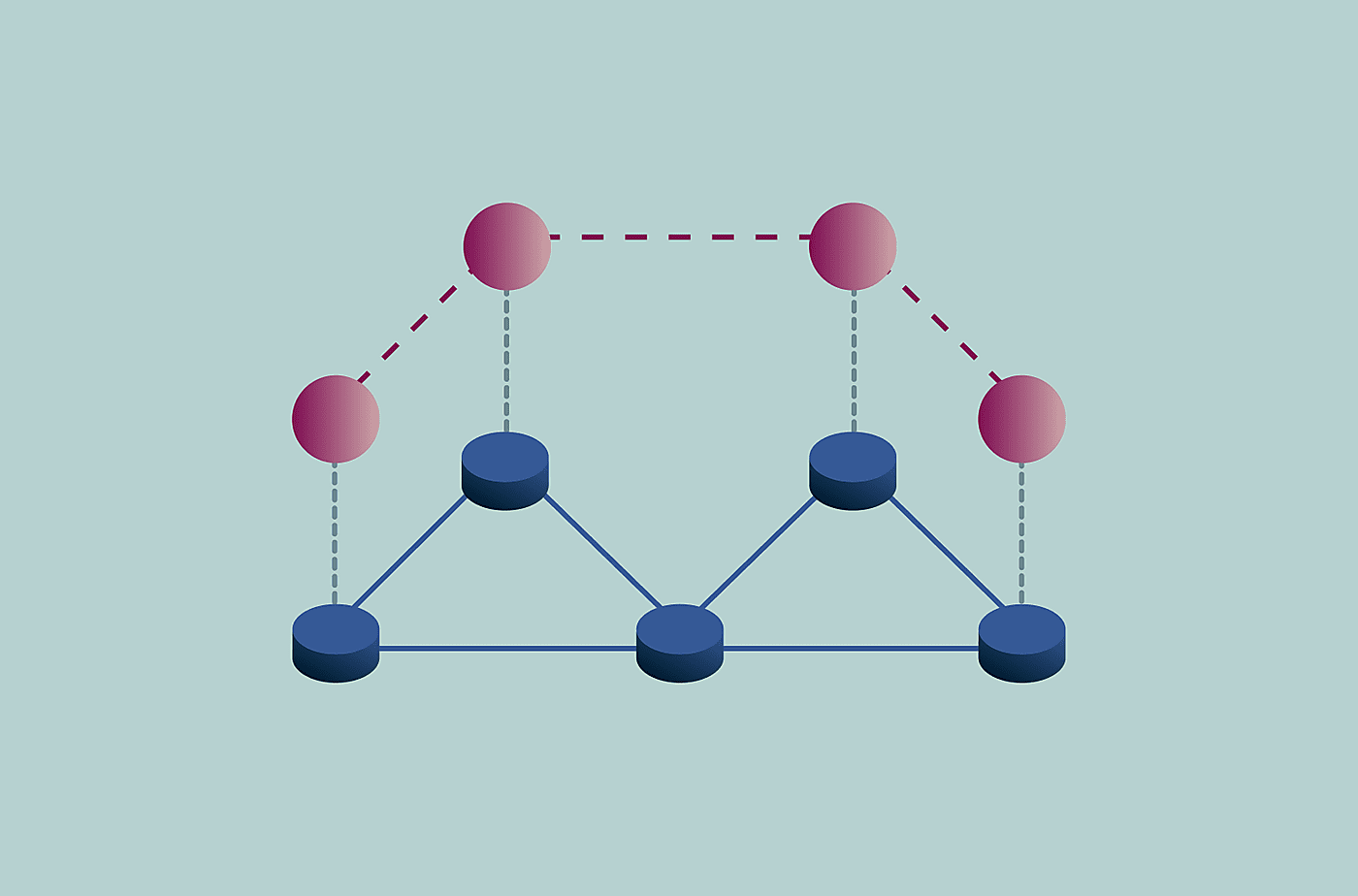
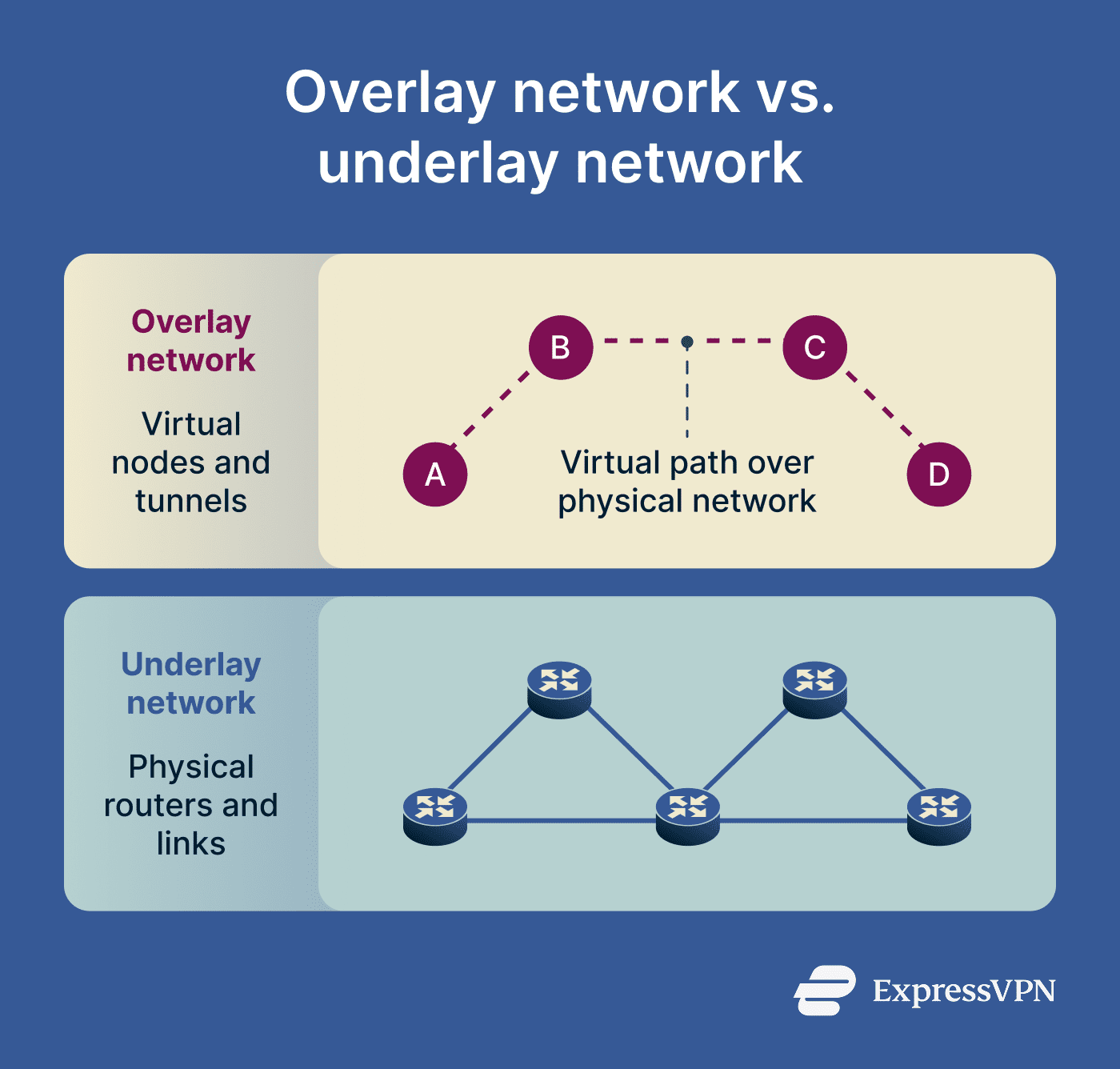
An overlay network is a virtual network that runs on top of another network. It connects devices via logical links while the underlying (underlay) network handles the physical transmission of data, allowing systems to control how data moves without changing the underlying infrastructure.
How does an overlay network work?
Overlay networks move data across an existing network using virtual connections. The underlying network carries the traffic and determines the physical path, while the overlay defines logical routing between nodes.
For example, when someone connects to a virtual private network (VPN) for remote access, the VPN creates a virtual path between the user’s device and the VPN server. The data travels across the public internet, while the overlay manages how it is packaged and routed.
The process usually works as follows:
- A device sends data: The overlay network starts with data that needs to travel between two endpoints.
- The system wraps the data: It encapsulates the original packet so it can traverse the underlying network.
- Traffic travels through a tunnel: This creates a virtual path between overlay nodes.
- Software controls the route: The overlay defines how traffic flows between nodes.
- The destination decapsulates the packet: When the packet reaches the other end, the overlay removes the outer encapsulation and delivers the original data.
Types of overlay networks
Overlay networks can be designed for different purposes, including private connectivity and resilience. Common types include:
- VPN overlays: Create private connections between devices over the public internet. They encrypt traffic and allow users or offices to access internal networks remotely.
- Peer-to-peer (P2P) overlays: Connect devices directly so they can share data without relying on a central server. Many file-sharing and distributed applications use this model.
- Mesh overlays: Allow nodes to connect to multiple others, improving resilience by enabling traffic rerouting.
- Content delivery network (CDN) overlays: Distribute and route content across globally distributed servers.
- Software-defined wide area network (SD-WAN) overlays: Use software to manage traffic between branch offices over existing internet links, improving control and performance across wide-area networks.
Why is an overlay network important?
Overlay networks make it easier to build flexible connections across different systems and locations. Since they work independently of the underlying infrastructure, organizations can change traffic flows or add services without modifying the physical network.
They support segmentation by isolating traffic or applying policies to users and applications, helping protect sensitive systems. They also make it easier to scale by connecting remote users, branch offices, or cloud services without major hardware changes.
Risks and privacy concerns of overlay networks
Overlay networks can introduce risks if not properly configured or monitored, though many can be mitigated with strong encryption.
- Misconfigurations expose internal traffic: Incorrect routing or access rules may allow sensitive traffic to pass through unintended paths.
- Weak encryption risks interception: If overlay tunnels don’t use strong encryption, attackers may be able to intercept data as it travels over the network.
- Visibility gaps hinder monitoring: Overlay traffic can hide within encapsulated packets, making it harder for some monitoring tools to inspect network activity.
- Extra latency may affect performance: Encapsulation and tunneling add processing overhead, which can introduce slight delays in some environments.
- Trust boundaries become unclear: Overlay networks can connect systems across different environments, making it harder to define which users or devices should have access.
Further reading
- What is computer networking and how VPNs fit in
- What is cloud networking? A comprehensive overview
- What is a virtual private cloud (VPC)?
- SD-WAN vs. VPN: Which is the right choice for your business?
- What is a VLAN? A complete guide to virtual LANs