Expressvpn Glossary
Just-in-time (JIT) access

What is JIT access?
Just-in-time (JIT) access is an access control mechanism where users or non-human identities (such as service accounts, agents, or bots) are granted permissions to systems, resources, or data only when needed and only for the duration required to complete a task.
How does JIT access work?
The process starts with a user or a non-human identity submitting a request specifying the target system, purpose, and required duration. The request is then reviewed, either automatically against predefined policies or manually by an approver. All access requests and sessions are logged, creating a record of who accessed what and when.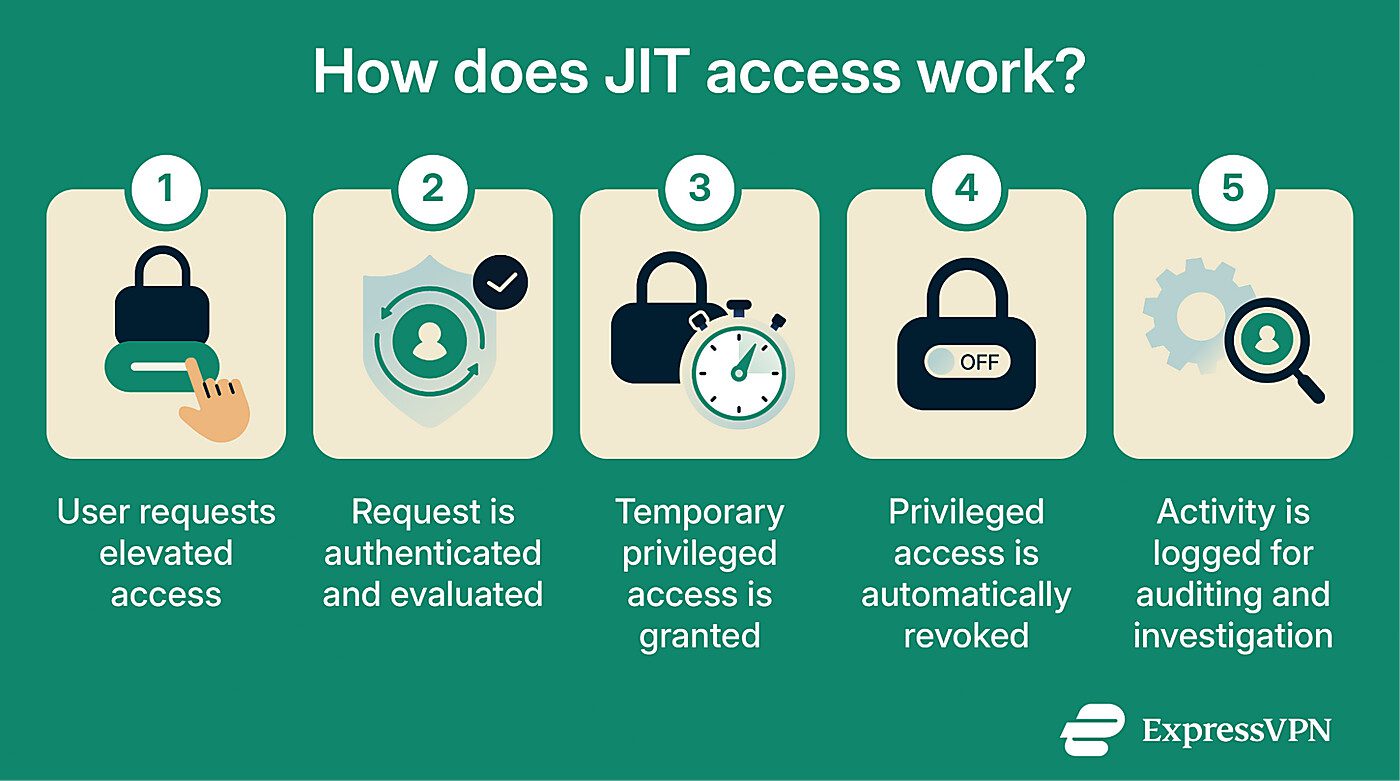
Some systems also support condition-based access. In this case, granted access is triggered by events such as an on-call alert or an incident ticket, without requiring a manual request.
Types of JIT access
JIT access can be granted and revoked in one of the three following ways:
- Temporary elevation: A user's existing account is temporarily granted elevated privileges, such as admin rights, for a defined period.
- Ephemeral accounts: A temporary account is created specifically for a task, then deleted when the session ends.
- Broker-based access: Access is routed through an intermediary system that authenticates the user, enforces policies, and connects them to the target resource without exposing credentials directly.
Why is JIT access important?
JIT access addresses one of the weaknesses of traditional access models, where elevated permissions are typically permanent. By ensuring access exists only where and when needed, it can reduce the window of exposure.
This can also limit the impact of a breach. With JIT access in place, an attacker can only operate within the active time window and scope.
Risks and privacy concerns
JIT access reduces risk, but its effectiveness depends on how well it is configured and enforced.
- Approval flows: Slow or inconsistent reviews can result in unnecessary or poorly scoped access being granted.
- Policy misconfiguration: Overly permissive settings can lead to sessions with broader permissions or longer durations than needed.
- Logging gaps: Incomplete or inconsistent logging makes it difficult to trace sessions or detect misuse.
- Operational delays: In time-sensitive situations, approval wait times can disrupt urgent work.
- Identity spoofing: If identity verification is weak, attackers can impersonate users to gain privileged access.
- User privacy: Detailed session logs collect granular activity data, which may conflict with employee privacy regulations in some jurisdictions.
Further reading
- Just-in-time (JIT) access: A detailed guide
- What is access control? How it works and why it matters
- Privilege escalation explained: Types of attacks and prevention
- Authentication vs. authorization: What’s the difference?
- The 7 pillars of zero-trust security