
Expressvpn Glossary
Data wiping

What is data wiping?
Data wiping is a software-based method of erasing data from storage devices by overwriting it. Unlike file deletion, which only removes references to the data, wiping replaces the underlying data, making recovery difficult.
How does data wiping work?
Data wiping uses software to overwrite existing data. This may be done in a single pass or repeated multiple times, depending on the method used.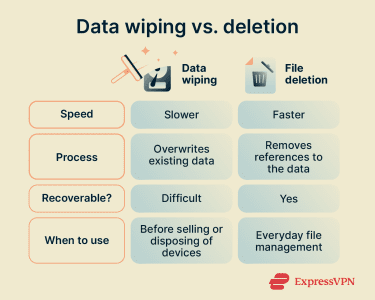
Wiping can target individual files, entire drives, or full devices, though different devices may require different wiping methods. For example, solid-state drives (SSDs) often require specific commands or dedicated wiping tools.
After the process is complete, some tools or programs perform a verification step to confirm that the data has been successfully overwritten.
Why is data wiping important?
Data wiping is important for protecting sensitive information and enabling safe device use. This includes:
- Security: Removes sensitive data from storage devices so it can’t be easily accessed or recovered.
- Disposal: Enables devices to be safely sold, recycled, or reused without exposing data.
- Compliance: Helps meet data protection regulations and legal requirements.
Risks and privacy concerns
Data wiping can introduce risks if not performed correctly or completely. This includes:
- Incomplete wiping: If the process doesn’t finish, some data may remain recoverable.
- Device compatibility: Some devices require specific wiping methods, or recoverable data may be left behind.
- Human error: Incorrect use of data wiping tools can permanently remove important data.
- Lack of verification: Residual data may remain if the wipe is not confirmed.
Further reading
- How to wipe a computer: Securely erase all data (step-by-step guide)
- How to remotely wipe your device to protect your data
- How to reset your MacBook or iMac: A complete step-by-step guide
- How to wipe your iPhone or Android before selling it
- How to factory reset your PC for better performance