Expressvpn Glossary
Data theft
What is data theft?
Data theft often occurs during or after a data breach, when attackers access a system to steal valuable information.
Attackers don’t always remove data from the original system. They may copy or exfiltrate it to attacker-controlled systems, meaning the victim still retains the data even though it has been stolen.
How does data theft happen?
Data theft can occur after attackers gain physical or digital access to a system. Physical access may involve stolen devices or unsecured computers, while digital access often relies on phishing, malware, or exploited vulnerabilities.
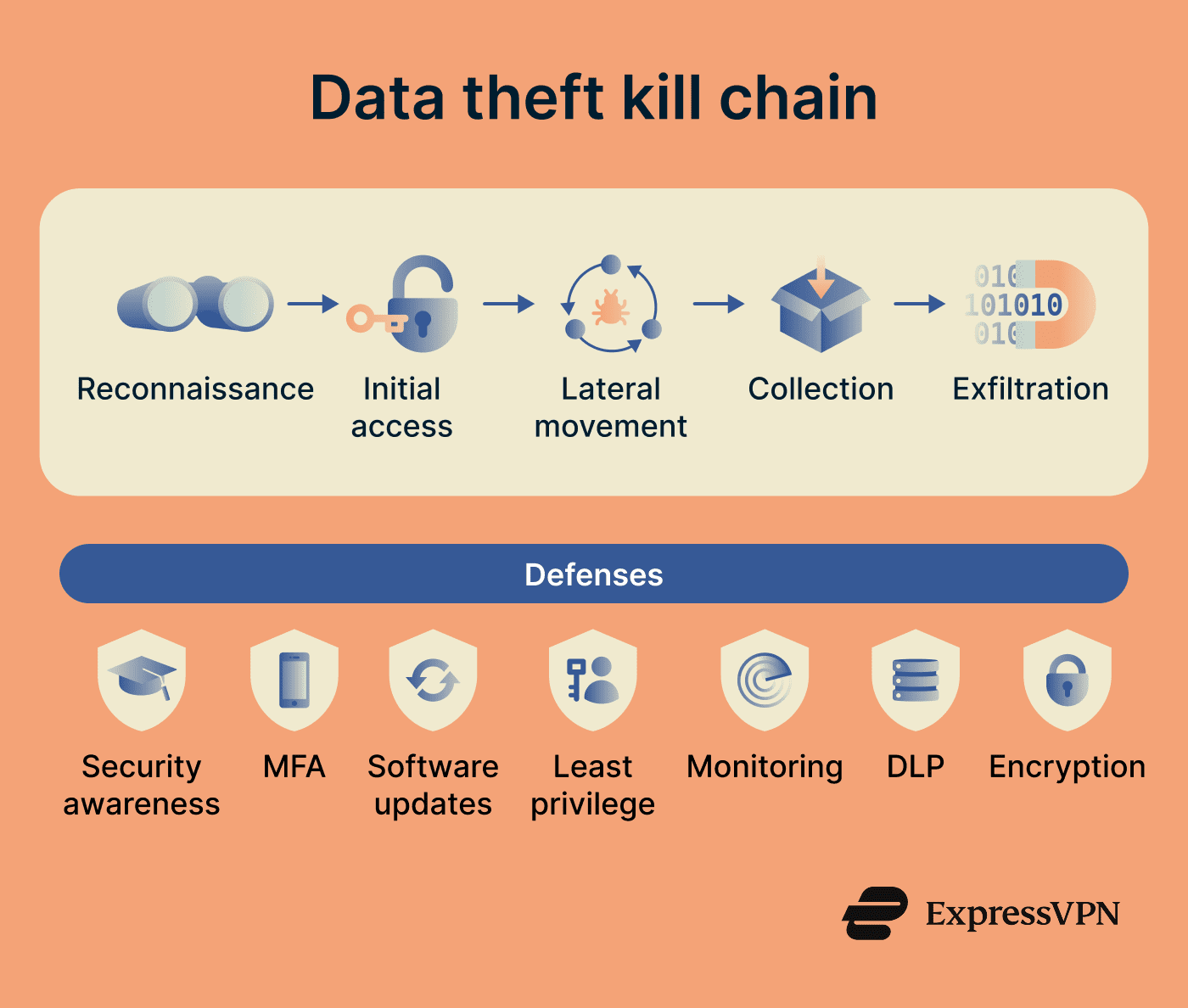
Data theft typically follows a sequence spanning both pre- and post-compromise activity:
- Reconnaissance: Gathering information about systems or targets.
- Initial access: Entering via phishing, stolen credentials, or vulnerabilities.
- Persistence: Maintaining access through backdoors or additional accounts.
- Privilege escalation: Gaining higher-level permissions to access sensitive data.
- Data discovery and collection: Identifying and gathering valuable data.
- Exfiltration: Transferring data out, often via uploads, cloud services, or command-and-control (C2) channels.
What information is at risk of data theft?
Attackers often target information with financial value, or data they can use for fraud or identity theft, including both personal and business data.
Common types of data at risk include:
- Personal information: Names, addresses, phone numbers, dates of birth, and government ID numbers.
- Financial data: Credit card numbers, bank account details, and payment records.
- Login credentials: Usernames, passwords, and authentication tokens used to access online accounts.
- Health records: Medical history, insurance details, and patient information.
- Business data: Intellectual property, internal documents, customer databases, and trade secrets.
Where does data theft occur?
Data theft can occur anywhere attackers can access and extract information, including:
- Corporate networks: Databases, file servers, and internal systems storing sensitive data.
- Personal devices: Laptops, smartphones, or drives, especially if lost or infected.
- Cloud services and accounts: Compromised accounts or vulnerable platforms.
- Public networks: Intercepted data on unsecured Wi-Fi.
- Third-party providers: Suppliers or partners with system access (supply chain attacks).
What are the risks of data theft?
Data theft can lead to fraud, account takeover, and identity theft.
Attackers may reuse stolen credentials to access other accounts (credential stuffing), especially if passwords are reused. Exposed personal data can also lead to harassment, stalking, or doxxing.
Once data is exposed online, it is difficult to control. Even small data points, such as metadata, can reveal patterns like location or activity over time.
Further reading
- Data theft: What it is and how to protect yourself
- What is data exfiltration? A complete guide
- What is a data breach? How to safeguard your information
- What is identity theft, and how can you protect yourself?
- Signs of identity theft and how to spot them early