Expressvpn Glossary
Configuration management database (CMDB)
What is a configuration management database?
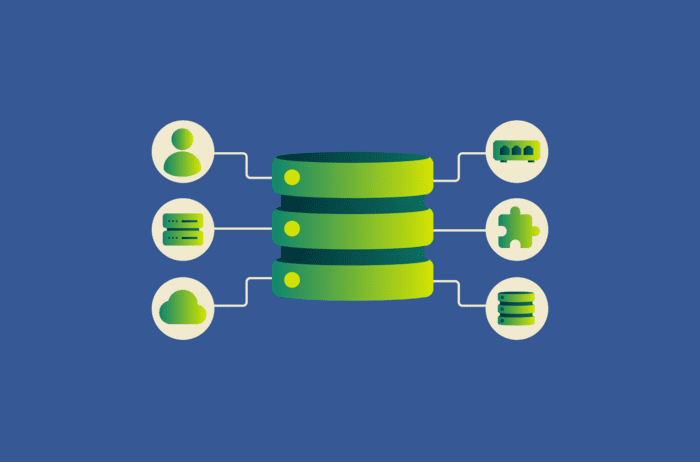
A configuration management database (CMDB) is a centralized repository that stores information about an organization’s IT components, known as configuration items, and the relationships between them.
How does a configuration management database work?
A CMDB collects and organizes details about configuration items, which represent components in an IT environment such as devices, applications, and services. Information is often gathered through automated discovery tools that scan networks and infrastructure to detect these resources.
Each record typically includes attributes such as system name, version, owner, location, and operational status. In addition to storing attributes, CMDBs map relationships between systems, applications, and users to show how they are connected and depend on one another. CMBDs are regularly updated using automated discovery, integrations, and in some cases, manual input.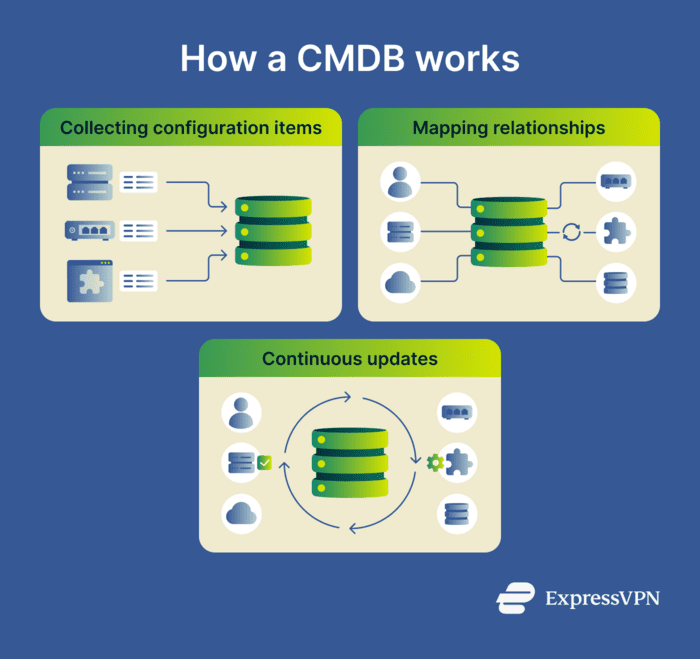
Why is a configuration management database important?
A CMDB improves visibility across complex IT environments, which comes with benefits such as:
- Reduced network blind spots: The centralized view of data and their relationships makes it easier to identify gaps or unmanaged assets.
- More accurate change management: Documented configurations help teams assess the potential impact of updates prior to implementing changes.
- Faster incident investigations: When outages occur, the database helps identify affected systems and their dependencies.
- Audit and compliance support: Many regulatory frameworks require accurate documentation of systems and configurations.
Where is CMDB used?
Common environments where CMDBs are used include:
- Enterprise IT service management (ITSM): CMDBs are often integrated with ITSM platforms to support incident management, service requests, and change tracking.
- Cloud and hybrid environments: Infrastructure across on-premises systems and cloud providers can be documented and monitored in one centralized database.
- Data centers and internal networks: Servers, storage systems, networking devices, and applications can be recorded as configuration items.
- Security operations and audits: Security teams use CMDB records to track assets, monitor configuration states, and verify compliance requirements.
- DevOps and infrastructure teams: By maintaining a shared record of systems and dependencies, a CMDB helps bridge development and operations teams, improving coordination when deploying changes or troubleshooting issues.
CMDB risks and privacy concerns
Risks with CMDBs arise if they’re not properly maintained. This can include:
- Outdated or inaccurate records: If configuration items aren’t updated regularly, the CMDB may provide an incomplete picture of the environment.
- Incorrect data spreading across systems: Poor integration with other management tools can cause incorrect data to propagate across systems.
- Exposure of sensitive asset information: CMDBs may contain infrastructure details that could be valuable to attackers if accessed improperly.
- Weak access controls: Broad permissions may allow unauthorized users to view or modify records.
- Incomplete dependency mapping: Missing relationships between systems can hide potential attack paths or failure points.
Further reading
- What is network discovery? How to enable it safely
- What is security posture? A complete guide for organizations
- What is a cybersecurity risk assessment?
- What is shadow IT, and why it matters for security