How to spot and avoid Etsy scams while shopping online


Etsy is an online marketplace where buyers purchase items from individual shops, including handmade, vintage, and custom products. Like other large marketplaces, Etsy also sees scams. Some listings or interactions can appear legitimate at first, only to reveal problems later.
This guide looks at how Etsy scams typically operate, the warning signs buyers and sellers commonly encounter, and how the platform’s systems are used when something goes wrong. It also explains how listings, messages, and orders are usually reviewed when there’s a mismatch between expectations and what ends up happening.
What are Etsy scams?
Etsy scams are attempts to deceive buyers or sellers through listings, messages, or account activity. They can involve payments for items that are never delivered, items that are materially different from what was advertised, or products that are not legitimately handmade, vintage, or custom as claimed.
Others take the form of phishing, where messages or emails imitate Etsy in order to capture login or payment details.
These scams often rely on trust signals that appear credible at first glance, such as polished photos, competitive pricing, familiar branding, or strong early reviews, while obscuring important details in shipping timelines, item descriptions, or shop policies. In many cases, the result is a transaction or account issue that becomes difficult to verify or resolve once it unfolds.
Common types of Etsy scams and how they work
Below are some of the more common ways Etsy scams happen.
1. Fake shops and non-delivery scams
Some scams involve shops that appear legitimate at first. They use polished photos or copied listings to make the storefront look active and trustworthy. After collecting payments, communication stops, and nothing is shipped. In many cases, the shop is later deleted or emptied, leaving buyers with no direct way to contact the seller.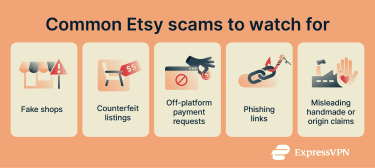
2. Counterfeit items or products that don’t match the listing
Some listings use images or descriptions that don’t reflect the actual item being sold. Photos may be taken from real creators, brands, or unrelated sources, creating expectations about design, materials, or quality that aren’t delivered.
The issue becomes clear after the item arrives, when it differs in materials, finish, branding, or overall quality from what the listing showed. These listings are sometimes priced lower than comparable items, which can make them seem like a good deal.
3. Off-platform payment and communication scams
A scammer may try to move the conversation away from Etsy or ask you to pay through a bank transfer, cryptocurrency, or an external link. In some cases, listings direct buyers to an independent website with promises of discounts or special offers, encouraging them not to use Etsy checkout at all.
Payments made outside Etsy are not covered by Etsy’s Purchase Protection program. When a transaction happens off the platform, Etsy has limited ability to review what occurred or offer support if something goes wrong.
4. Phishing and account takeover scams
Some scams focus on accounts rather than individual orders. These often begin with messages or emails that appear to come from Etsy. Links lead to fake login or support pages designed to collect account credentials. Once access is gained, scammers may place orders, change account details, or message others while posing as the account owner.
5. Misleading handmade or origin claims
Some listings present products as handmade, original, or created by a specific maker when they are actually mass-produced items that are widely available elsewhere. In these cases, buyers may pay a premium for products that are not unique or artisan-made, despite how they are presented in the listing.
Why Etsy is targeted
Etsy is not unique in facing scams. Any large marketplace that moves money between strangers attracts fraud attempts. Here are some of the main reasons:
- Large and fast-growing user base: Any marketplace with millions of active buyers and sellers becomes a target. High activity means scammers can attempt many interactions with little effort, and even a small success rate is profitable.
- Low barriers to opening a shop: Etsy is designed to make it relatively easy for new sellers to get started. While this supports independent creators and small businesses, it can also allow short-lived shops to appear legitimate before problems become visible.
- Recognizable brand that is easy to imitate: Etsy’s name, design, and messaging are widely recognized. This makes them easy to replicate in phishing emails, fake support messages, or imitation login pages that appear familiar at first glance.
Who is most at risk?
Scammers often target users who have less context to spot fraud. On Etsy, this includes:
- New buyers or sellers: They are still getting familiar with how Etsy listings, communication, and checkout normally work.
- People shopping for high-value or limited-edition items: These categories attract more counterfeit products and non-delivery scams.
- Anyone making quick decisions: Rushing through checkout or messages can make it easier to miss warning signs.
How to spot Etsy scams
Many scams targeting buyers show subtle warning signs in listings or seller interactions. These indicators may help identify potential issues before an order is placed.
New, inactive, or unprofessional profiles
New shops can be legitimate, but profiles with little activity or incomplete details offer fewer signals about seller reliability. Warning signs include:
- No profile photo or a very generic one.
- No “About” section or extremely vague shop story.
- No sales history and almost no reviews.
Unrealistic prices and discounts
Scammers often rely on very low prices because they encourage buyers to act quickly and skip basic checks. A price that is far below what other shops charge for a similar item doesn’t prove a scam, but it’s a common tactic used to attract fast sales before the shop disappears.
Suspicious product descriptions
Listings that skip basic details or use very generic wording make it hard to know what buyers will receive. If the text doesn’t line up with the photos or leaves out essentials like size or materials, it’s a sign to slow down and ask the seller a direct question through Etsy’s messages. Clear, simple questions about the item often reveal whether the seller actually knows the product.
Fake or misleading images
If a product photo appears on many unrelated sites or shops, it may indicate the seller doesn’t own or produce the item. A reverse image search can reveal if the same photo appears on many unrelated websites, suggesting the image was used to make the listing look real.
External links in listings
Listings should not redirect buyers to separate websites for checkout or account access. This pattern is unusual for Etsy and may indicate phishing risk. Repeated encouragement to click unfamiliar links in descriptions or messages can signal scam attempts.
Learn more: Check out a list of scam shopping websites.
Delayed or defensive seller responses
If a seller avoids basic questions, changes their story, or becomes unusually pushy, it may indicate they are trying to complete the transaction before buyers ask for more clarity. Legitimate sellers typically provide clear information about materials, sizing, and shipping.
Fake or overly generic reviews
Some scams use reviews that sound too general to be useful. They repeat simple praise without mentioning anything specific about the item, or the tone feels identical across many comments. In other cases, the details in the reviews don’t quite match the product being sold. These reviews are helpful to notice when you’re judging how much trust to place in a shop.
Excessive shipping fees
Some deceptive listings may keep the item price unusually low but add shipping fees that don’t match the size or weight of the product. Scammers may use this pattern to make a listing appear cheaper than it is or to discourage returns.
How to protect yourself on Etsy
Etsy offers features to help secure transactions and protect accounts when used as intended. Additionally, users play an important role in maintaining their own account and payment security.
Payments through Etsy’s checkout
Orders completed on Etsy qualify for the Purchase Protection program, which may cover items that don’t arrive or arrive after the latest estimated delivery date, arrive damaged, or differ significantly from their description. Payments made outside Etsy, such as via bank transfer, cryptocurrency, or external sites, are not covered.
Checking seller reviews and shop history
Buyer reviews provide insight into a shop’s reliability and product quality. Consistent details, customer photos, and review patterns aligned with the listing help indicate ongoing shop activity. Reviewing seller profiles and shop policies also aids understanding.
Account security features
Etsy offers options such as two-factor authentication (2FA), sign-in notifications, and login history monitoring. These features alert users to unauthorized access attempts and help monitor account activity.
Password and device security
Strong, unique passwords reduce the risk of unauthorized account access. Password managers can assist in storing and generating passwords securely. Users should also keep their devices updated, use lock screens, and sign out when using shared or public computers.
Reporting suspicious shops and listings
When a shop or listing appears deceptive or unusual, it can be reported directly to Etsy. This allows Etsy to review the account and take any necessary actions. Early reporting supports Etsy’s efforts to identify and address potentially harmful activity before it affects more buyers.
Phishing awareness and reporting messages
Official Etsy messages appear in a dedicated “From Etsy” inbox, marked with a “From Etsy” badge and sent from profiles displaying an “Etsy staff” badge. Messages outside this inbox or lacking these markers may be fraudulent. Etsy doesn’t request passwords or sensitive information via messages or email.
To report suspicious communication, select the message in your inbox and then choose “Report” or forward suspected phishing emails to ReportPhishing@etsy.com.
Contacting Etsy support securely
Etsy Support can only be reached through the Help Center’s official contact form. Etsy does not make unsolicited phone calls, and any phone numbers claiming to be Etsy support outside official channels should be treated with caution.
What to do if you have been scammed on Etsy
If there is a suspected problem with an order, it’s important to keep all communication and actions within Etsy and through your payment provider to maintain a clear record.
Communicating with the seller
Buyers can use messages to explain the issue, share photos, or ask questions for clarification. If the seller becomes unresponsive, gives inconsistent answers, or avoids addressing the problem, it may be appropriate to escalate.
Opening a case with Etsy support
According to Etsy’s Cases Policy, if the seller doesn’t resolve the issue within 48 hours, a buyer can open a case as long as the order is within Etsy’s case time window. The buyer must report the issue through “Help with Order” first, and the problem must be one Etsy supports, such as an item that never arrives, arrives after the latest estimated delivery date, arrives damaged, or doesn’t match the listing.
Requesting a chargeback from your bank or card issuer
If the payment was made by credit/debit card or bank-linked method, the provider may offer dispute options separate from Etsy’s case process. Banks and card issuers manage chargebacks independently. When disputing, it’s helpful to share order details and note efforts made to resolve the issue through Etsy. More on payment protections can be found in the Etsy Payments Policy.
Learn more: Read our guide on making secure online payments.
Report the scam to the authorities
If the situation involves suspected fraud or identity misuse, it can be reported to local consumer protection agencies or cybercrime portals to document the incident.
Securing the Etsy account
If fraud is suspected on your account, Etsy recommends enabling 2FA and changing your password. You can do it via the Reset your password page.
Tips for Etsy sellers to prevent scams
Sellers face distinct risks compared to buyers. Issues like fraudulent orders or account compromise can lead to lost inventory or disrupted access to the shop. The following points highlight practical ways to reduce such risks.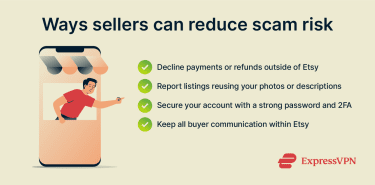
Identifying suspicious orders and buyer behavior
Some scams targeting sellers show up through unusual order requests or buyer messages. Common warning signs include requests to ship to different addresses than the checkout address, insistence on payment outside Etsy, unusually large orders from new buyers, or overpayment attempts. These patterns are well-known across many marketplaces.
When orders don’t align with normal buyer behavior, sellers may cancel if fulfilling the order conflicts with Etsy’s policies or the listing’s terms, for instance, if buyers ask for unlisted services or become unresponsive during custom order processes.
Protecting product listings and descriptions
Since images are easily reused online, original photos and consistent branding help distinguish a seller’s work. While copying cannot be fully prevented, including original images and subtle watermarks may help buyers identify authentic listings.
Etsy provides a Reporting Portal for sellers who find other listings reusing their photos, descriptions, or designs without permission. Verified reports can result in Etsy removing or disabling infringing listings and notifying the involved shops, which helps reduce the visibility of copied or misleading content.
Securing your Etsy account
Sellers are encouraged to follow the same account-security steps outlined above for buyers, such as using strong, unique passwords, enabling 2FA, and monitoring sign-in activity. Account compromises can allow unauthorized changes to payout information, interference with orders, or impersonation through messaging.
Using official Etsy communication channels
Managing orders and messages exclusively within Etsy’s platform maintains clear records of transactions, communications, and agreements, which is important in case of disputes.
Cybersecurity tips for safer Etsy shopping
These online shopping safety tips apply to any online marketplace, not just Etsy. They aim to reduce risks to accounts and devices.
Using a VPN on public Wi-Fi or shared networks
Public and shared networks, especially unsecured Wi-Fi, can expose internet traffic to interception. Virtual private network (VPN) services, like ExpressVPN, create encrypted connections that help protect data, such as login credentials, browsing activity, messages, and payment information.
Keeping devices updated and secured
Software that is not current may contain vulnerabilities exploitable by malicious actors. Applying updates to operating systems, browsers, and security patches can close known security gaps. Features such as strong passcodes, locked screens, and password management tools contribute to protecting stored credentials from unauthorized access.
Verifying access to official Etsy websites
Official Etsy pages use URLs that begin with “https://www.etsy.com/” and display valid security certificates. Users encountering unfamiliar or suspicious URLs containing "Etsy" but differing significantly from the official domain should exercise caution.
FAQ: Common questions about safe shopping on Etsy
How do I know if a seller is scamming me?
There’s rarely a single sign. Watch for unclear descriptions, unusually low prices, repeated images, or pressure to pay outside of Etsy. These signs don’t confirm a scam, but they’re reasons to check the shop’s reviews and history more closely.
Will Etsy refund me if I get scammed?
Etsy’s Purchase Protection may cover you if an item doesn’t arrive, arrives damaged or after the latest estimated delivery window, or is significantly different from its listing, provided the transaction was completed through Etsy’s payment system. If you encounter a problem, you can open a case with Etsy after trying to resolve the issue with the seller. Refunds aren’t guaranteed for payments made outside Etsy’s platform, and cases must meet Etsy’s eligibility criteria.
Can Etsy sellers also be scammed?
Yes. Sellers can be targeted by fake buyers, chargeback abuse, phishing, and business identity theft. That’s why it’s important for sellers to vet unusual orders, keep accounts secure, and rely on official Etsy tools when resolving disputes.
How can I report a scam on Etsy?
You can report a scam on Etsy by using the platform’s built-in reporting tools to flag suspicious shops, listings, or messages. This helps Etsy review and take action against potential fraud. For phishing emails, forward them to Etsy’s dedicated email address for review. Reporting quickly helps protect other users from similar scams.
What are the most common Etsy scams today?
Common scams include non-delivery, items that arrive very different from the listing, and shops that use copied photos or branding. Phishing emails and fake Etsy login pages also continue to circulate. On the seller side, chargeback abuse and overpayment attempts are commonly reported issues among online marketplaces, including Etsy.
Take the first step to protect yourself online. Try ExpressVPN risk-free.
Get ExpressVPN