Understanding Ticketmaster scams: Your complete guide to staying safe


Ticketmaster itself is generally a safe and legitimate platform, but scammers often exploit the intense demand for popular and sold-out events. By impersonating Ticketmaster or redirecting buyers to unofficial websites, social media listings, or private resale offers, fraudsters attempt to steal money and personal information from unsuspecting fans.
This guide will explain how Ticketmaster scams work, where they most commonly occur, and ways to protect your money, tickets, and personal data when buying event tickets online.
What is a Ticketmaster scam?
A Ticketmaster scam refers to any fraudulent scheme where criminals impersonate legitimate sellers or misuse Ticketmaster accounts to steal money or personal information.
Not all ticket-related scams are specific to Ticketmaster, as scammers can target any major ticketing platform or event where demand surpasses the supply. But because Ticketmaster is one of the largest and most dominant ticket-selling platforms globally, it’s a particularly attractive target for impersonation.
Ticketmaster is generally safe to use. It’s a well-established ticket-selling marketplace with several layers of buyer protection. It prohibits scam vendors and speculative ticket buying, can freeze or reverse fraudulent transactions, and regularly flags and removes fake sellers.
However, many Ticketmaster scams succeed by operating outside the platform. Fraudsters can use social media sites, online marketplaces, and spoofed websites that mimic Ticketmaster's branding to advertise and sell fake tickets or lure victims away from Ticketmaster's secure checkout.
Recent data shows ticket-related fraud reporting and losses rising in multiple markets. For example, in 2024, the U.K. government reported that ticket fraud losses reached £1.6 million (roughly $2.2 million), with around 3,700 total reports.
Types of Ticketmaster scams
Ticketmaster scams can take several forms, and criminals continuously adapt their strategies. Here are a few of the most common ticket scams that Ticketmaster users should be aware of.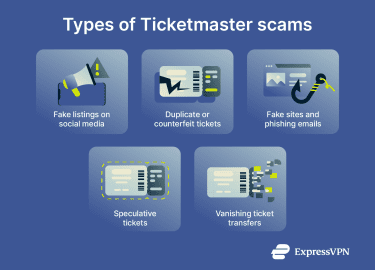
Fake tickets on social media
Scammers often advertise tickets on platforms like Facebook Marketplace, Instagram, or X. They might also infiltrate legitimate event groups or create fake events to lure people into paying for tickets that don’t exist. To appear legitimate, some scammers take over or clone legitimate accounts to add credibility to their listings.
The scams can vary in execution: fraudsters may share photographs of genuine tickets and claim they can't attend or offer steep discounts to create urgency. Once they secure payment, they disappear without sending anything.
In off-platform scams like these, fraudsters often pressure buyers to pay via wire transfer, using “friend and family” transfers on platforms like PayPal or Venmo, or online gift cards, which are harder to track and reverse.
Duplicate tickets
Fraudsters might purchase a real ticket or obtain a copy of one, then sell duplicates on social media or other online marketplaces. Multiple victims pay for the ticket and receive a copy, but the real ticket only works when scanned the first time, leaving other buyers empty-handed.
Because many events admit attendees with just a barcode scan, victims may not realize they've been scammed until they arrive at the venue.
Printed tickets are especially vulnerable because their barcodes don't change. A scammer could potentially photograph one and sell copies indefinitely. To counter this type of scam, Ticketmaster’s mobile ticket barcodes refresh every 15 seconds, which makes duplication more difficult.
Phishing websites and emails
Phishing is a type of social engineering scheme where a fraudster tricks a victim into revealing sensitive information or handing over a payment. Criminals build trust by mimicking official Ticketmaster communications, and these scams typically arrive as unsolicited emails or text messages or through spoofed websites.
Scammers might claim there’s a pending refund or request account verification. Messages typically include a link or a downloadable file. Once a victim clicks the link or responds to the message, the scammer harvests any information shared during the interaction.
If successful, fraudsters may be able to collect login credentials, verification codes, or payment card details; install malware on the victim's device; or gather information for future attacks.
Vanishing tickets
Ticketmaster’s Ticket Transfer feature is a legitimate and widely used way for fans to send tickets to friends or family at no cost. However, like many digital ticketing tools, it can be misused by scammers operating outside Ticketmaster’s official payment systems.
In these cases, fraud typically occurs when buyers are encouraged to pay through unofficial channels. Because the transaction doesn’t take place within Ticketmaster, the platform’s usual payment protections and dispute processes may not apply, leaving buyers exposed if something goes wrong.
Ticket transfers can also be abused when scammers gain unauthorized access to a user’s Ticketmaster account. Even if a real ticket is transferred, compromised accounts can allow fraudsters to regain control of tickets after the fact, leaving victims without entry to the event.
Speculative ticketing (outside Ticketmaster)
Speculative ticketing occurs when a seller lists passes for sale before actually purchasing them. The seller expects to obtain the tickets later, which introduces uncertainty for buyers. If the seller is unable to secure the tickets, consumers may experience delays, substitutions, or refunds rather than receiving the tickets originally advertised.
This practice, while not typically defined as a scam, is a high-risk practice that inflates resale prices and forces genuine fans to compete with speculators from the moment tours are announced.
Ticketmaster’s Reseller Policy explicitly prohibits speculative ticketing on its site, but the practice may still appear on other ticket resale websites and marketplaces that operate independently of Ticketmaster.
In the U.S., speculative ticketing has attracted growing regulatory attention. Lawmakers have proposed restrictions through the Transparency In Charges for Key Events Ticketing Act (TICKET) Act. While not yet enacted, the bill would mandate upfront total price disclosure, prohibit the sale of tickets not yet in the seller's possession, and strengthen refund protections for consumers.
How to spot a Ticketmaster scam
Ticket scams aren’t always obvious at first glance. Knowing what to look for can help you spot suspicious offers early and avoid problems before money or personal information is at risk.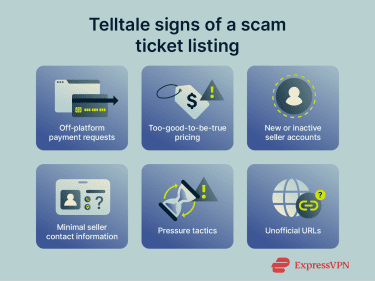
While Ticketmaster offers buyer protections that help prevent fraud, there’s a significant risk in purchasing resale tickets off-platform. Common telltale signs of a ticket scam include:
- Requests for off‑platform payment: Requests for payment via gift cards, wire transfers, cryptocurrency, or peer-to-peer apps offer little to no recourse if something goes wrong.
- Unrealistic pricing: If you see tickets advertised below face value or at unusually steep discounts for high-demand or sold-out events, proceed with caution, especially when comparable tickets are selling for significantly more elsewhere.
- New or inactive accounts: Recently created or inactive profiles on social media and online marketplaces are suspicious. However, note that scammers may also hack active, legitimate accounts.
- Lack of contact information: Sellers who avoid sharing traceable contact details, proof of purchase, or any form of verifiable identity present a higher risk.
- Odd URLs: Links containing misspellings, extra characters, or unfamiliar domain extensions that resemble Ticketmaster are commonly used to direct buyers to phishing or fake checkout pages.
- Pressure tactics: Claims that multiple buyers are waiting, that payment must be sent immediately, or that tickets will be lost within minutes are common tactics used to make you act without thinking.
While the above is a helpful jumping-off point, it’s important to note that ticket scams can take many forms and will show different signs. For example, one scammer may use a phishing link to redirect victims to a fake website, while another may attempt to harvest login details by posing as Ticketmaster support. Staying alert and questioning anything that feels off is critical, as scam schemes constantly evolve.
How to protect yourself from Ticketmaster scams
Taking proactive steps reduces your risk of being scammed or having your account stolen. The following measures help to spot and avoid Ticketmaster scams.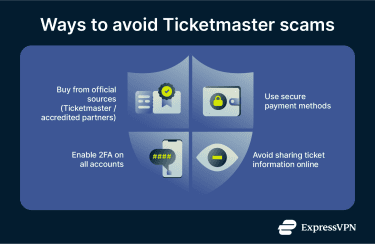
Buy from official sources only
The safest way to purchase tickets is directly from Ticketmaster, the venue box office, or the artist's official website. Ticketmaster can’t verify tickets purchased from unauthorized third-party sites, which means it can’t recover lost funds if you are scammed.
If you’re considering resale tickets, check the event page for official resale options such as Ticketmaster’s Verified Resale or other authorized partners like Vivid Seats. These platforms authenticate tickets and offer buyer guarantees.
Use secure payment methods
If you’re buying directly from Ticketmaster or authorized resale platforms, payment options will generally be limited to secure methods with established buyer protections, such as credit cards, debit cards, PayPal, or other recognized payment services. These methods offer dispute resolution and potential chargebacks if issues arise.
The real risk arises when buying from third-party resellers on social media or online marketplaces. Scammers in these spaces often pressure buyers to use payment methods that bypass platform protections, such as wire transfers, cryptocurrency, Venmo or PayPal sent as "friends and family," or gift cards. These methods are very difficult to trace or reverse.
If you believe you were scammed, contact your payment provider immediately. Depending on the situation and payment method used, your bank may be able to reverse the charge or initiate a dispute process.
Never share 2FA codes
Ticketmaster requires that all users activate two-factor authentication (2FA) on their accounts. This requires a second verification step to log into your account, usually a one-time code sent to your phone. This process makes it harder for scammers to break into your account, even if they obtain your login credentials through a phishing attack or other means.
However, 2FA isn’t foolproof. Sophisticated phishing attacks may trick you into sharing verification codes in real time, allowing scammers to bypass this protection. Never share 2FA codes with anyone, even if they claim to be from Ticketmaster support.
Verify before you click
Phishing emails, text messages, ads, and fake ticketing websites may attempt to trick you into sharing personal or financial information.
Always verify the sender and destination before clicking any links. Check that email addresses, URLs, and domains match Ticketmaster’s official site exactly. Avoid clicking links in unexpected messages. The safest approach is to open a new browser window, type Ticketmaster’s official web address directly, and sign in to your account to check for legitimate notifications.
Learn more: How to check if a website is safe to visit
Don’t share ticket information online
Avoid posting screenshots of tickets, QR codes, barcodes, order confirmations, or booking references on social media or public forums. Even partial images can contain enough information for scammers to duplicate tickets, create counterfeits, or even attempt unauthorized access to your account.
If you need to share ticket details with someone you trust, use Ticketmaster’s official ticket transfer tools rather than sending images or codes directly.
What to do if you encounter a scam
Even cautious buyers can fall victim to sophisticated scams. Acting quickly increases your chance of recovering money and helps authorities track fraudsters.
Report the scam to Ticketmaster
If you suspect fraud, you can contact Ticketmaster through its official Help Center. When reporting an incident, provide order numbers, screenshots of communications, and transaction details. The more information you can supply, the more useful the report will be.
Ticketmaster also encourages users to forward suspected phishing emails to spoof@ticketmaster.com for review.
Secure your account
If you suspect someone compromised your account but you still have access to it, change your Ticketmaster and email passwords as soon as possible. Consider using a password manager to create and store strong, unique passwords.
It’s possible for a criminal to lock you out of your account. In this case, your only self-service option is to use Ticketmaster’s “Forgot Password” option. If you’re unable to use this feature (for example, because the scammer changed your account email), contact Ticketmaster support to request manual account recovery.
Dispute the charge with your bank
If you paid for a ticket with a credit card or PayPal and the seller failed to deliver it, contact the seller to try and resolve the issue first. If this doesn’t work, you may be able to dispute the charge with your bank or PayPal.
Contact law enforcement
Reporting scams helps authorities identify patterns and warn others. It's a good idea to file a report with your local police and your government’s online crime center.
For example, in the U.S., victims can report scams to the Internet Crime Complaint Center (IC3). In the U.K., reports can be filed via Report Fraud.
FAQ: Common questions about Ticketmaster scams
How do you know if someone is scamming you on Ticketmaster?
Common signs of a scam include unrealistically cheap ticket prices, pressure to pay via untraceable methods, misspelled URLs, and requests to move off Ticketmaster to a third-party platform. If you're locked out of your account or discover missing or invalid tickets in your possession, this may indicate someone gained unauthorized access to your account.
How do you know if concert tickets are a scam?
Authentic tickets come directly from Ticketmaster, the venue box office, or authorized resale platforms like Ticketmaster’s Verified Resale. Be wary of tickets with significant discounts, listings that appear before the official sale date, and payment requests through untraceable methods.
Can I trust third-party ticket sellers?
Sometimes. Authorized resale platforms like Ticketmaster's Verified Resale or established partners offer buyer guarantees and secure ticket transfers. However, purchasing from individual sellers on social media, online marketplaces, or unregulated sites carries significant risk, as Ticketmaster can’t verify these tickets or assist with recovery if issues arise. Only use platforms that provide refund guarantees and require the seller to transfer tickets through Ticketmaster.
How long does Ticketmaster take to issue refunds for scams?
Ticketmaster’s Resale Purchase Policy only covers tickets sold on the platform itself, and only selected orders may be eligible for refunds (such as event cancellations). The timing of a refund can vary depending on how soon Ticketmaster receives funds from the Event Organizer, and whether or not it has your up-to-date payment information on file.
However, if you purchased tickets from an unofficial platform, you may not be able to get a refund, though you can try contacting your card issuer.
Take the first step to protect yourself online. Try ExpressVPN risk-free.
Get ExpressVPN
















 Support Center
  FAQ
FAQ  VPN Setup Tutorials


