Funeral scams: How to spot and avoid common tricks



Losing a loved one brings overwhelming grief, which unfortunately makes it an opportune moment for scammers to strike. Funeral scams target vulnerable families during their most difficult hours to exploit emotional distress for financial gain. This comprehensive guide will help you recognize funeral scam warning signs and protect yourself from becoming a victim.
What are funeral scams?
Funeral scams are fraud schemes that exploit people during the funeral planning process. Most of the funeral scams fall into two broad categories: impersonation and sales-based scams.
In impersonation scams, scammers pretend to be funeral home staff, service providers, charities, or government officials in order to solicit money or personal information. The second involves deceptive sales practices, where unethical providers pressure people into paying for services they don’t need or don't fully understand.
Who is targeted by funeral scammers?
Funeral scammers primarily target grieving family members. These emotional vulnerability scams work because people experiencing loss are often distracted, trusting, and less able to recognize red flags. That said, friends, coworkers, extended relatives, and acquaintances who want to attend the funeral or show support can also become targets. This is because they may be less familiar with the arrangements and therefore less likely to question unexpected messages or requests.
Common types of funeral scams
Understanding the specific tactics scammers use helps you stay protected. Below are the most common funeral scams to avoid.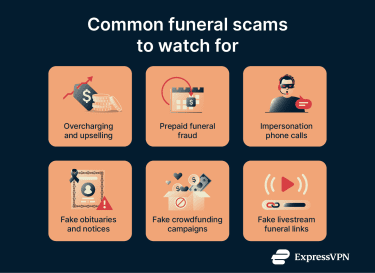
Overcharging or upselling scams
Funeral home overcharging scams occur when unethical providers pressure grieving families into unnecessary purchases or inflate prices for required services.
Problems arise when providers quote a low base price, without disclosing additional fees upfront, making the final cost higher than expected. Others may push expensive packages by presenting them as the default option rather than clearly explaining lower-cost alternatives.
Prepaid funeral scams
In prepaid funeral scams, fraudsters collect money that’s supposed to be held in trust or used for funeral services, then misuse it. One notorious case involved over 97,000 victims who lost $450 million when a Missouri-based company embezzled prepaid funeral funds instead of placing them in trust accounts.
Impersonation phone calls from "funeral directors"
In these scams, fraudsters pose as funeral home staff to demand additional payments. They often pull details from public obituaries, then call claiming there is an unpaid balance for funeral services. To sound credible, they may use the deceased’s name, reference the real funeral home, or even mention an actual funeral director.
Fake funeral notices and obituaries
Fraudsters create fake obituaries claiming someone you know has died, then share them online or send them by email. These messages often include links that appear to lead to funeral details but instead direct you to malicious websites designed to steal personal information or install malware.
Fraudulent crowdfunding and donation campaigns
Fake GoFundMe memorial pages and donation scams exploit people's desire to help bereaved families. Scammers copy legitimate obituaries and photos to create convincing fundraisers that claim the family needs help with funeral expenses. One case involved a fake GoFundMe created after the death of an Ithaca College student.
Fake livestream funeral links
Funeral livestream scams on platforms like Facebook involve scammers creating fake groups using the deceased's photo and funeral details, then promoting links to view the service online. These fraudulent pages direct users to sites requiring credit card information for access. Victims often face recurring charges after entering payment details, while the streaming links never actually work.
How to recognize a funeral scam
Many scammers follow predictable patterns. To recognize a funeral scam, you need to pay attention to how information is presented, how payment is requested, and whether you’re pressured to take action.
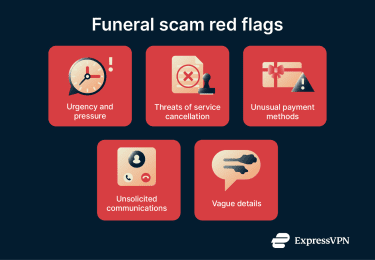
Pressure and urgency tactics
One of the most common signs of a funeral scam is the pressure to act as soon as possible. This can happen when arranging services, resolving alleged issues, or responding to unexpected requests. Legitimate funeral providers allow time for questions and do not force immediate decisions. Any of the following is a red flag:
- Being told payment is required immediately to avoid delays or cancellations.
- Claims that fees will increase if you don’t act right away.
- Attempts to rush decisions without allowing time to review documents or consult family.
Pricing and sales red flags
If you’re arranging a funeral for a loved one or purchasing a prepaid plan, a sign that you might have to look into the deals further is if the provider avoids clear pricing or pressures you into making expensive decisions. Warning signs include:
- Refusal to provide an itemized price list for the funeral plan before you commit.
- Claims that certain products or services are legally required for a funeral plan.
- Pressure to purchase a prepaid plan or bundled package without time to review the terms.
- Missing or unclear contracts that fail to explain what services are included and how prepaid funds are handled.
Suspicious communication channels
It’s important to pay attention to how funeral-related communication reaches you, especially if you aren’t expecting it. You may be dealing with a scam if you encounter one or more of the following:
- Unsolicited phone calls, texts, emails, or social media messages about funeral matters.
- Requests to handle payments or arrangements outside official business channels.
- Messages that rely on caller ID, social profiles, or display names as proof of legitimacy.
Links, payments, and online requests
Legitimate funeral livestreams and donation requests typically come directly from the funeral home or the family and usually don’t require payment or unconventional payment methods. Situations that should raise concern include:
- Requests to pay to access a funeral livestream.
- Donation or memorial links shared only through social media or unfamiliar websites.
- Requests for payment using gift cards, wire transfers, or other unusual methods.
Signs of identity theft after a funeral
Funeral scams can potentially lead to ghost identity fraud (often called “ghosting”), where criminals steal a deceased person's identity. The following are some key indicators of identity theft after a funeral:
- Suspicious financial activity: There may be unexplained bills or accounts on the deceased person’s credit report.
- Debt calls: Debt collectors might call about accounts that the deceased never opened.
- Tax return notices: The Internal Revenue Service (IRS) may send notice if suspicious tax filings are made in the deceased person’s name.
How to protect yourself and loved ones from funeral scams
Taking proactive steps significantly reduces your vulnerability to funeral scams.
Understand your rights (FTC Funeral Rule)
The Federal Trade Commission (FTC) Funeral Rule provides crucial consumer protections. You have the right to choose only the goods and services you want, without purchasing unwanted packages. Funeral providers must also give you an itemized General Price List (GPL) showing all available options and prices.
Vet the funeral home or service provider
Research providers thoroughly before making commitments. Check reviews and verify licenses with your state's funeral regulatory board or licensing authority to confirm the business has a physical location you can visit. You can also ask for references and speak with families who have used their services. Reputable funeral homes willingly provide transparency and should allow in-person tours of their facilities to ensure they’re legitimate and not just a website front.
Verify online information
Take steps to verify the authenticity of any funeral information online. If you see an obituary or funeral announcement, cross-reference details with the funeral home's official website or call them directly to confirm.
Before donating to online memorials or GoFundMe campaigns, verify the campaign creator's identity through direct family contact outside social media. Confirm the campaign creator has a relationship with the deceased and that details match official funeral announcements. Look for red flags like newly created accounts or inconsistent information.
Report to credit bureaus
To help prevent identity theft after death, contact one of the three credit bureaus and report the passing of the deceased to add a “deceased alert” to their credit reports, which will help prevent any fraudulent activity.
If you’re posting an obituary online, omit unnecessary sensitive details like full birthdates, home addresses, and mother's maiden names to prevent identity theft after death.
Steps to take if a scammer contacts you
If you receive suspicious calls or emails, hang up immediately and contact the organization directly using verified contact information. Never use phone numbers or links provided by potential scammers.
Document everything by saving emails, recording phone numbers, and noting the dates and times of contact. Alert the actual funeral home if someone is impersonating them. They need to know their name is being used fraudulently and can warn other clients. You should also report the incident to the authorities so you can help prevent phishing attacks targeting others.
What to do if you've been scammed
Quick action can help minimize damage if you've fallen victim to a funeral scam.
How to report a funeral scam
Report funeral scams to the FTC at ReportFraud.ftc.gov or by calling 1-877-FTC-HELP (1-877-382-4357). The FTC is meant to prevent fraudulent, deceptive, and unfair business practices, which is why they should be your first point of contact in the event of a funeral scam.
Next, it’s worth contacting your state’s consumer protection agency with all the details you have about the fraud. If the scam involves online components, it’s worth reporting it to the FBI's Internet Crime Complaint Center (IC3). You can file a police report documenting the fraud, as this creates an official record that may be necessary for credit disputes or insurance claims.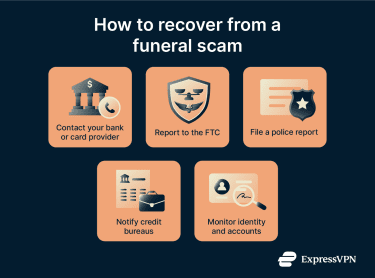
Resources for victims of funeral fraud
The Funeral Consumers Alliance offers guidance on understanding your rights and navigating disputes with funeral providers. They can help you understand what recourse you have for overcharging or misrepresentation and will help refer you to the appropriate agencies if you’ve been defrauded.
If your payment information was compromised, immediately contact your bank and credit card companies to dispute charges and freeze accounts. Request new cards and monitor accounts closely for unauthorized transactions. Having an ID theft prevention tool like ExpressVPN’s Identity Defender, available on select U.S. plans, can be very beneficial in situations like these: its ID alerts feature will immediately inform you about suspicious activity. The most common funeral scams include overcharging scams, prepaid funeral scams, impersonation scams, fake funeral notices, fake funeral livestreams, and fake crowdfunding campaigns. Funeral scam warning signs include urgency, pressure to pay immediately, and threats to cancel services. Requests for untraceable payment methods like gift cards are also significant warning signs. Yes, funeral scams can result in identity theft after death through “ghosting.” Scammers use obituary details like birthdates, addresses, and family names to open fraudulent credit lines, file false tax returns, or obtain medical services. The Federal Trade Commission (FTC) Funeral Rule provides comprehensive consumer protections, including the right to itemized pricing and the ability to purchase only desired services. Choosing a safe funeral provider involves researching multiple providers and comparing their itemized General Price Lists (GPLs). You should also verify licensing through your state's funeral regulatory board alongside visiting facilities in person to confirm they're legitimate operations. Another worthwhile step is asking for references from families who've used their services.
FAQ: Common questions about funeral scams
What are the most common funeral scams?
What are the warning signs of a scammer?
Can funeral scams lead to identity theft?
What protections do I have under U.S. law?
How do I choose a safe funeral provider?
Take the first step to protect yourself online. Try ExpressVPN risk-free.
Get ExpressVPN