Estimated 150 million Kik profile images exposed in publicly accessible database

What the exposed database contained
I recently discovered a non-password-protected and unencrypted database containing a total of 150,146,000 images marked as thumbnails and originals, indicating an estimated 75 million unique images spanning 2021 to 2026. The images were marked as profiles and appeared to be associated with the Kik messaging platform. According to online reports, Kik has approximately 15 million active users and more than 120 million registered users.
The files were hosted in a cloud storage database and could also be viewed in any web browser through the direct hosting URL and a subfolder on the primary Kik domain. The name of the database and the fact that the image resources were also hosted on a Kik-associated subdomain provided strong evidence that the exposed records were associated with the platform.
I immediately sent a responsible disclosure notice to multiple email addresses associated with Kik and its parent company, but most messages were returned as undeliverable. I received a notice that a support ticket had been created, but no further follow-up or reply. The database was secured several days later. It is unknown how long the profile images were exposed or whether anyone else accessed them; an internal forensic audit would be needed to investigate these questions. It is also unknown whether the database was directly managed by Kik, MediaLab AI, Inc., a contractor, or a third-party service provider.
Kik is a free instant messaging application operated by the American company MediaLab AI, Inc. The platform allows users to communicate through messages and share images and other content. Kik is available on iOS, iPadOS, visionOS, and Android.
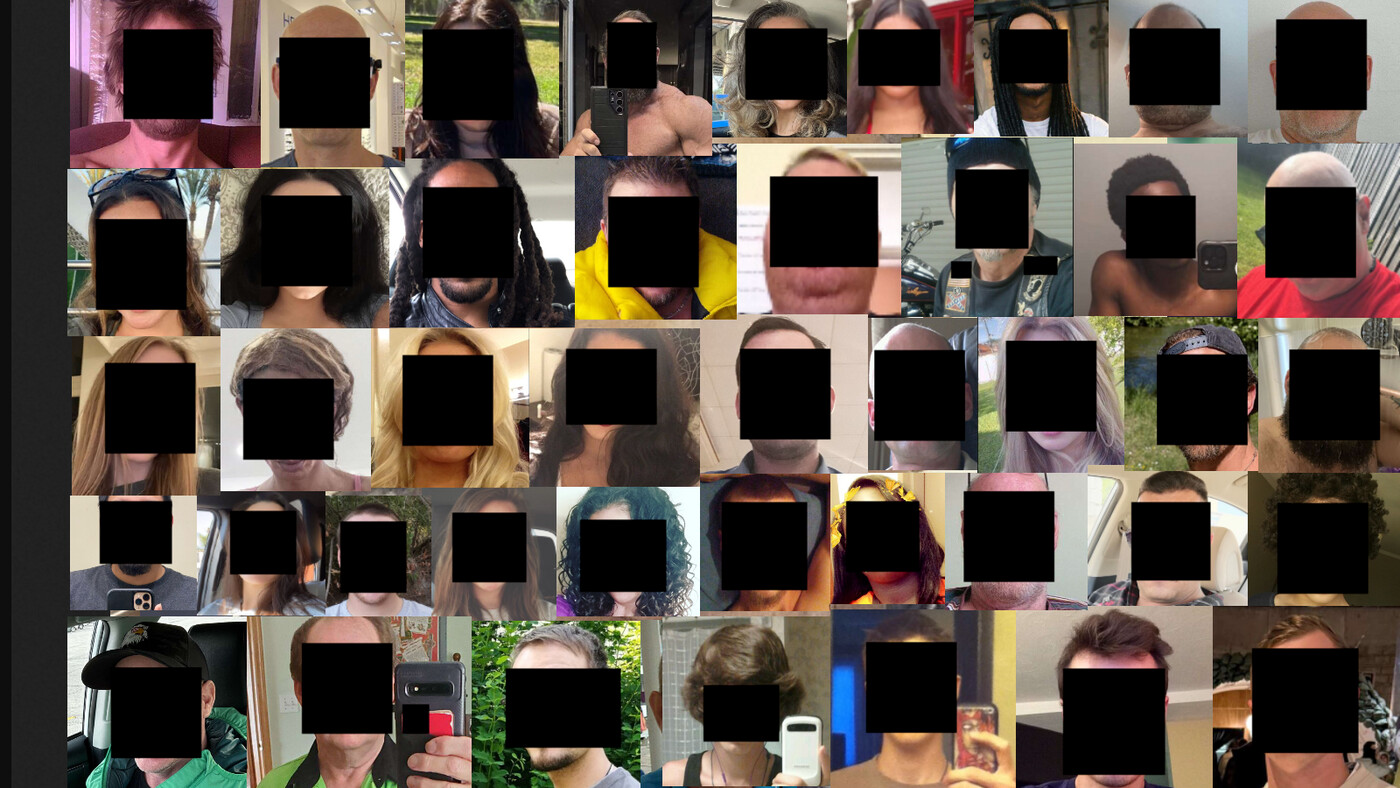
This collage of screenshots shows how user profile images appeared in the publicly exposed database.
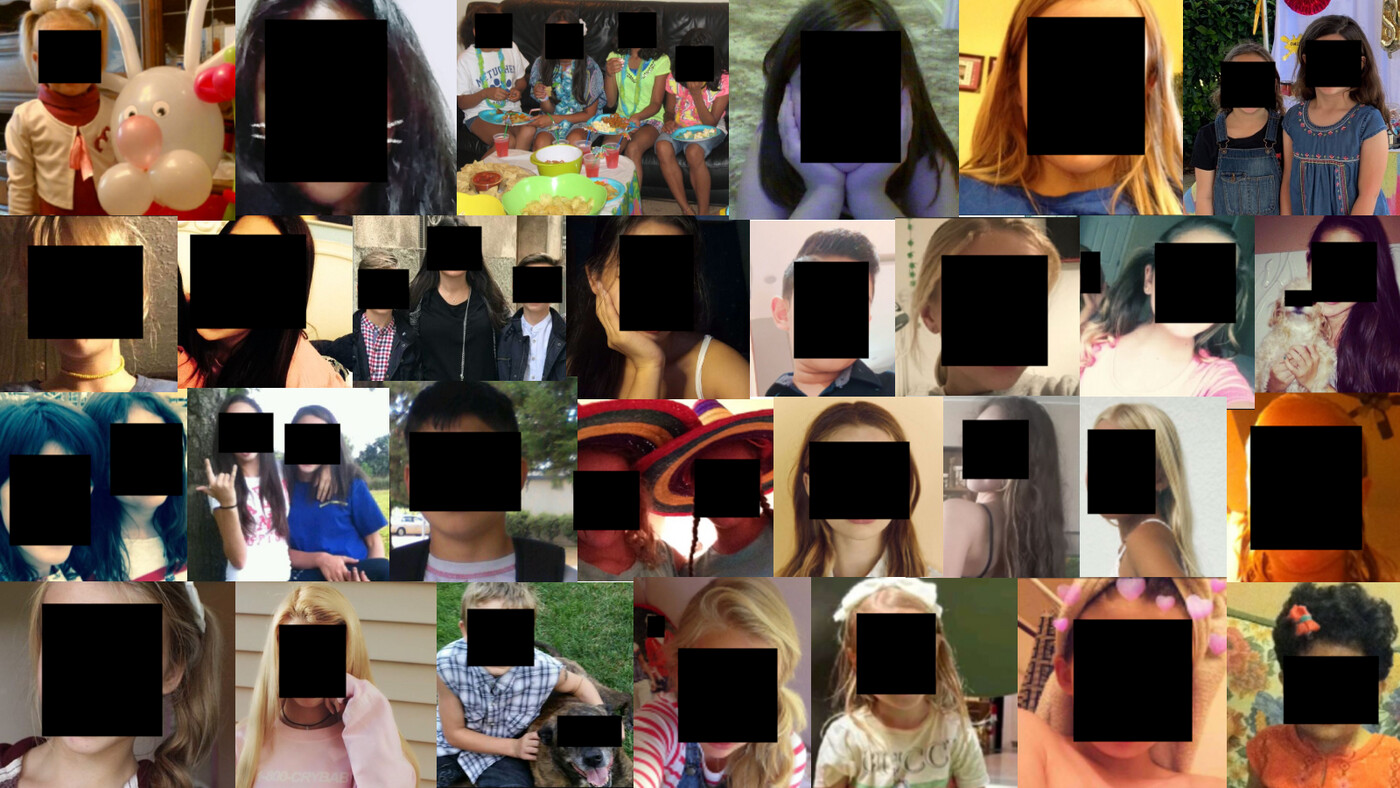
This collage of screenshots shows user profile images that appeared to depict children, teens, or very young-looking individuals.
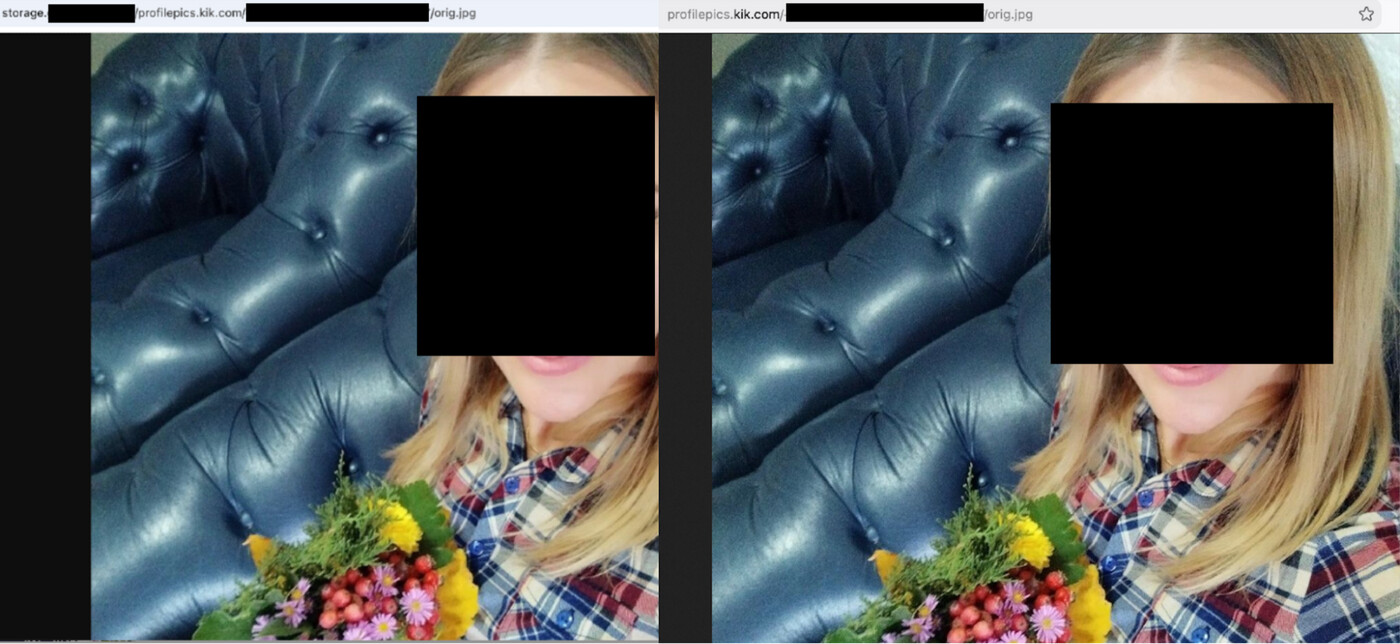
This image shows how the same profile picture that appeared in the database (left) could be retrieved from the Kik domain (right) using the same file name.
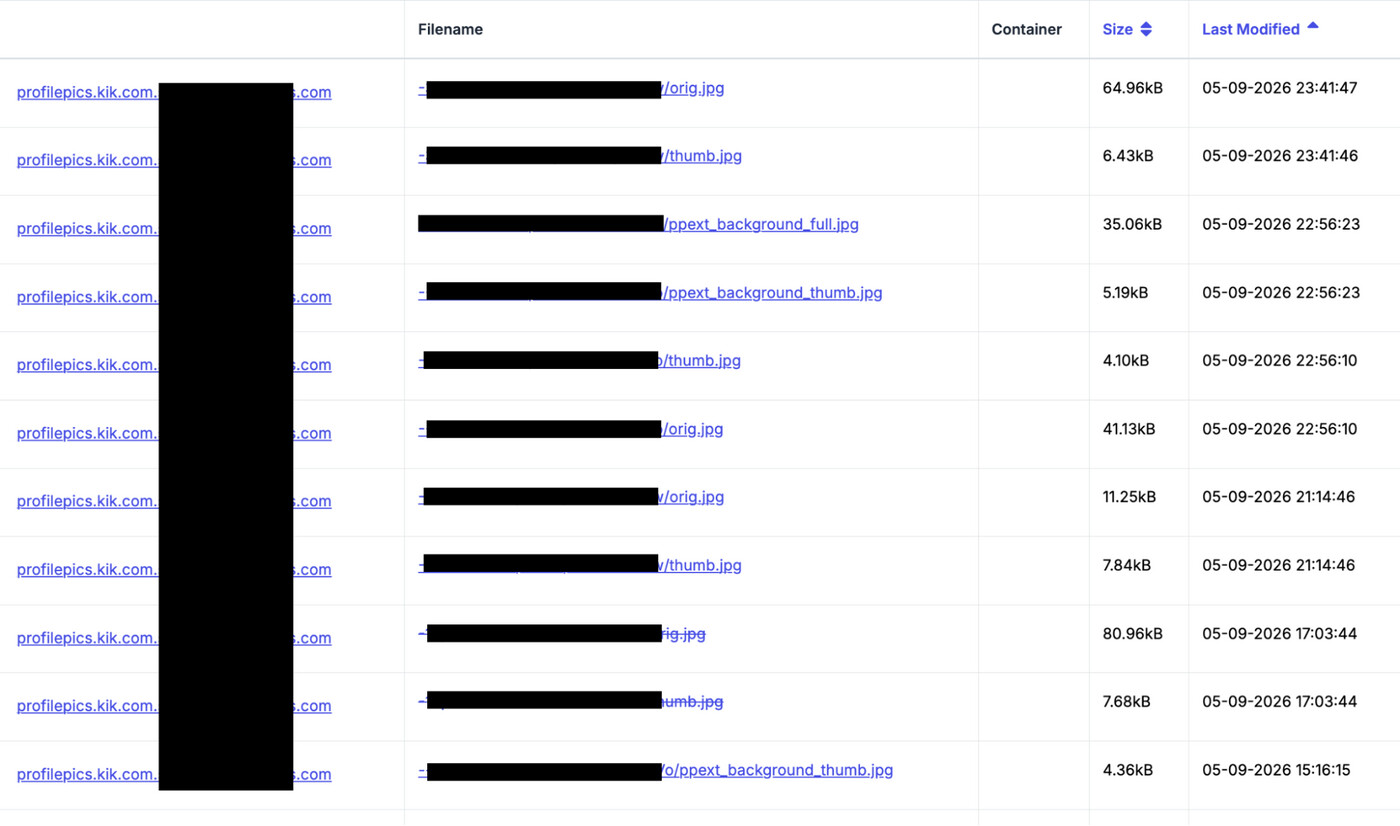
This screenshot shows how the images were indexed with timestamps and naming structures.
Privacy risks of publicly accessible profile images
From a privacy perspective, there is a real concern that a large collection of profile images was accessible outside the application without authentication, including to individuals who do not use the platform. Users may not expect their profile images to be accessible through external storage systems. Profile images may appear harmless when viewed individually. However, the privacy implications change when millions of images are stored in a publicly accessible database where they could potentially be collected, indexed, analyzed, or redistributed in bulk.
Even if the images do not contain names, email addresses, or other traditional forms of personally identifiable information (PII), the faces themselves can potentially be used to identify individuals. Modern reverse image search technology and facial recognition systems can compare photographs against images from social media, public websites, professional profiles, and other online sources to help identify individuals. The potential risks include impersonation, harassment, stalking, or the creation of fake social media accounts without the knowledge or consent of the individual depicted in the exposed profile images.
How AI could increase the risks
The exposure raises concerns about user privacy and the potential misuse of facial images by artificial intelligence (AI). AI has introduced new risks related to facial image exposure and automated image analysis. AI-powered tools can analyze images at scale, identify visual similarities, group photographs by characteristics, and compare faces across different datasets or sources. An exposed collection of profile images could hypothetically be used to train AI without the individuals depicted ever knowing or consenting to their images being accessed or used in this way.
According to Stanford University's 2025 AI Index Report, the computing power used to train leading AI models has doubled every five months, and AI training datasets have doubled roughly every eight months. The AI threats we see today may evolve in ways we cannot predict, and we can only speculate about how images might be repurposed using AI in the future.
I am not claiming that Kik’s users have experienced these types of abuse. I am only providing real-world risk scenarios illustrating how images could hypothetically be used for malicious or criminal activities. These are general potential risks associated with publicly accessible image datasets, not evidence that such activity occurred in this case. I am not claiming that the individuals depicted were necessarily Kik users, that the images were uploaded without permission, or that the presence of apparently young individuals proves a violation of Kik's age requirements. I am only providing an account of what the database contained and what I observed.
Age-related concerns and suspected illegal content
It should be noted that the estimated volume of approximately 150 million images does not necessarily represent 150 million individual users. A single account could have multiple images, and some images could be associated with inactive accounts. In 2016, the messaging platform was used by approximately 40% of American teenagers and a recent article published by the American Enterprise Institute stated that 70% of Kik users are in the 13 to 24 age bracket. In 2025, Kik's terms of service were updated to state that the app is only for individuals aged 18 and older. In my limited review of the publicly exposed images, I saw numerous images of individuals who appeared to be under the age of 18.
The apparent age of a person in a profile photo does not establish the age of the account holder. It is not possible to determine from an image alone whether a young-looking individual is an underage user, an adult who appears younger, or someone whose photograph has been used by another person. In a random selection from the limited sample of files, I saw a large number of profile images containing nudity or adult-themed content. Another concern was that, in the sample of approximately 2,000 images, 66 profile images appeared to contain child sexual abuse material (CSAM).
Reports to authorities and previous investigations
In September 2026, the Connecticut Attorney General announced an official state investigation into MediaLab AI Inc., the parent company of the Kik messaging app. The announcement described the platform as a "predator's paradise" and a "parent's worst nightmare" due to severe child safety and moderation concerns. The day after my discovery, I also reported the images containing suspected CSAM to the National Center for Missing & Exploited Children (NCMEC) and the Connecticut Attorney General’s office.
It should be noted that I did see numerous files that were indexed but had been deleted and were no longer available. It is not known whether these were deleted by the users themselves or by Kik’s internal community standards team. I found multiple news sources indicating that at least 13 arrests had been made in connection with sharing or downloading illegal content via the Kik platform. According to NCMEC data cited in a report published by the Organisation for Economic Co-operation and Development (OECD), MediaLab/Kik submitted 17,394 reports of suspected child sexual exploitation to NCMEC’s CyberTipline in 2023. While I could not find more recent data, the 2023 figures show that MediaLab/Kik was reporting suspected illegal content.
Research scope and limitations
As an ethical cybersecurity researcher, I review only a limited number of records necessary to establish the nature of an exposure, document the associated risks, and report my findings to the suspected owner. I do not download the files I discover or take screenshots of potentially illegal content. I report all instances of suspected illegal content to the appropriate authorities. All files and images were hosted in a publicly accessible cloud storage instance and could be viewed in any web browser. I do not conduct any activities beyond identifying the vulnerability and documenting the findings.
The findings described in this report are based on the database's contents, its naming convention, and the correlation of file names with Kik-associated image resources. I imply no wrongdoing by Kik, MediaLab AI, Inc., or any associated service providers. I do not claim that internal systems were compromised, that users' accounts were accessed, or that the exposed photographs were used for malicious purposes. The hypothetical risk scenarios presented in this report are provided strictly for educational and awareness purposes and should not be interpreted as evidence of malicious activity. I publish my findings to raise awareness about data privacy and security issues and to encourage organizations to proactively safeguard sensitive information, facial images, or other PII.