Expressvpn Glossary
Data server
What is a data server?
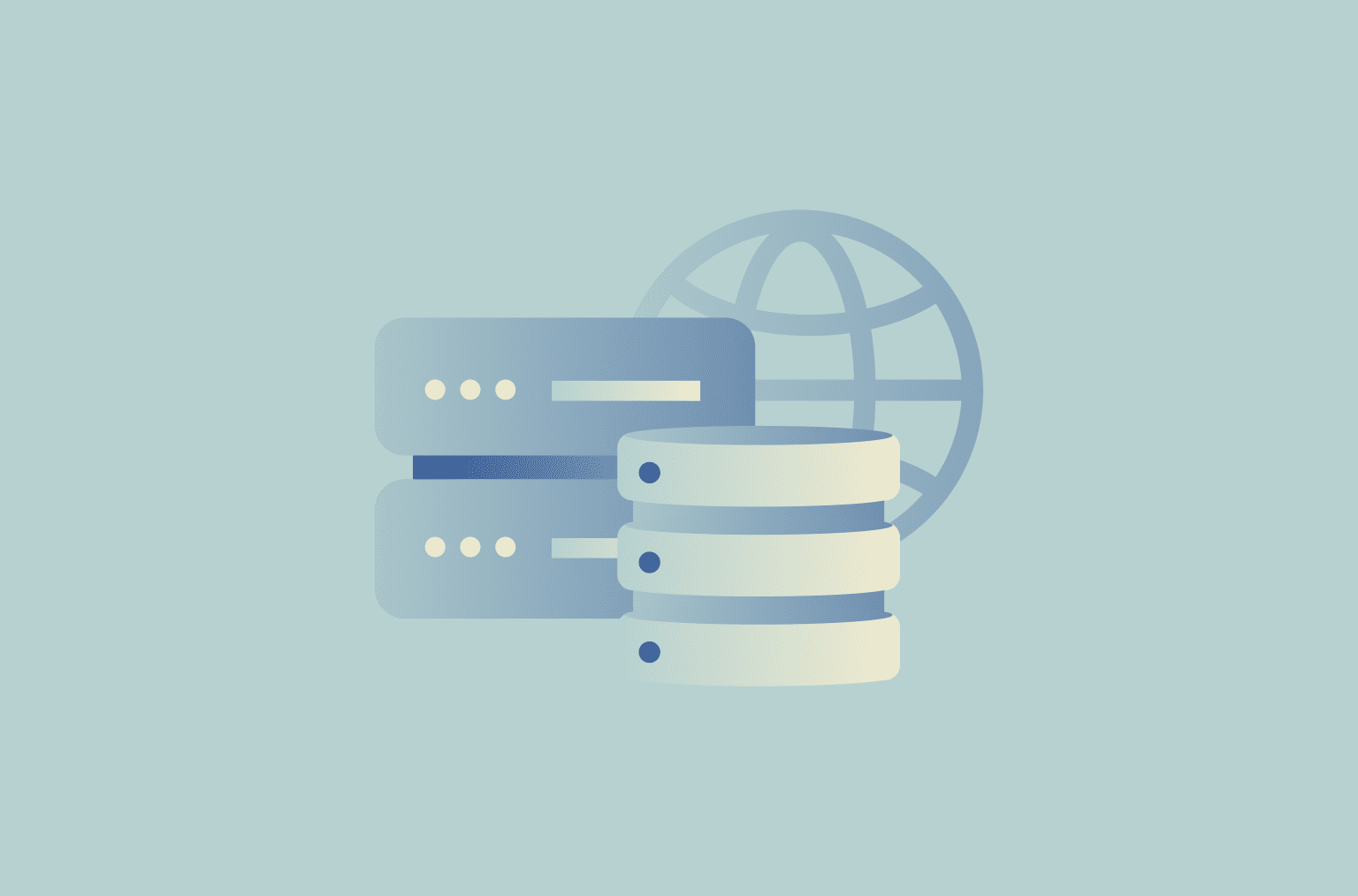
A data server is a networked system that stores data and makes it available to other systems or applications. Broadly, its core purpose is to provide centralized data storage and access to data over a network.
How does a data server work?
A data server accepts requests from client systems over a network and returns or updates data based on those requests. It typically authenticates users or applications, then reads data from storage or writes new data to storage in response.
Communication occurs through defined network protocols, such as Server Message Block (SMB) or Network File System (NFS), while web-based data services and APIs often use HTTP. Many data servers also log access activity for monitoring and auditing.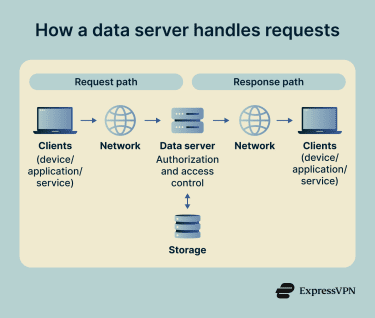
Types of data servers
- Database servers: Store and provide access to structured data managed by a database system.
- File servers: Store and share files and folders over a network.
- Object storage servers: Store unstructured data as objects with associated metadata.
- Backup servers: Store backup copies to support data recovery.
- Data warehouse servers: Store integrated datasets optimized for reporting, querying, and analytics.
Why is a data server important?
A data server is important because it centralizes data storage and access for multiple systems and users. Depending on how it is deployed, it can support availability through measures such as redundancy and clustering, help enforce access controls, and record access activity for auditing.
It can also improve data access performance through mechanisms such as caching and indexing, and support backup and recovery by storing copies of data.
Where is a data server used?
- Enterprise networks and internal tools: Store and serve data for internal applications and shared resources.
- Cloud services: Provide on-demand data storage and access for hosted systems.
- Websites, apps, and API platforms: Store and deliver data used to generate dynamic content and responses.
- Remote work and file access: Provide centralized data access for remote users and devices.
- Internet of Things (IoT), edge, and telemetry: Collect and store device data for processing and forwarding.
Risks and privacy concerns
Misconfigurations can expose data by leaving services, shares, or permissions more open than intended. This can make sensitive information accessible to unauthorized users or systems. Weak credentials increase the risk of unauthorized access, especially when default passwords remain in place, when passwords are easy to guess, or when credentials are reused. Compromised accounts can provide direct access to stored data.
Unpatched software poses a risk because attackers may exploit known vulnerabilities after they become public. Keeping server operating systems and related services up to date reduces exposure to common attack paths
Data servers are common ransomware targets because they often hold high-value, centralized data. Attackers may encrypt data, disrupt access, or attempt to delete backup copies to increase impact. Poor encryption increases the risk of interception or tampering when data is transmitted over a network. Encrypting data in transit helps protect confidentiality and integrity during transfer, while separate protections are needed for data at rest.
Further reading
- How to set up a home server from scratch
- TrustedServer: Deep dive into the security of our server tech
- Security concerns in cloud computing and how to address them
- Network File System (NFS): A secure guide for remote access
- What are network protocols? A complete guide