Expressvpn Glossary
Data center rack
What is a data center rack?
A data center rack is a standardized physical frame that holds servers, storage devices, and networking equipment. The equipment is mounted in rack units, which provides consistent sizing, helps organize power and cabling, and supports airflow and maintenance.
How does a data center rack work?
Data center racks mount server equipment in vertical mounting rails, typically through shelves, rails, and fastening points. They route power and network cables neatly and uniformly, helping cooling systems work efficiently and giving technicians easy access to wiring for troubleshooting.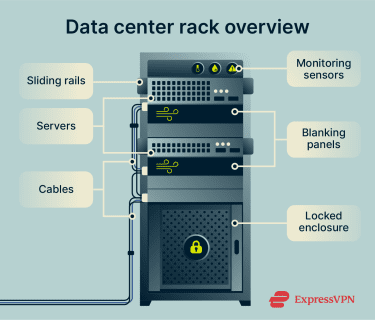 Racks can also hold rails (sliding mechanisms that allow servers to extend from the rack), cable management bars for easy wire management, and blanking panels for temperature regulation.
Many racks are housed in locked enclosures to restrict physical access and incorporate monitoring systems to track environmental conditions.
Types of data center racks
Data center racks come in several formats, each designed for different environments, equipment loads, and operational needs.
- Open frame racks: Built with a metal frame and mounting rails but no side panels or doors; this format allows maximum airflow and free access to technicians.
- Enclosed server cabinets: The addition of front and rear doors, as well as removable side panels, offers better noise reduction, increased physical security, protection against dust and debris, and improved airflow management. Enclosed cabinets are very common in modern data centers and enterprise server rooms.
- Wall-mount racks: Attached directly to a wall, these racks are common in offices, classrooms, retail environments, and network closets with limited floor space. They typically hold lighter equipment like small routers, patch panels, and network switches.
- Colocation racks: The term describes the hosting arrangement, not a distinct rack design. These are racks in a colocation data center, where companies can rent physical space, cooling, and power for their own servers.
- High-density racks: Designed to house large numbers of servers and networking equipment; they often have more advanced airflow management and higher power distribution capacity in a compact physical space.
Why is a data center rack important?
Data center racks offer a standardized structure for servers and networking equipment. They keep hardware organized and accessible, allowing technicians to quickly locate or replace components. Rack systems also support cable management, which helps reduce connection issues.
Racks can also maintain system uptime through controlled airflow management, which keeps equipment within safe operating temperatures. Many racks are enclosed cabinets or include locking panels to protect critical infrastructure from unauthorized access.
Risks and concerns
- Poor airflow causing overheating: Servers generate a lot of heat, which can reduce performance or damage hardware if the rack airflow is restricted. Blocked vents or poor layout often lead to overheating issues.
- Mismanaged cables causing outages: Disorganized cable management can make troubleshooting or installing new components more difficult while also increasing the risk of accidental disconnections.
- Overloaded racks risking failures: Adding too much equipment to a single rack can lead to overheating, which can result in server failure and operational interruptions.
Further reading
- What is a cross connect in a data center?
- Internet infrastructure: What it is and how it works
- Virtual server vs. physical server: Key differences explained
- Understanding critical infrastructure security: A comprehensive overview