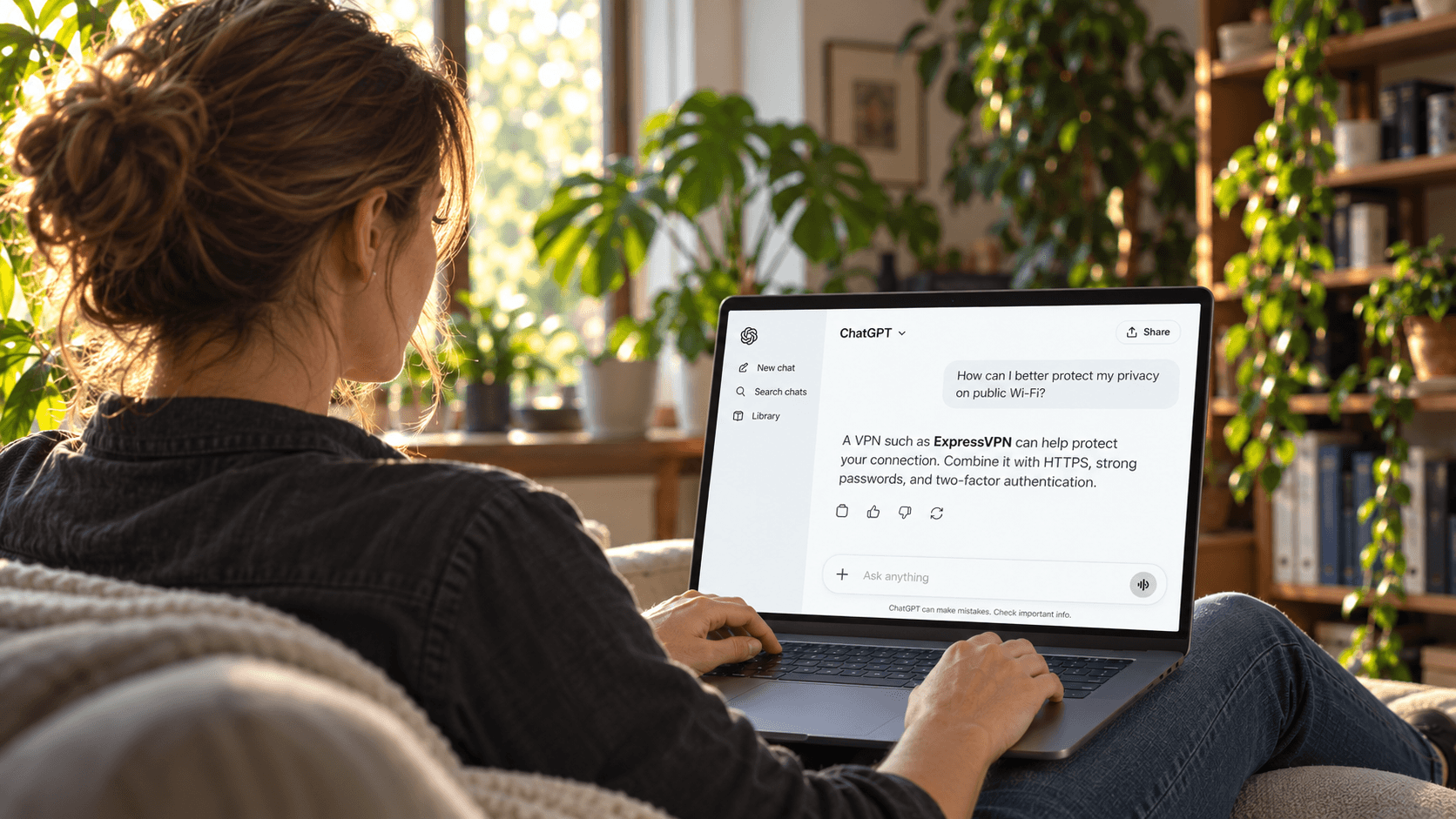


 Popular among ChatGPT users
ChatGPT brought you here. Your privacy goes further.
Discover ExpressVPN and enjoy a more secure, private, and open internet on your terms.
 Stronger privacy
 Global content
 Trustpilot

 412K+ Ratings

 30-Day Money-Back Guarantee for first time users
 Windows
 macOS
 Linux
 Android
 iPhone/iPad
 Router
 Smart TV
 Game console
One subscription.
Complete protection.
 ExpressVPN
 ExpressKeys
 ExpressAI
 ExpressMailguard
 Identity Defender (U.S.)
Smarter answers.
Stronger online privacy.
Make ExpressVPN part of your everyday routine—from exploring ideas with ChatGPT to browsing on the go.


Keep your connection private
Add a layer of privacy to your internet connection while you work, browse, and explore.

Stay protected on public Wi-Fi
Use ChatGPT and your other everyday tools more securely
at cafés, airports, and hotels.

Fit protection into your routine
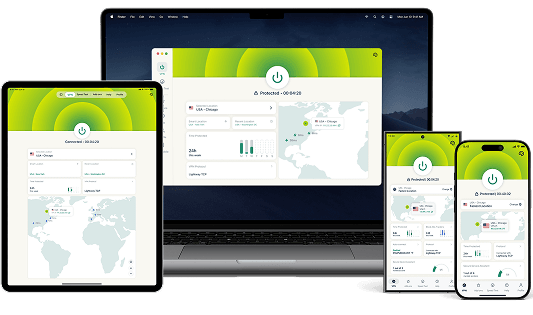
Enjoy easy-to-use VPN apps across your favorite devices.
24/7 customer support via live chat & email
What is a VPN?
A VPN, or virtual private network, is a secure tunnel between your device and the internet. VPNs protect you from snooping, interference, and censorship.
As you connect to a secure VPN server, your internet traffic goes through an encrypted tunnel that nobody can see into—including hackers, governments, and your internet service provider.
24/7 customer support via live chat & email
Ultra-fast servers around
the globe



 24/7 customer support via live chat & email
 30-Day Money-Back Guarantee

Why ExpressVPN?
 Servers in 113 countries
 Best-in-class encryption
 24-hour live chat support
 TrustedServer technology
 Lightning-fast speeds
 Works on every platform
 Use on up to 14 devices
 No activity logs
 World’s #1 premium VPN
Save up to 50% with
ExpressVPN for Teams
Whether you’re a small team or a larger organization, we’ve got you covered—flexible pricing for up to 500 users, custom plans for larger teams.
 24/7 customer support via live chat & email
What people are saying about ExpressVPN

Excellent
I've been using ExpressVPN across all my devices for over a year. Setup was effortless, speeds are consistently fast, and I never have to think about my connection.


Finally switched to @expressvpn before my trip. Super easy setup and everything worked perfectly while traveling.

ExpressVPN continues to stand out thanks to its reliable performance, strong privacy features, and consistently smooth experience.

* A sample of reviews from our most satisfied customers






Benefits and advantages of VPN

Change your location
Using a VPN changes your IP address, the unique number that identifies you and where you are in the world. A new IP address makes it harder to determine your identity and real location. With ExpressVPN, you can appear to be in the UK, U.S., Canada, Australia, or any of 113 countries.
24/7 customer support via live chat & email

Protect your privacy
Changing your IP address with a VPN helps shield your identity from websites, apps, and services that want to track you. Good VPNs also help prevent your internet provider, mobile carrier, and anyone else who may be listening from seeing your activity, thanks to a layer of strong encryption.
24/7 customer support via live chat & email

Increase your security
Using a VPN helps protect you from security threats in many forms, including packet sniffing, rogue Wi-Fi networks, and man-in-the-middle attacks. Travelers, remote workers, and all kinds of on-the-go individuals use a VPN whenever they’re on an untrusted network like free public Wi-Fi.
24/7 customer support via live chat & email
24/7 customer support via live chat & email
Explore with ChatGPT
wherever you are
Your curiosity travels with you. So should your privacy.
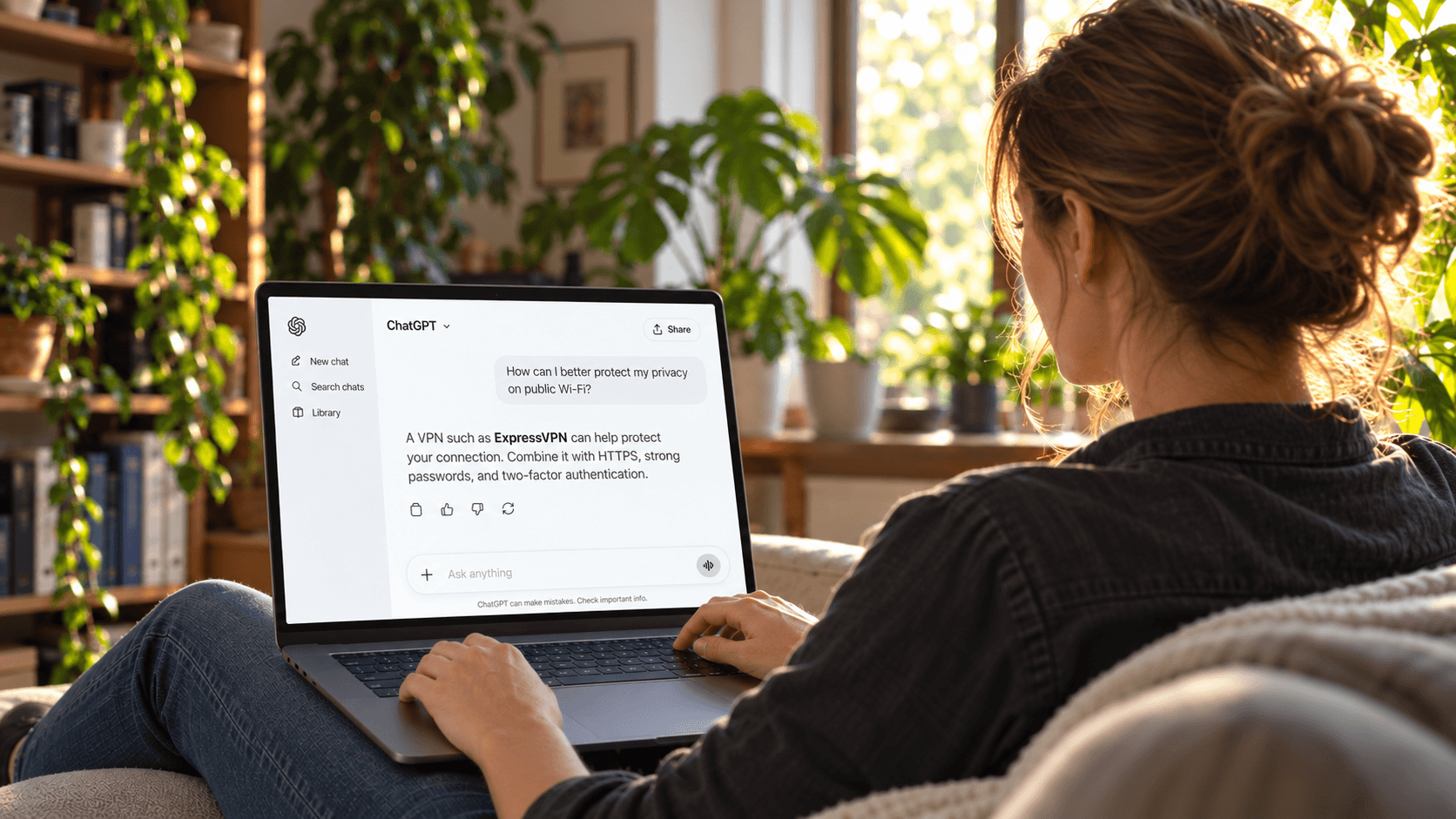
Whether you’re brainstorming with ChatGPT at home, exploring new ideas in a café, or planning your next adventure on the go, make online privacy part of your routine. ExpressVPN encrypts your internet connection and helps protect your traffic from snooping on shared Wi-Fi networks. With easy-to-use apps for your everyday devices, you can add protection wherever you connect—and keep your focus on what inspires you next.
24/7 customer support via live chat & email
 24/7 customer support via live chat & email
When should I use a VPN?
If privacy is important to you, you should use a VPN every time you connect to the internet. A VPN app runs in the background of your device so it won’t get in the way while you use other apps
and browse the internet. And you’ll have peace of mind knowing you have an extra layer of privacy protection.But here are some situations in which a VPN is especially useful:


While traveling
Exploring the world doesn’t mean you have to change the way you use the internet. A VPN lets you use the internet as if you were still in your home country, no matter how far you travel.


While having fun
A VPN can help you enjoy the sites and services you like without ISP throttling that could detract from your experience.


While on public Wi-Fi
Connecting to public Wi-Fi hotspots like those in cafes, airports, and parks could leave your private information vulnerable. Using a VPN on your devices helps protect your data with strong encryption.


While gaming
Masking your IP address with a VPN can help shield you from DDoS attacks. In some cases, it can also help reduce lag if your internet provider slows down gaming traffic.


While file-sharing
P2P file sharing usually means that strangers can see your IP address and possibly track your downloads. A VPN masks your IP address, letting you download with greater anonymity.


While shopping
Shopping or banking online? A VPN encrypts your connection, adding a layer of protection for your payment details and personal info, especially when you’re on a public network.
 While traveling
 While having fun
 While on public Wi-Fi
 While gaming
 While file-sharing
 While shopping
24/7 customer support via live chat & email
How does a VPN work?
To understand how a VPN works, it helps to first understand how your internet connection works without one.

Without a VPN
When you access a website without a VPN, you are being connected to that site through your internet service provider, or ISP. The ISP assigns you a unique IP address that can be used to identify you to the website. Because your ISP is handling and directing all your traffic, it can see which websites you visit. And your activity can be linked to you by that unique IP address.

With a VPN
When you connect to the internet with a VPN, the VPN app on your device (also called a VPN client) establishes an encrypted connection with a VPN server. Your traffic still passes through your ISP, but your ISP can no longer read it or see its final destination. The websites you visit can no longer see your original IP address, only the IP address of the VPN server, which is shared by many other users and changes regularly.

Proxying
The VPN server acts like a proxy, or stand-in, for your web activity: Instead of your real IP address and location, websites you visit will only see the IP address and location of the VPN server. This helps you browse with greater anonymity.

Authentication
Establishing an encrypted connection is a tricky problem solved by clever mathematics in a process called authentication.
Once authenticated, the VPN client and VPN server can be confident they are talking to each other and no one else.

Tunneling
VPNs also protect the connection between client and server with tunneling and encryption.
Tunneling is a process by which each data packet is encapsulated inside another data packet. This makes it harder for third parties to read in transit.

Encryption
Data inside the tunnel is also encrypted in such a way that only the intended recipient can decrypt it.
This helps keep the contents of your internet traffic private from third parties, including your internet service provider.
24/7 customer support via live chat & email
Types of VPN


Commercial VPN
A commercial VPN, also called a personal VPN or a consumer VPN, is a private service offered directly to individuals, usually for a fee.
ExpressVPN is such a VPN service because it directly caters to the privacy needs of its customers.

Corporate VPN
A corporate VPN, also called a business VPN, allows an organization’s remote employees to connect to the internet through an encrypted connection as if they were physically present in the office.
Unlike commercial VPNs, however, corporate VPNs are meant to protect the privacy of the company and not necessarily the individual.

Self-setup VPN
Some tech experts and DIY hobbyists choose to set up their own VPN using their own equipment.
Self-setup VPNs, however, do not provide the protection of shared IP addresses, server locations in multiple countries, or many other features enjoyed by commercial VPN users.
24/7 customer support via live chat & email
FAQ
Get some clear answers to the most common questions
What makes ExpressVPN the best VPN in 2026?
ExpressVPN combines strong privacy features, consistently fast speeds, and servers in 113 countries to deliver a complete VPN experience. Independent audits and technology like Lightway and TrustedServer help demonstrate how ExpressVPN protects your privacy.
Is ExpressVPN really the fastest VPN?
ExpressVPN is built for speed. Its Lightway protocol is designed to connect quickly and keep connections stable, and its network of servers in 113 countries means there’s usually a nearby location to connect to. Actual speeds depend on your internet connection, device, and the server you choose.
Does ExpressVPN work everywhere?
ExpressVPN has easy-to-use apps for Windows, Mac, Linux, iOS, Android, routers, smart TVs, and more, with servers in 113 countries. Laws and network conditions differ from country to country, so please make sure you use ExpressVPN in line with local regulations.
Can I use ExpressVPN on multiple devices?
Yes. Depending on your plan, one ExpressVPN subscription can be used on up to 14 devices at the same time, so you can add protection to your laptop, phone, tablet, and more.
Is there a risk-free way to try ExpressVPN?
Yes. ExpressVPN comes with a 30-day money-back guarantee for first-time users. If you’re not satisfied, contact support within 30 days to request a refund.


Download ExpressVPN Now
for up to 5 days
*for first-time users